
Small Bedroom Organization Ideas That Instantly Create More Space
If you’re looking for how to organize a small bedroom, you’ve probably already tried a few common solutions. Maybe you bought storage baskets, folded everything neatly, and finally felt like the clutter was under control. A few days later, clothes were back on the chair, the nightstand was covered with everyday items, and the room felt just as cramped as before.
The problem usually isn’t a lack of storage or a bedroom that’s too small. It’s that many organization tips focus on adding containers before creating a simple system that’s easy to maintain.
The good news is that you don’t need a bigger closet, expensive organizers, or a complete bedroom makeover to make a noticeable difference. With the right approach, you can create more usable space, reduce everyday clutter, and keep your bedroom organized with less effort.
In this guide, you’ll learn practical, space-saving strategies that actually work, helping you make the most of every inch without overspending or overcomplicating the process.
Why Small Bedroom Organization Ideas Fail in Real Homes
Here’s where most people get stuck: they treat bedroom organization as a storage problem when it’s actually a volume problem.
You can buy every pretty basket and floating shelf on the market, but if your bedroom holds more than it should, you’re just organizing clutter. The room stays crowded because the amount of stuff never changed — you just moved it around.
A bedroom has two jobs: rest and personal storage. Anything that doesn’t support one of those two things is working against your space. That pile of hobby supplies, those old work files, the exercise gear you haven’t touched in eight months — they’re eating up square footage your bed and dresser actually need.
The second reason organizing efforts fail is complexity. Color-coded drawer dividers and five-step morning routines work great for a week. Then a busy Tuesday hits, one step gets skipped, and the whole system collapses.
Simple systems you can maintain when you’re tired will always beat perfect systems that fall apart under normal life.
How to Plan Storage Before Organizing a Small Bedroom
Before you buy a single bin or shelf, spend fifteen minutes on these three steps:
- Audit what’s actually in the room. Walk through and write down every category of item: clothes, books, electronics, work stuff, exercise equipment, and anything that wandered in from other rooms and never left. That last category matters most — those items are consuming space meant for the bedroom’s real purpose.
- Map where storage makes sense based on how you use the room. Clothes go near where you get dressed. Bedside items go within reach of the bed. Books go where you read. This sounds obvious, but most people put things where they fit, not where they belong.
- Measure before you buy anything. This single step saves more money and frustration than any other. Measure your under-bed clearance, your wall space, and your drawer depth. Ten minutes with a tape measure prevents hours of returning bins that don’t fit.
Only once you know what belongs in the room — and where — should you start shopping for storage products.
Best Space-Saving Furniture for Small Bedrooms
In a small bedroom, every piece of furniture has to earn its floor space. If something only does one job, question whether it belongs there at all.
Storage benches and ottomans. A bench at the foot of the bed that opens up can hold extra blankets or out-of-season clothes. In a small bedroom, seating without storage is a luxury you probably can’t afford.
Storage beds. A bed with drawers underneath can replace a dresser entirely, freeing up a huge chunk of floor space. Ottoman beds with lift-up bases are even better — the whole under-bed area becomes usable without crawling around.
Bed risers. If you’re not ready to replace your bed, risers cost almost nothing and add four to six inches of clearance, so flat storage bins actually fit underneath.
Multi-functional nightstands. A nightstand with drawers beats a decorative table every time. A floating, wall-mounted nightstand takes up zero floor space while still holding your phone, glasses, and book.
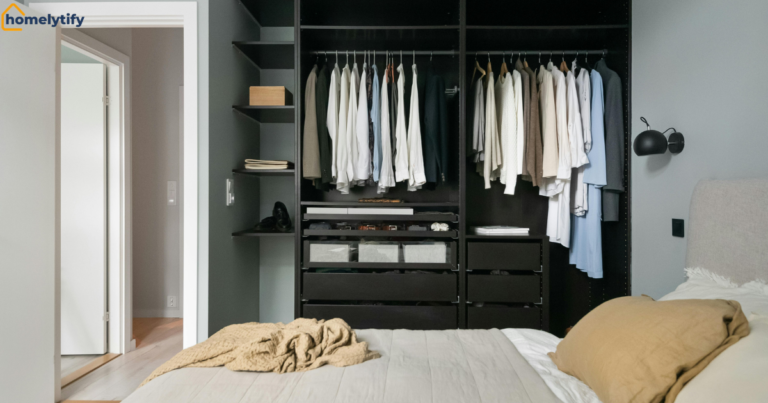
Wardrobes with interior organization. A wardrobe with a hanging section, drawers, and shelving holds far more than a plain box with a single rod. Adding a second rod for short items like shirts and jackets can double your hanging space for about ten dollars.
Using Walls and Vertical Space in Small Bedroom Organization Ideas
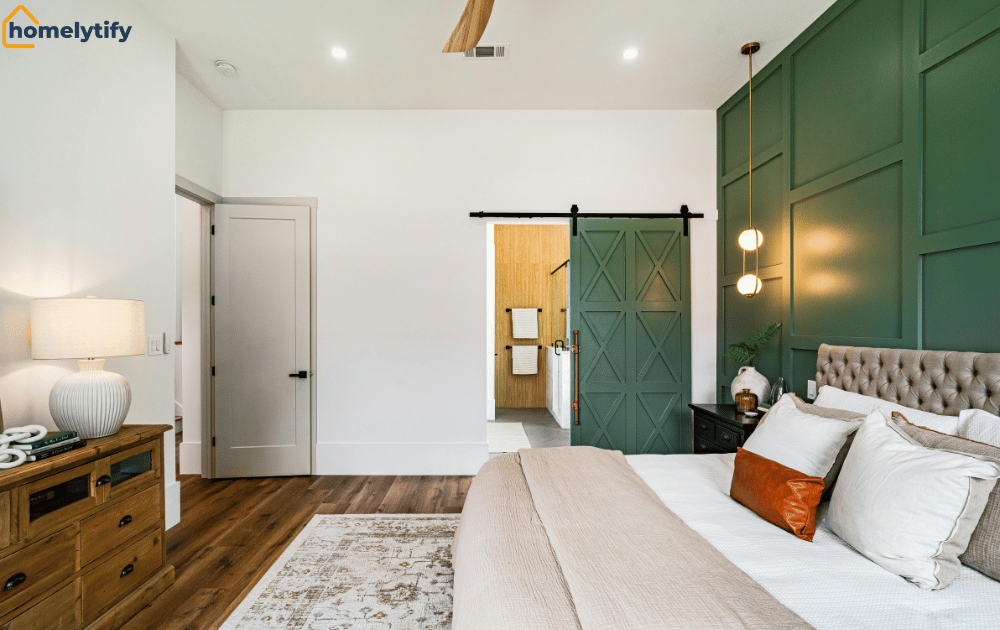
Most people use only the floor and the closet. The space between the top of your furniture and the ceiling is almost always empty — and it’s your single best opportunity to add storage without losing walking room.
Floating Shelves
Floating shelves above furniture extend what you already have. Put one above your dresser or nightstand, and it can hold twice as much without taking up another inch of floor space. Give each shelf a specific job — one for books, one for daily items — so it stays organized instead of becoming a catch-all.
Hooks, Rails, and Ceiling-Height Shelving
Wall-mounted hooks and rails are one of the cheapest wins on this list. A hook rail behind your bedroom door holds tomorrow’s outfit, bags, belts, and scarves — without it, those items end up on a chair or the floor. One inexpensive hook rail can eliminate the dreaded “clothes chair” completely.
Shelving that goes all the way to the ceiling adds serious storage without increasing your footprint. Most units stop well below ceiling height, so add shelves above an existing unit or buy a taller one. Reserve the top shelves for seasonal or rarely-used items you don’t need daily access to.
Under-Bed and Hidden Small Bedroom Organization Ideas
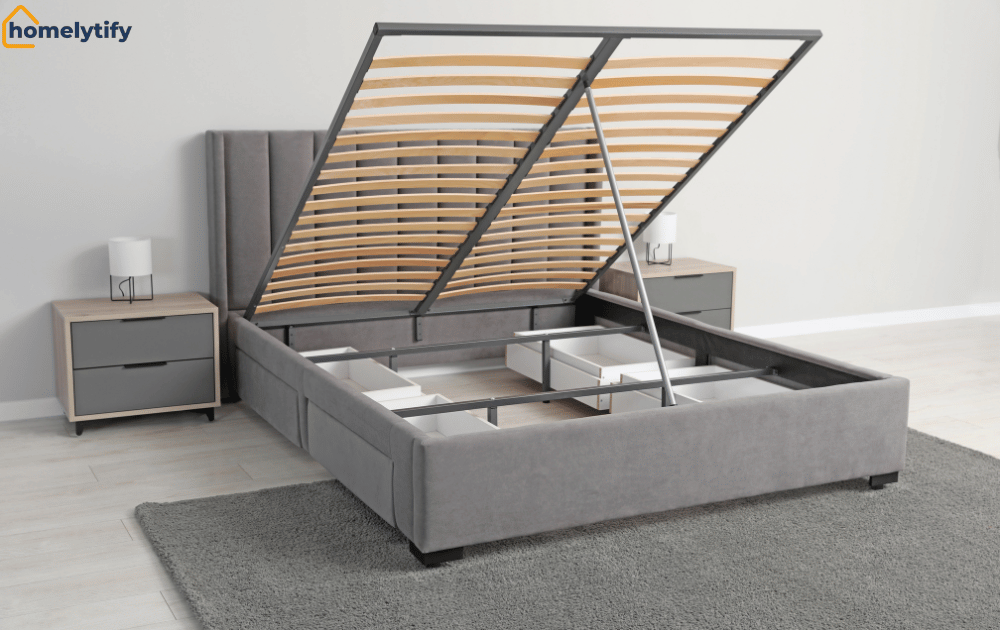
Under-bed storage gets talked about constantly, but most people do it wrong.
Measure your clearance first. Standard bed frames give you anywhere from four to twelve inches. Slim bins (4–7 inches) work for flat items, extra bedding, and seasonal clothes; taller bins hold more but need more clearance.
Only store things you don’t need often under the bed. Pulling bins out is a pain — if you store weekly-worn sweaters down there, you’ll stop putting them back. Winter clothes in summer? Perfect. Extra sheets? Great. Daily items? Bad idea.
A bed skirt that reaches the floor will completely hide bins if visible storage bothers you. And hidden storage in plain sight — a storage ottoman, a decorative trunk doubling as a bench — holds a surprising amount while adding to the room’s look. These pieces reduce the visual weight of your belongings, which makes a room feel calmer even when the total volume hasn’t changed.
How to Organize a Small Bedroom With No Closet or Limited Storage
No closet is harder than a small closet, but it’s not impossible. You just have to think beyond traditional storage and use furniture, walls, and honest self-assessment.
Build a closet with furniture
- Use a large wardrobe or armoire with hanging space, drawers, and shelves — not just a rod.
- For a built-in look, flank a window or wall with two wardrobes and connect them with a floating shelf above.
Try an open clothing display
- A clothing rack with a curated wardrobe can look intentional rather than messy.
- An overstuffed rack looks worse than a messy closet, so it has to stay edited.
- This works especially well with a capsule wardrobe approach, where every piece serves a purpose.
Use every inch of vertical space for clothes
- Add hooks to the back of the door.
- Install a wall rail for frequently worn items.
- Use shelves for folded clothes instead of a dresser.
Open shelving only works if you fold consistently and neatly. If you tend to toss clothes after a long day, closed bins or baskets on those same shelves are the smarter choice.
The Best Decluttering System for a Small Bedroom
Decluttering feels overwhelming if you try to do everything at once. This sequence works:
- Start with clothes — usually the biggest category. Go through everything: hanging, folded, in drawers, on chairs, on the floor. For each item, ask one question: Have I worn this in the last year? If yes, keep it. If not, it goes (with an exception for true special-occasion items). Resist the “but I might wear it” trap — you haven’t worn it in a year, and you won’t in the next one either.
- Move to surfaces and drawers. Sort everything into four piles: keep, donate, trash, relocate. The “relocate” pile matters — some things don’t belong in your bedroom but belong somewhere else in your house. Take them there now.
- Set a volume limit. Once you’ve decluttered, note how much storage the room actually has and commit to keeping only what fits comfortably — not stuffed, not crammed. When storage is full, bringing something new in means something else has to leave. That one rule prevents the slow buildup that ruins organization over time.
Common Mistakes That Make Small Bedrooms Feel Smaller
| Mistake | Why It Hurts |
|---|---|
| Buying storage before decluttering | You end up organizing things that shouldn’t be in the room — organized clutter is still clutter. Declutter first, then buy only what you actually need. |
| Using too much open storage | Your eye reads covered surfaces as calm and exposed items as busy. Closed drawers, cabinets, and lidded boxes reduce visual weight. |
| Ignoring lighting | Heavy dark curtains and a single overhead light shrink a room regardless of how organized it is. Open curtains, add a warm lamp, or switch to sheers. |
| Storing too many categories in the bedroom | Work stuff, hobby supplies, and kids’ toys drift in because the door closes. Find another home for them, or contain them to one defined area. |
| Overcomplicated systems | A system that demands effort every day gets abandoned within weeks. The imperfect system you’ll actually use beats the perfect one you’ll quit. |
How to Maintain a Clutter-Free Bedroom After Organizing
Maintenance comes down to two habits.
The daily reset (5 minutes). Every night, return the room to baseline: clothes into the wardrobe or laundry bin, items taken out during the day go back where they belong, surfaces cleared. One item left out becomes a pile within a week — the pile becomes “normal” within two. The five-minute reset stops that cycle before it starts.
The weekly check (10 minutes). Walk through slowly. Has anything drifted from its home? Put it back. Has anything new entered the room that doesn’t belong there? Deal with it now. This isn’t cleaning — it’s maintenance, and it keeps your system from slowly unraveling.
Budget-Friendly Small Bedroom Organization Ideas for Beginners
Free first:
- Rearrange furniture: moving the bed to a different wall can open up floor space you didn’t know existed.
- Repurpose what you already own: shoeboxes as drawer organizers, baskets from other rooms, luggage stored flat under the bed.
- Declutter: it’s free, and it creates more space than any product you can buy.
Low-cost purchases worth making:
- Command hooks for a door rail or wardrobe-side hooks — no drilling required.
- Drawer dividers, or small boxes cut to size.
- A second hanging rod inside your wardrobe (often under $10) to double your hanging space.
Second-hand furniture. Facebook Marketplace, Craigslist, and local buy-nothing groups regularly have storage beds, organized wardrobes, and solid dressers for a fraction of retail price. For larger pieces, this is almost always the right move on a tight budget.
Does Organizing Really Make a Small Bedroom Feel Bigger?
Yes — but only when you focus on the right changes. A bedroom doesn’t feel bigger just because it’s “organized.” It feels bigger because specific visual problems get removed:
- Clearing the floor completely has the single biggest impact. A visible, open floor makes a room feel significantly larger than one with items stored on it.
- Reducing surface clutter is the second biggest factor — clean nightstands and uncluttered dressers make a room feel calmer and more open.
- Improving lighting removes the “shrinking” effect of dark rooms.
- Using vertical space instead of floor space adds storage without adding visual weight.
Professional organizers, including members of the National Association of Productivity & Organizing Professionals, consistently point to decluttering and visual-weight reduction — not storage volume — as the biggest driver of how spacious a room feels. Storage systems are just tools; the real goal is a room that feels open and breathable.
Building a Long-Term System
A small bedroom that stays organized isn’t the result of a heroic one-weekend cleaning spree — it’s a realistic system built around how you actually live.
The sequence that works every time: remove what doesn’t belong first, then organize what stays, then build simple habits that maintain the result. That sequence works in any small bedroom, no matter where you’re starting from.
The furniture and storage ideas in this guide are tools, not solutions on their own. A storage bed doesn’t help if it’s filled with things that shouldn’t be in the bedroom. Floating shelves don’t help if they become a catch-all for random items. These tools work when paired with honest decisions about what your bedroom actually needs to hold.
If the whole project feels overwhelming, start with one drawer, one corner, or one surface. Small bedrooms respond faster than people expect to this approach — and the momentum from finishing something small makes the rest easier.
The room you’ll have at the end isn’t just tidier. It’s where you sleep better, feel calmer, and spend less time searching for things. That’s worth the effort.
Conclusion
A small bedroom doesn’t need more storage — it needs less clutter and a system you’ll actually keep up with. Every idea in this guide, from storage beds to wall hooks to the five-minute daily reset, only works once you’ve removed what doesn’t belong in the first place.
You don’t have to fix everything this weekend. Pick one drawer, one shelf, or one pile of clothes on the chair, and start there. The room you end up with won’t just look better — you’ll sleep better, feel calmer, and stop wasting time hunting for things you already own. That’s the real win, and it’s well within reach no matter how small the room is.
Frequently Asked Questions
How do I organize a small bedroom with no closet?
Use a freestanding wardrobe with drawers and shelving (not just a rod), add wall hooks and rails for daily items, and consider an open clothing rack if you can commit to keeping it edited.
What’s the best way to declutter a small bedroom fast?
Work in this order: clothes first, then surfaces and drawers, then set a volume limit for what you keep. Sorting into keep/donate/trash/relocate piles is faster than trying to make a decision on every single item as you go.
How much clearance do I need for under-bed storage bins?
Most bed frames offer four to twelve inches. Measure yours before buying — slim bins (4–7 inches) suit flat items and bedding, while taller bins need more room but hold more volume.
Should I use open shelving or closed storage in a small bedroom?
Closed storage (drawers, lidded boxes, cabinets) generally makes a small room feel calmer because it reduces visual clutter. Open shelving works only if you’re consistent about folding and organizing — otherwise it becomes visual noise.
What’s the single fastest way to make a small bedroom feel bigger?
Clear the floor. An open, visible floor has a bigger impact on perceived space than any other single change, including paint color or furniture style.

2 Comments