How to Organize a Small Entryway for Shoes and Coats Without Wasting Space
You get home, kick off your shoes, drop your coat over the nearest chair, and by Friday your entryway looks like a garage sale. If you’re trying to figure out how to organize a small entryway for shoes and coats, you already know the problem isn’t laziness — it’s that most entryways were never designed to hold what a real family actually owns.
Two kids, four seasons of coats, and a rotating cast of sneakers do not fit into 15 square feet by accident. They fit because you build a system for it. That’s what this guide walks you through: a real, step-by-step approach, not just a photo gallery of pretty baskets.
Why Small Entryways Get Cluttered So Fast
Small entryways clutter fast because they’re a bottleneck — everyone dumps their stuff there at the same time, usually while juggling keys, bags, and a dog leash. There’s rarely a “home” for anything, so items land wherever gravity takes them.
I’ve noticed the pile-up follows a pattern. It’s never one giant mess — it’s five small habits stacking on top of each other. Shoes get left by the door because the closet is two rooms away. Coats end up on a chair because the hook is already full. Mail sits on the console because there’s no better spot. Individually, none of these feel like a big deal. Together, they turn a 3-foot-wide hallway into an obstacle course.
Here’s where most people get stuck: they try to fix the mess with one big storage purchase — a hall tree, a bench, whatever’s trending on Pinterest — without first figuring out why the clutter happens in their specific home. A family with two toddlers and a dog needs a completely different setup than a single renter in a studio apartment. Fixing the entryway starts with understanding your own traffic pattern, not shopping.
I learned this the hard way in a rental with a hallway barely wide enough for two people to pass. My first fix was a big woven basket for shoes, the kind that shows up in every Pinterest photo. It looked great for about four days, then turned into a jumbled pile I had to dig through every morning, which was somehow worse than the original mess because now I couldn’t even see what was in there.
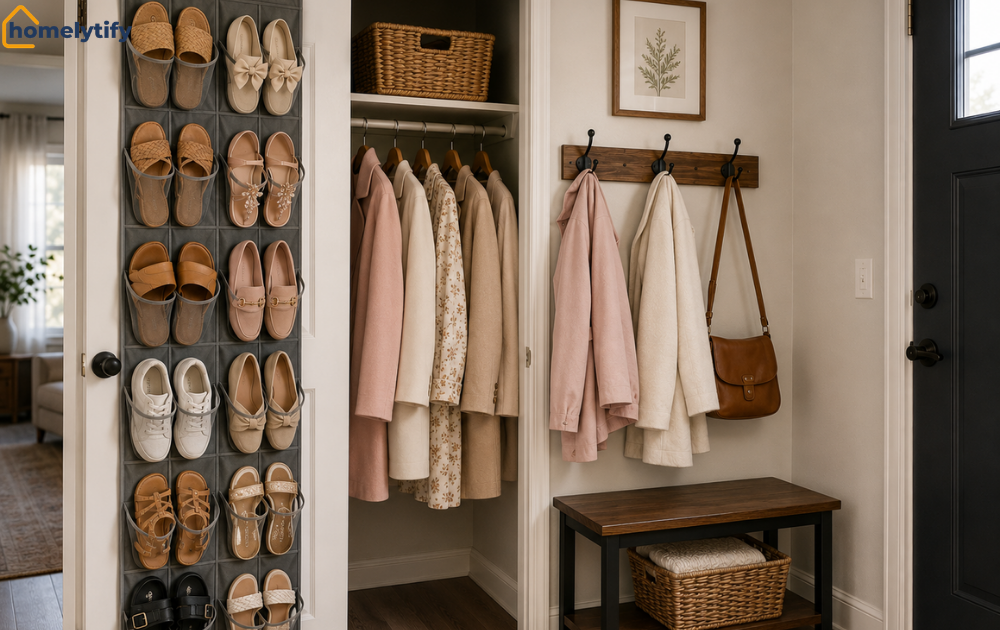
What actually worked was almost embarrassingly simple: I pulled the basket out, mounted a $12 over-the-door shoe organizer on the inside of the coat closet, and added three hooks at the height where coats naturally landed anyway. The clutter didn’t go away because I bought better storage — it went away because I stopped fighting where things wanted to end up.
This isn’t just a personal quirk, either. A 2025 study published in the Journal of Environmental Psychology surveyed 501 adults and found that people who perceived their homes as more cluttered reported lower well-being and life satisfaction, along with higher stress and more negative emotion.
The study looked at overall home clutter, not the entryway specifically, but it lines up with what I’ve seen in practice: the entryway is the one space every household member and every guest walks through daily, so it’s usually the first thing that makes a home feel disorganized, even when the rest of the house is fine. Fixing it tends to have an outsized effect on how the whole home feels, simply because of how often you see it.
The entryway is usually the first space that sets that tone — it’s the room every family member and every guest passes through daily, so a jumbled pile of shoes at the door does more psychological damage per square foot than clutter almost anywhere else in the house.
How to Organize a Small Entryway for Shoes and Coats in 5 Practical Steps
Organizing a small entryway works best when you treat it like a mini system with rules, not a one-time cleanup. These five steps, done in order, will get you from chaos to a workable setup in a single weekend.
Step 1: Measure Before You Buy Anything
Grab a tape measure before you open a single shopping tab. Measure the width of the entry, the depth from wall to opposite wall, and — this part gets skipped constantly — the swing radius of your front door. A bench that’s 18 inches deep looks harmless online, but if your door swings inward past that mark, you’ll be tripping over it every single day.
Write these three numbers down on your phone. You’ll use them every time you’re tempted by a “great deal” that doesn’t actually fit.
Step 2: Zone the Space by Function
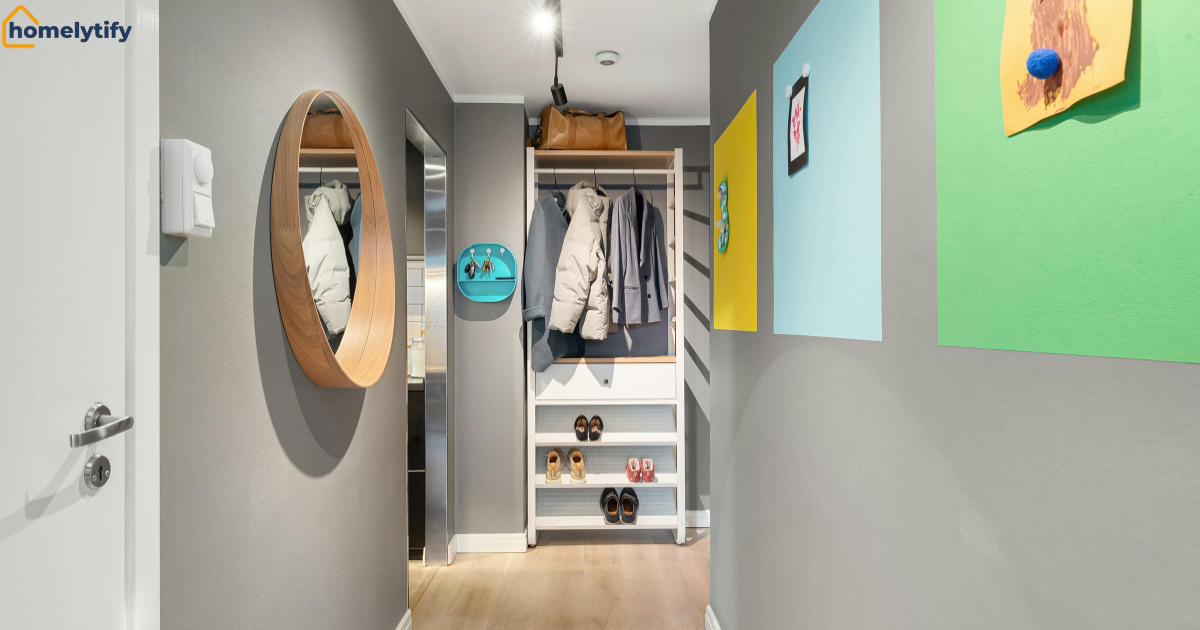
Split your entryway into three invisible zones: a landing zone (keys, mail, sunglasses), a shoe zone (floor-level), and a coat zone (wall-level, above the shoe zone). Even a hallway only 3 feet wide has room for this if you stack the zones vertically rather than spreading them out.
For example, in a narrow apartment hallway, I’ve seen people put a slim 8-inch shoe rack flush against the wall, hooks directly above it at coat height, and a small shelf above the hooks for keys and mail. Three zones, one wall, zero wasted inches.
Step 3: Claim the Wall Before the Floor
This is the biggest shift most people need to make: stop thinking about entryway storage as furniture, and start thinking about it as wall space. Floor space in a small entryway is precious and easy to trip over. Wall space, from about 12 inches off the ground to 6 feet up, is almost always empty.
Wall hooks for coats are the single cheapest, fastest upgrade you can make. A row of five hooks costs less than one throw pillow and instantly gets coats off chairs and doorknobs. Add a wall-mounted shoe rack or a slim shelf below it, and you’ve organized 80% of daily clutter without touching the floor.
Step 4: Pick Furniture That Does Two Jobs
If you do add furniture, make every piece pull double duty. An entryway bench with storage underneath gives you a place to sit while you put shoes on and a hidden spot for the pairs you don’t want on display. A console table with a shelf underneath holds baskets instead of just looking pretty.
Skip anything that only does one thing. A decorative side table with no storage is a missed opportunity in a space this tight.
Step 5: Set a “One In, One Out” Shoe Rule
This is the step almost nobody talks about, and it’s the reason most entryway systems fail within a month. Storage only works if the number of items stays roughly constant. Set a simple household rule: if a new pair of shoes comes in, an old or unworn pair goes to the closet, donation bin, or trash. Same goes for coats at the start of each season.
It sounds almost too simple, but this one habit does more for long-term entryway organization than any product you can buy.
What’s the Best Shoe Storage for a Small Entryway?
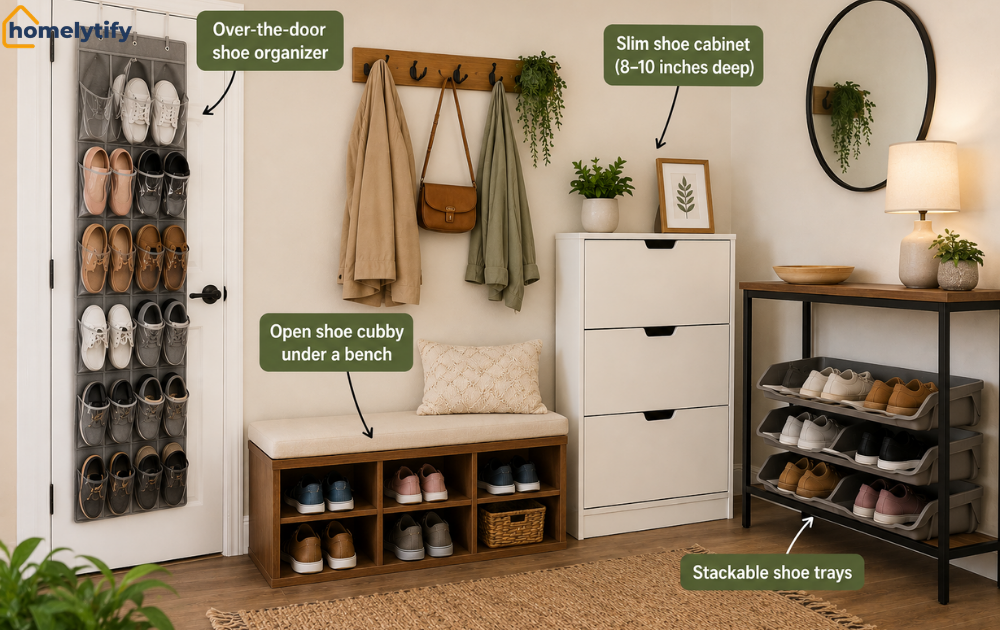
The best shoe storage for a small entryway is a slim, over-the-door or wall-mounted rack that holds 6–12 pairs without taking up floor space, paired with a low bench or open cubby for daily-use shoes. This combination keeps everyday pairs accessible while off-season or extra shoes stay out of the walking path.
A few specific options worth considering, depending on your layout:
- Over-the-door shoe organizer — best for apartments with limited wall space and a rule against drilling holes.
- Slim shoe cabinet (8–10 inches deep) — fits flush against a wall in a hallway without blocking foot traffic.
- Open shoe cubby under a bench — good for households with kids, since there’s no lid to fight with.
- Stackable shoe trays — the cheapest option, and surprisingly effective in a closet or under a console table.
If you’re tight on floor space specifically, prioritize depth over height. A shoe rack that’s only 9–10 inches deep will disappear against a wall, while anything over 12 inches starts to feel like a piece of furniture you have to walk around.
Coat Storage Solutions That Don’t Eat Up Floor Space
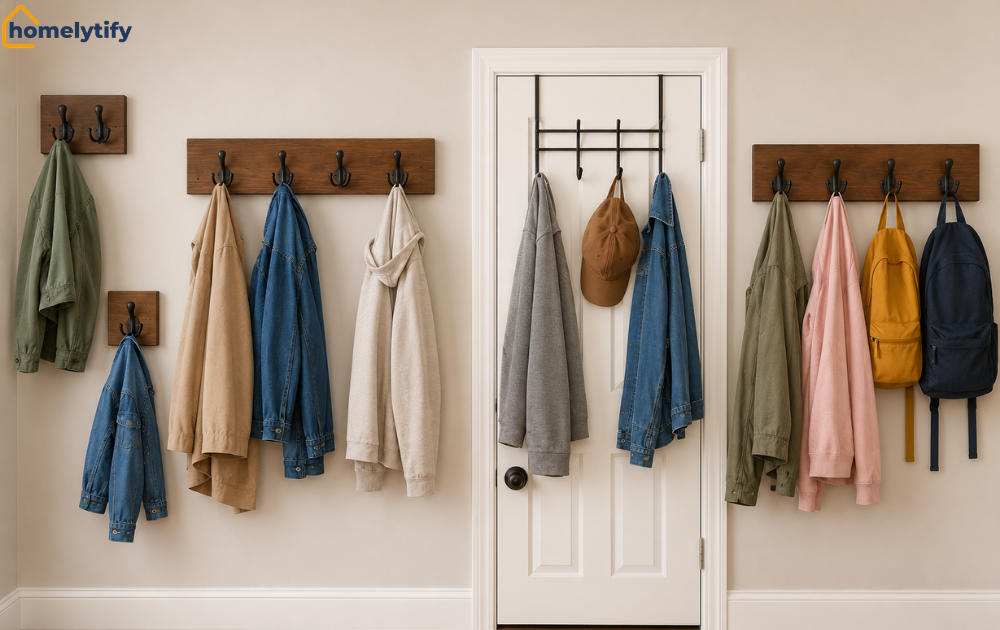
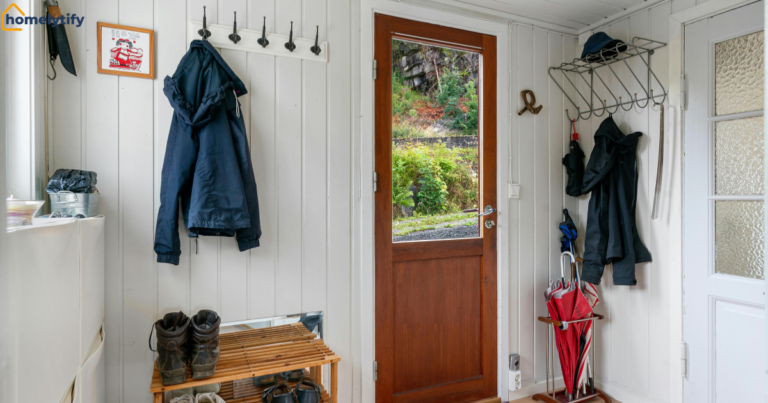
Coats take up more visual space than shoes, mostly because they’re bulky and hang at eye level where you notice clutter first. The fix is almost always vertical: hooks, a slim rod, or a narrow cabinet — never a floor rack that eats a walking room.
A mistake I see constantly: people buy a freestanding coat rack for a small entryway, thinking it’ll “contain” the mess. In reality, a coat rack just moves the pile from the chair to the rack, and it still juts out into the walkway. Wall-mounted hooks or a slim rod solve the same problem without stealing an inch of floor.
Here’s a layout that works in almost any narrow hallway:
- Install hooks at two heights — adult height and kid height, if you have children. This alone stops half the “why is my coat on the floor” complaints.
- Limit hooks to one coat per person for daily wear. Everything else (heavy winter coats, rain jackets used twice a year) belongs in a closet, not the entryway.
- Use a slim over-the-door hook rack if wall space is already claimed by shelving.
- For families, label each hook or use color-coded tags — it sounds fussy, but it cuts down on the “whose coat is this” pile dramatically.
Mudroom Alternatives When You Don’t Have a Mudroom
Most homes built in the last few decades — especially apartments and condos — skip the mudroom entirely, which means you have to build one out of a hallway, a closet, or even a corner. The good news is you don’t need a dedicated room to get mudroom-level organization; you need a dedicated zone.
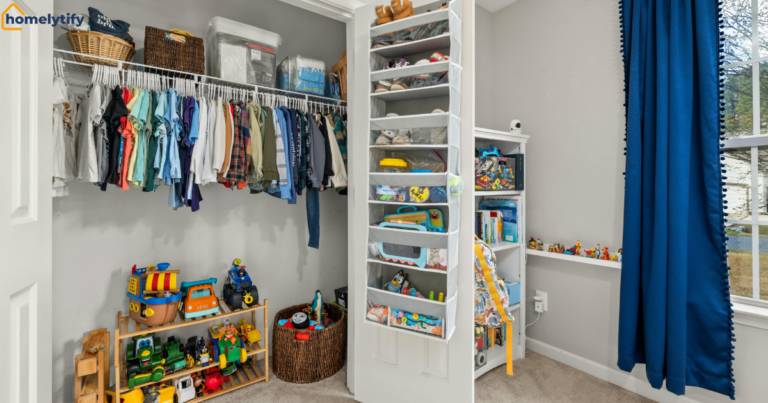
A coat closet near the front door can become a stand-in mudroom fast. Pull out anything that isn’t a coat or a bag, add an over-the-door shoe organizer to the inside of the closet door, and install a second, lower hook rod for kids’ coats and bags. You’ve just created 90% of a mudroom’s function in a space you already own.
If there’s no closet at all, a narrow console table against the wall closest to the door can act as the mudroom substitute — landing zone on top, shoe baskets underneath, hooks on the wall above. It’s not glamorous, but it works, and it’s the setup I’d recommend first for anyone renting an apartment with a straight hallway entry.
Common Mistakes That Sabotage Small Entryway Organization
The biggest mistake is buying storage before measuring the space or counting what actually needs to fit — this leads to furniture that’s too deep, too tall, or holds the wrong number of items. A close second is designing for an empty entryway instead of the one you’ll have on a Tuesday with wet boots and three backpacks.
A few other patterns worth watching for:
- Storing off-season items in the entryway. Ski boots and flip-flops don’t need to live by the front door year-round. Rotate them seasonally into a closet or under-bed bin.
- Choose closed storage for shoes that get used daily. A cabinet with doors looks tidy in photos, but if you have to open a door every single time you leave the house, you’ll eventually stop bothering — and the shoes end up on the floor again.
- Ignoring drawer depth in a bench. Shallow drawers (under 4 inches) are great for slides and flats but useless for boots. Deep drawers (6+ inches) handle boots fine but waste space if you’re only storing sneakers. Mixed households usually need one of each, or a bench with an open cubby for tall items instead of a drawer at all.
- Skipping a “landing zone.” If keys and mail don’t have a spot, they’ll end up on top of your shoe storage, which defeats the purpose.
- Overbuying baskets. Entryway storage baskets are useful for gloves, dog leashes, and umbrellas — not for full-size shoes. A basket stuffed with eight pairs of sneakers just becomes a pile with a lid.
Budget-Friendly Small Space Storage Ideas
You don’t need a custom-built mudroom to fix this. Some of the most effective small space storage ideas cost under $30 and take an hour to install.
- Command hooks for coats and bags — zero drilling, easy to remove if you’re renting.
- A tension rod inside a closet to create an extra hanging bar for kids’ coats.
- Repurposed crates or bins stacked sideways as open shoe cubbies — paint them if you want them to match your decor.
- A $15–20 shoe rack from a big-box store instead of a built-in bench, if budget is the priority over aesthetics.
- Over-the-door organizers, which are consistently the best dollar-for-dollar shoe storage for small entryways since they use dead space most people ignore.
If you can only spend money on one thing, spend it on wall hooks and a slim shoe rack. Those two items solve roughly 80% of daily entryway clutter, and everything else is a nice-to-have.
A 5-Minute Weekly Routine to Keep It From Sliding Back Into Chaos
Organizing the entryway once is easy. Keeping it that way is where most systems quietly fall apart around week three. A short weekly reset stops that from happening.
- Sunday night, do a 5-minute sweep. Return anything that’s wandered off — jackets on chairs, shoes in the middle of the floor — to its assigned spot.
- Check the landing zone. Toss junk mail, file anything important, and clear loose change or receipts.
- Do a seasonal swap every few months. Move out-of-season coats and shoes to a closet or storage bin to free up hooks and rack space.
- Ask one question: did anything not have a spot this week? If something keeps ending up on the floor, it needs its own hook, bin, or shelf — not a lecture to the family about being neater.
This routine works because it treats organization as maintenance, not a one-time event. The system you built in the five steps above only holds up if you spend five minutes a week defending it.
Conclusion
A small entryway isn’t a design problem — it’s a traffic problem, and traffic problems get solved with zones, not just storage bins. Measure first, build up the wall before you fill the floor, and give every coat and shoe a specific home instead of a general area.
Do that, and even a narrow hallway can handle a busy household without turning into a shoe pile by Wednesday. Pick one step from this guide — probably the wall hooks — and do it this weekend. You’ll notice the difference before you even finish the rest.
Frequently Asked Questions
How do I organize shoes in a small entryway with no closet?
Use a slim wall-mounted rack or over-the-door organizer instead of a closet. Pair it with a low bench or open cubby for daily shoes, keeping off-season pairs stored elsewhere.
What’s the best way to store coats without a coat closet?
Install wall hooks at two heights (adult and child) directly by the door. Limit hooks to daily-wear coats only; store bulky seasonal coats in a bedroom closet.
How many pairs of shoes should I keep in the entryway?
Stick to what’s worn weekly — usually 2–4 pairs per person. Everything else belongs in a closet or under-bed storage to prevent floor clutter.
Are entryway benches worth it in a small space?
Yes, if the bench includes storage (drawers, cubbies, or baskets underneath). A bench with no storage just takes up floor space without solving the clutter problem.
How often should I declutter my entryway?
Do a 5-minute tidy weekly and a full declutter each season change. This keeps the system from quietly filling back up over a few months.