
How to Organize Your Home (Complete Beginner’s Guide)
That pile on the dining table has been there so long that you’ve stopped seeing it as you try to organize your home. The closet door barely closes. You’ve lost your keys in your own home three times this week.
You don’t have an organizational personality problem. You have a system problem, or more accurately, a missing system problem.
This guide walks you through the complete process of organizing your home from scratch. It shows you how to start without feeling paralyzed and how to declutter without making twelve impossible decisions.
You’ll also learn how to set up room-by-room storage that works with your real life. Finally, it helps you build simple daily habits that keep things from quietly falling apart again.
No expensive products required. No weekend marathon sessions. Just a clear, step-by-step process that works whether you’re a first-time homeowner or a busy parent. It also helps if you’ve tried to get organized before and watched it unravel.
Step-by-Step Guide to Organize Your Home for Beginners
The framework is five stages: assess, subtract, assign, contain, and maintain.
Everything else in this guide is an application of one of these stages. People who skip the first two, assess and subtract, and jump straight to buying matching baskets end up with the same clutter in nicer containers. The order matters.
Stage 1: Assess. Walk through your home and observe honestly. Where does stuff pile up? Where do you spend the most time searching for things? Which areas feel heaviest? Don’t touch anything yet; just understand the problem.
Stage 2: Subtract. Reduce your total volume of possessions before organizing what remains. This is where most of the real work happens, and it costs nothing.
Stage 3: Assign. Give every remaining item a specific, logical home, not a general area, but an actual spot it reliably returns to.
Stage 4: Contain. Use storage to make those homes functional and easy to maintain. This is when containers, bins, and hooks become useful.
Stage 5: Maintain. Build simple daily habits that keep the system working without turning your home into a permanent project.
Work through these stages one zone at a time. Pick one area, a single drawer, one cabinet, one shelf, finish it, then move on. Partial completions are worse than not starting because they leave your home disrupted without the payoff.
Why Do Most People Fail at Home Organization?
Most people fail because they start in the middle.
They buy storage bins before decluttering. They organize a drawer and call it progress while ignoring the fact that their home holds 40% more than it should.
Or they do a full weekend overhaul, exhaust themselves, and watch everything drift back within a month. This happens because there’s no maintenance habit attached to the effort.
There’s also a timing problem. People wait until they feel motivated to start. Motivation is unreliable, especially for tasks without a deadline. The organization doesn’t need inspiration. It needs a clear first action, small enough that you’ll actually do it today.
The deeper issue is thinking of the organization as a one-time event. It’s not. Stuff enters your home constantly: purchases, gifts, mail, kids’ school projects, things people leave behind. Without an ongoing system for what leaves your home, volume grows regardless of how well you initially organize.
Fix the process, not your attitude toward clutter, and the results follow.
How Should You Prepare Your Home Before Organizing?
Before you touch a single shelf, do three things.
First, clear a staging area. Pick a table, a section of floor, or an empty surface where you can temporarily hold items while sorting. Without a staging area, you’ll shuffle things from pile to pile without making real decisions.
Second, get three containers. Label them: donate, trash, belong elsewhere. Cardboard boxes work perfectly. Don’t buy anything yet, no bins, no drawer organizers, nothing. Those come after you know what you’re actually keeping and in what volumes.
Third, define your session scope before you start. Not “the kitchen.” One kitchen drawer. Not “the bedroom.” The nightstand and the area around it. A complete scope prevents the half-finished disaster that leaves your home more chaotic than before you started.
One other thing worth doing: take a photo of each area before you touch it. When you finish, the comparison is satisfying in a way that keeps you going. It sounds small, but it works
Decluttering Your Home the Right Way Without Overthinking
Decluttering fails when it becomes an emotional exercise. The faster approach is functional: Does this item earn its place?
Not whether you love it. Not whether you might theoretically need it someday. Whether it actually gets used, has a logical home, and isn’t one of three duplicates you own without needing three.
Start with the obvious layer. Every space has items that are clearly trash (expired, broken, empty), clearly in the wrong room, or clearly unused without any specific future need. Remove those first without deliberation. This alone clears 20–30% of most spaces.
Then work through the gray zone. For anything you’re genuinely unsure about, the one-year rule is your filter: if you haven’t used it in the past 12 months and can’t name a specific upcoming occasion you’ll need it, it goes. Hypothetical future uses don’t count.
Handle sentimental items last. They’re the slowest category and the most draining. Give them a defined physical container: one shoebox and one small bin. When it’s full, something comes out before something goes in. Sentimentality is fine; letting it spread unchecked across your entire home is where it becomes a problem.
Here’s where most people get stuck: they try to make every decision perfectly. You don’t need to. A reasonable decision made today is worth more than a perfect decision deferred indefinitely
Sorting Items by Category for Better Control

Once you’ve cleared out what doesn’t belong, sort what remains by category, not by room.
This is the step most home organization guides skip, and it’s one of the most useful things you can do. Pull together every item in the same category from across your whole home: all the scissors, all the tape, all the USB cables, all the cleaning products, all the pens. See the full inventory in one place.
Two things happen. First, you discover you own multiples you didn’t know you had. Second, letting go of duplicates becomes easy when you can see ten items in front of you and know you only need two.
Category sorting also logically shapes your storage decisions. When you know you own exactly four baking tools, you size the storage for four. When you discover you have seven charging cables and use two, you reduce before you organize.
This step takes more time up front, but saves significant time and confusion later.
How to Group Similar Items for Easier Access
Store things where you use them, not where they first got unpacked.
Most homes violate this constantly. The scissors are in the office, but are always needed in the kitchen. The phone charger lives on the nightstand, but the phone charges in the living room.
The spare batteries are in the junk drawer, but the remote is in the bedroom. These mismatches create the daily friction of living in an unorganized space.
Rethink every item’s location based on where it’s actually used. Then organize by frequency:
Daily-use items at eye level, front of shelves, accessible with one motion
Weekly-use items one step back, accessible but not taking prime real estate
Rarely-used items: high cabinets, back of shelves, under beds
This one adjustment, organizing by frequency of use, not just by category, makes a home dramatically easier to live in. Items you reach for every day shouldn’t require opening two cabinets and moving three things.
Smart Storage Solutions That Actually Save Space
Storage products don’t create organization. They maintain organization. That distinction changes how and when you buy them.
Buy storage only after you’ve decluttered and know exactly what you’re storing. Buy to fit your actual inventory. Otherwise, you’re buying containers for clutter you haven’t dealt with yet.
That said, a few solutions consistently earn their place:
Drawer dividers are the highest return on investment for most homes. A drawer without dividers becomes unsorted within days of being organized. Even improvised dividers, cardboard box lids cut to fit, work well.
Over-the-door organizers turn dead space behind any door into functional storage. Pantry door, bathroom door, closet door, bedroom door. Use them for toiletries, cleaning supplies, snacks, accessories, or small tools.
Tension rods under sinks let you hang spray bottles by the neck, immediately creating a second level of undersink space for less than $5.
Shelf risers inside cabinets create a second tier where most people are only using the floor of the cabinet. Doubles usable cabinet space in 10 minutes.
Flat underbed bins convert the chaos of underbed storage into intentional, accessible space for out-of-season clothes, extra bedding, or shoes.
The rule: don’t buy anything until you’ve completed the subtract and assign stages. Then buy the minimum needed to make your assigned homes functional.
Organizing Each Room Using a System-Based Approach
A system for a room means every item has an assigned home, and that home makes intuitive sense. Returning something should take under 10 seconds without thinking.
If it takes more effort to return something to its home than to leave it on the counter, you’ll leave it on the counter. The system fails on friction, not intention.
Design storage around your actual habits, not your ideal habits. You don’t hang your coat neatly after a long day, so maybe the real solution is a hook near the door, not a closet.
You don’t sort mail immediately, so maybe the real solution is a single tray that gets sorted once a week, not an elaborate filing system.
Work with how you actually behave, then make small adjustments where the stakes justify it. Designing for your ideal self produces systems your real self won’t maintain.
Kitchen Organization Strategies for Daily Efficiency
The kitchen is the hardest room in most homes because it holds the most categories of items, operates under daily pressure, and every surface becomes a default landing zone.
Clear the counter completely first. Every appliance, utensil holder, and container is off. Then, only return what gets used three or more times a week. The coffee maker earns its spot. The blender you use monthly doesn’t. Counter space is your most valuable kitchen real estate. Defend it.
Organize a cooking zone. Group everything for morning routines together: mugs, bowls, coffee supplies. Group cooking tools together: pots, pans, spatulas, and cutting boards.
Group baking supplies. Most kitchens are organized by where things fit, not by how they’re used, and that’s the source of most daily kitchen frustration.
Inside cabinet doors are almost always wasted space. A tension rod holds pot lids vertically. A wire rack holds cutting boards. Adhesive hooks hold measuring cups. None of these costs more than a few dollars, and each one returns meaningful storage.
One insight that rarely appears in kitchen organization advice: most households own too many dishes for their actual size. Two people don’t need eight sets of everything. Cutting dishware by 30–40% opens cabinet space with zero cost and zero storage product required.
Bedroom Organization Methods for Better Space Management
The bedroom’s job is to support rest. When it doubles as a laundry staging area, a home office, and a general overflow zone, both sleep quality and organization suffer.
Underbed storage is the most underused space in most bedrooms. Flat bins with lids for out-of-season clothes, extra bedding, or shoes turn dead space into meaningful storage. Measure the clearance first; bin heights vary widely.
The closet audit. Pull everything out. Group by type. Be honest about what you wear. Anything unworn in the past 12 months without a specific upcoming occasion goes.
Hang the remaining clothes with all hangers facing the same direction. After three months, anything still facing the original direction hasn’t been touched; that’s your next round of donations.
Hooks on the back of the bedroom door handle the things most bedroom organization systems miss: tomorrow’s outfit, the gym bag, the robe, the daily bag. This single addition typically eliminates the chair pile that almost every bedroom develops.
The nightstand is not a storage unit. It holds what you need for sleep and the first five minutes of your morning. Phone, book, water, one or two other things. A small tray keeps it visually contained. Beyond five items, it’s becoming clutter.
Bathroom Organization Hacks for Small Areas
Before buying a single organizer, do one thing: throw away everything expired, empty, or unused in the last six months. Most people clear 25–40% of their bathroom storage this way at no cost, in under 20 minutes.
Overtoilet shelving (freestanding, no drilling required) adds three levels of storage in a footprint that’s currently empty. This one piece of furniture solves the storage problem in most small bathrooms for under $40.
Tension rod under the sink for spray bottles, hang them by the neck, keep the floor clear for bulkier items. Doubles usable space under the sink for $3–8.
Magnetic strips on the inside of cabinet doors hold bobby pins, tweezers, nail clippers, and small metal items that otherwise disappear into drawer chaos.
Surfaces should be minimal. A bathroom counter with three items looks clean and functions more calmly than one with twelve. Daily-use items only; everything else lives inside a cabinet.
Living Room Organization for a Clean and Functional Space
The living room collects clutter by design. It’s the landing zone when people come home, where they relax and where kids play. It’s also where things get set down “just for a second” and stay for three weeks.
The solution isn’t discipline; it’s giving the daily drift somewhere to go.
A lidded basket or bin near the main seating area handles remotes, charging cables, current reading, and whatever else cycles through daily. This contains the clutter without pretending it doesn’t exist, which is honest and sustainable.
Limit flat surfaces. Every horizontal surface in a living room will be covered in stuff within days. A coffee table, a side table, and a shelf each become a landing pad. Fewer surfaces mean fewer places for drift to accumulate.
For families with young kids: one large, easy-access bin for living room toys is the only system that reliably works.
Kids won’t use elaborate sorting systems, no matter how clearly labeled. A single “throw it in here” bin they can use without help that they’ll actually use.
Vertical Storage Ideas to Maximize Small Spaces
Floor space is fixed. Wall space is not.
Most people only use vertical space where it already exists, such as kitchen cabinets and closet shelving, and leave the rest of their walls doing nothing. This is one of the biggest missed opportunities in a small space organization.
Above the doorways is almost always dead space. A narrow floating shelf above a door frame holds books, baskets, or items you access infrequently. Zero floor footprint, meaningful storage.
Pegboards in kitchens and offices keep tools and supplies on the wall and off surfaces. Reconfigurable, inexpensive, and entirely damage-free if you use the right wall anchors.
Ladder shelves lean against any wall without drilling, creating five levels of storage in a footprint smaller than an armchair. They move with you if you’re renting.
Wall-mounted hooks and rails in hallways, entryways, and kitchens turn linear wall space into active storage for bags, coats, cooking tools, and accessories.
The principle governing vertical storage: the least-used items go highest. If reaching something requires effort, it had better be seasonal or rarely needed. Daily-use items stay at eye level and below, always.
Budget-Friendly Storage Ideas Using Everyday Items
Before spending money, look at what you already own that could serve a storage function and keep your budget intact.
Shoeboxes become drawer organizers when cut to fit, or shelf dividers when stacked sideways. They can also be used as labeled bins for cables, receipts, and other small miscellaneous items.
Cover with contact paper or leftover wrapping paper to make them look intentional.
Mason jars you already own work for cotton rounds and swabs in the bathroom, pens and scissors on a desk, or cooking utensils in the kitchen.
Uniform containers create visual consistency that makes any shelf look more organized. Even when the volume of items stays the same, the space instantly feels more structured.
Gift boxes with lids are free drawer organizers. Three or four similarly sized boxes in a drawer keep categories separated cleanly.
Cardboard tubes from paper towels rolled inside a drawer hold charging cables without tangles. Free, effective, invisible.
Tension rods cost $3–8 and perform at least five different jobs: undersink bottle storage, cabinet door organization, drawer dividers, closet partition rods, and shower curtain rods for hanging bathroom accessories.
The mindset shift: before any purchase, spend two minutes asking what you already own that could do the same job.
How Do You Maintain an Organized Home Long Term?
Once your storage is set up and working, the only thing that determines whether it holds is what you do daily. Getting organized is the easy part. Staying organized is where most projects quietly fail.
It’s not because the system was bad, but because there was no maintenance plan.
Maintenance isn’t a cleaning event. It’s a series of small, regular actions that catch drift before it becomes chaos.
The Daily Reset
Every evening, spend 10 minutes clearing surfaces, handling dishes, and returning anything out of place to its home. This is not a deep clean; it’s a reset. Ten consistent minutes prevent two hours of weekend cleanup.
One In, One Out
Every time something new enters your home, a purchase, a gift, a free item, something else leaves. This keeps total volume stable without requiring periodic overhauls.
A Weekly Five-Minute Audit
Pick one zone that tends to accumulate drift: the junk drawer, the entryway, or the bathroom cabinet.
Spend five minutes returning it to baseline. Rotate zones each week. Nothing ever gets bad enough to require a major session.
A Designated Outbox
A basket near the front door for things leaving your home: donations ready to drop off, items to return, and things going to neighbors. When it fills up, it goes. This creates a regular physical exit point and prevents the “I’ll deal with it later” delay that keeps clutter inside.
Common Mistakes That Make Homes More Cluttered
Buying Storage Before Decluttering
This is the most expensive and most common mistake. Bins and baskets don’t solve a volume problem; they just give clutter a nicer address. Always reduce first, contain second.
Items Without A Defined Home
If something doesn’t have a specific spot it reliably returns to, it floats. Floating items become clutter within days. “Somewhere in the kitchen” isn’t a home. The third drawer on the left is.
Organizing For Looks Over Function
Open shelving with curated items looks beautiful in design content. In a real home, its surfaces need constant dusting and rearranging. Closed storage is almost always more functional for daily life, especially with kids or pets.
Ignoring The Entry Point
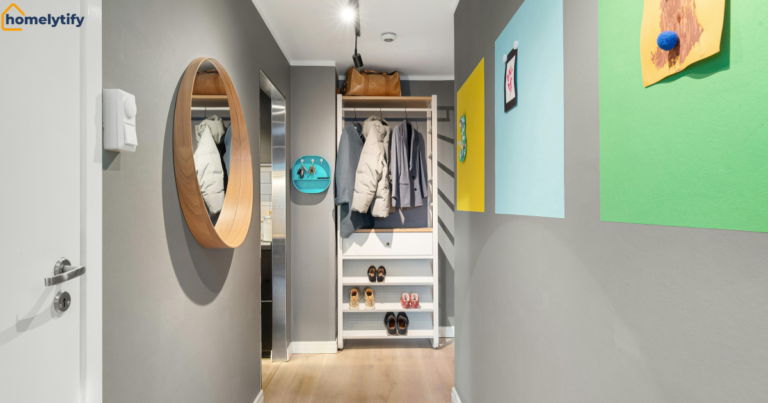
The first two feet inside your front door determine the organization of the rest of your home. Without hooks, a tray for keys, and a spot for shoes and bags, everything that enters becomes a problem deferred. Fix the entryway first; its effect is disproportionate to its size.
Treating The Organization As A One-Time Event
A home stays organized because someone maintains it, not because it was once perfectly arranged. The initial setup matters, but the daily habits matter more. One without the other doesn’t hold.
Simple Daily Habits That Keep Your Home Organized
Habits are more reliable than motivation. Here are the ones that actually hold:
Don’t Put It Down, Put It Away
Every time you’re about to leave something on a surface instead of its home, pause for a moment. Then take the extra ten seconds and put it where it belongs.
Practiced consistently, this prevents the majority of daily drift.
Process Mail The Moment It Arrives
Mail left unprocessed becomes paper clutter within 48 hours. Sort it immediately: recycling, action items to one tray, everything else filed or handled. A single inbox tray and a weekly ten-minute session beat a growing pile.
Make The Bed
This is less about the bed itself and more about its psychological effect. A made bed makes a bedroom feel organized, regardless of what else is happening. It sets a tone and creates a subtle pull to keep the surrounding environment consistent.
End-Of-Day Kitchen Reset
Dishes done, counters clear, everything back in its place. It takes less than ten minutes and means you start every morning without yesterday’s chaos.
One Load Of Laundry, Start To Finish
The organizational problem in most bedrooms isn’t the closet. It’s the in-between state of clean laundry that never quite gets put away.
One load fully handled, every day or two, prevents the pile that becomes a permanent furniture feature.
Creating a Personal Organization System That Works for You
A system that actually holds has three qualities. It’s easier to use than to skip, and it makes sense to everyone in the household. It also forgives an occasional bad day without collapsing.
To design yours, look at your actual patterns. Where does clutter consistently accumulate? That gap reveals where your current system fails. What storage are you using correctly without thinking? Build from there. What have you tried and abandoned? Avoid repeating it regardless of how logical it looks on paper.
Ask everyone in your household one question: “Where do you naturally look for X?” Their answer tells you where X should actually live. A system built around real behavior survives. One built around ideal behavior rarely does.
The other element most guides ignore: your system should work for your worst day, not your best. If it requires full energy and complete attention to maintain, it will break down. It only takes one moment when you’re sick, overwhelmed, or just exhausted.
In most cases I’ve seen, people design systems that only function when they are fully motivated. Then they blame themselves when it falls apart later. Design for your most depleted self, and it’ll work on your best days too.
Adapting Your Organization System When Life Changes
Most guides treat home organization as a static achievement. It isn’t, life changes, and your system needs to change with it, or it stops working quietly. You won’t notice until the drift has been going on for months.
A new baby changes your entire storage logic. Valuables move high, floor space becomes active territory, and fast-access storage near changing and feeding zones becomes critical.
A child aging from toddler to school age changes what they can access and use independently. A work-from-home arrangement turns shared space into an office with completely different storage and surface needs.
The rule: any significant life change is a trigger for a deliberate home organization review. Don’t wait for the chaos to announce itself. Build in a two-hour reassessment every six months as standard practice. It catches slow drift before it requires a full overhaul.
What usually happens is people assume their old system will stretch to fit new circumstances, but I’ve seen that it quietly breaks long before it becomes obvious.
If someone moves in, renegotiate the whole system; don’t just adjust it. More people mean more items and more competing habits. The old system was built for different inputs.
Practical Home Organization Tips for Busy People
Busy people need low-friction systems, things that work in 5–10 minutes without requiring a fully cleared schedule.
Timebox Every Session
Set a timer for 15 or 20 minutes. Work until it goes off. Stop. Consistent short sessions produce better results than rare marathon efforts. They don’t require recovery time and don’t create the “I’ll do it when I have a full day” delay. That delay is exactly why nothing gets done.
Keep A Donation Bag Accessible At All Times
A bag in the closet or near the front door means you can drop items in as you notice them, no scheduling required. When it’s full, it leaves.
This passive decluttering habit keeps volume in check without dedicated effort.
Use Dead Time
Waiting for water to boil? Clear a drawer for three minutes. On a call that doesn’t need your full attention? Put away the laundry. Organization doesn’t require dedicated sessions. It can happen in fragments throughout the day and still accumulate real progress.
The Two-Minute Rule
If returning something to its home or dealing with an item takes under two minutes, do it now. Don’t create a future task out of something you can close immediately.
Batch Similar Tasks
Process all the mail at once. Put away all the laundry at once. Return everything misplaced in the living room to its correct room in one loop. Batching reduces the mental cost of task switching and makes each action faster.
Conclusion
The organized home isn’t a finished state; it’s an ongoing relationship between you, the stuff you own, and the systems that keep both manageable.
What actually makes a home feel organized isn’t matching containers or perfectly labeled shelves. It’s a reduced volume of possessions. Everything that remains has a logical home. A few daily habits keep the system running automatically.
You don’t need to do this perfectly or all at once. Start with one drawer. Finish it. Notice how it feels. Then pick the next zone.
The gap between a chaotic home and a functional one is rarely about space or money. It’s about decision-making, making them clear, and making them once. Then you build simple systems so you don’t have to keep making those decisions again.
Start smaller than you think you need to. Finish what you start. Build from there.
Frequently Asked Questions
Where should I start organizing my home if I don’t know where to begin?
Start with one small, contained space, a single drawer, one shelf, or the nightstand, not an entire room. Complete it fully before moving to the next zone. A finished drawer builds momentum; a half-finished bedroom adds to the chaos.
What’s the fastest way to declutter without getting overwhelmed?
Remove the obvious layer first: trash, misplaced items, and clearly unused things — without deliberating over each one. This alone typically clears 20–30% of a space in minutes and makes the harder decisions that follow much easier.
Should I buy storage bins before or after decluttering?
After. Buying storage first is the most common organizational mistake — it just gives clutter a nicer container instead of reducing it. Declutter and assign homes first, then buy only what’s needed to fit your actual, reduced inventory.
How do I keep my home organized instead of it going back to clutter after a few weeks?
Attach small daily habits to the setup: a 10-minute evening reset, a one-in-one-out rule for new items, and a five-minute weekly audit of one drift-prone zone. Most organizational projects fail at maintenance, not at the initial start.
How often should I reassess my home organization system?
Every six months as a standing habit, and immediately after any major life change — a new baby, a move, a child starting school, someone moving in or out. Systems built for old circumstances quietly stop working long before the clutter becomes obvious.

One Comment