How to Organize a Small Kitchen With No Pantry: Easy Storage Solutions
If you’ve ever opened a cabinet and had a box of pasta fall on your foot, you already know what it’s like to figure out how to organize a small kitchen with no pantry. There’s no extra room, no walk-in closet for canned goods, just cabinets, a few drawers, and whatever wall space you haven’t already given up on.
The good news is that a pantry isn’t actually what makes a kitchen functional. Structure is. In this guide, you’ll get easy storage solutions that work in real apartments and small homes, plus the mistakes that quietly undo most people’s organizing efforts.
Why a Missing Pantry Isn’t Actually the Problem
Here’s where most people get stuck: they treat “no pantry” as the reason their kitchen feels chaotic. It’s usually not. The real issue is that food, cookware, and appliances are all competing for the same few cabinets with no system behind them.
I’ve lived in three apartments with zero pantry space, and every single one got manageable once I stopped trying to recreate a pantry and started treating my whole kitchen as one. That means every cabinet, drawer, and blank wall gets a job, instead of becoming a catch-all for whatever doesn’t have a home yet.
My last apartment had a single wall of upper and lower cabinets, four drawers, and nothing else. No coat closet, no hallway nook. The first time around, I bought a bunch of matching bins before I’d even emptied a cabinet, and half of them sat empty in a corner for two months because they were the wrong size for what I actually owned.
The second time, I emptied everything first and only bought organizers once I could see exactly what needed a home. That one change, in order, made a bigger difference than any product I bought.
Start With a Real Declutter, Not Just a Rearrange
Before you buy a single bin, empty your cabinets. Not “look through them,” actually take everything out and put it on the counter or table. You’ll almost always find expired spices, duplicate can openers, and gadgets you forgot you owned.
This step matters more than any storage product you’ll buy later. A tiny kitchen with 20 percent less stuff in it will always outperform a bigger one stuffed to the edges. Toss anything expired, donate the appliances you haven’t touched in a year, and only put back what you actually cook with.
Turn Your Cabinets Into a Working Pantry System
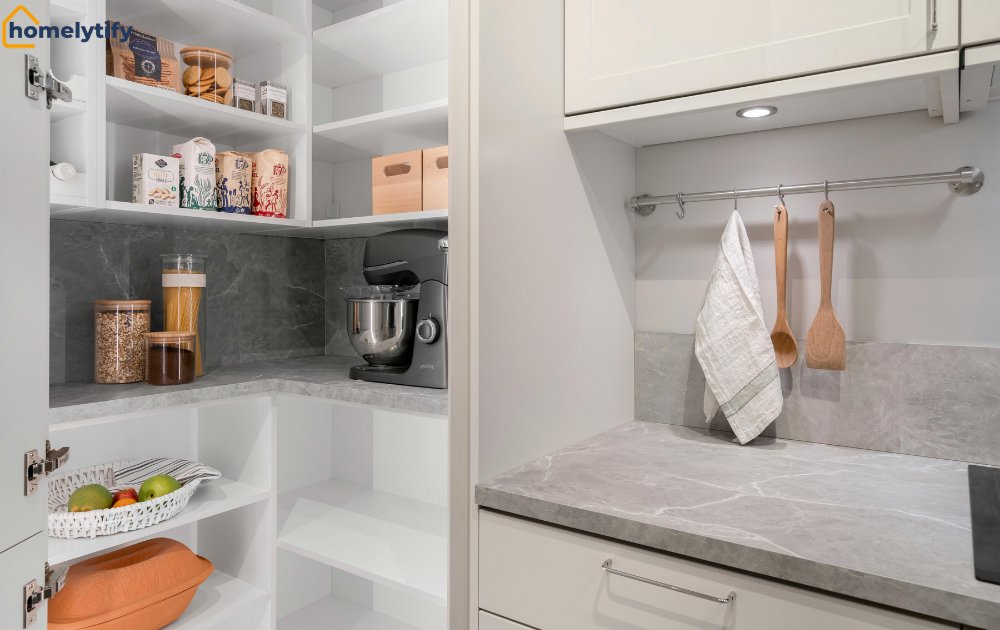
Your cabinets are your pantry now, so they need to be organized like one. That means grouping by category and giving everything a fixed spot instead of shoving items wherever there’s a gap. This isn’t just personal opinion, either.
Houzz’s 2026 U.S. Kitchen Trends Study, based on a survey of nearly 1,800 homeowners, found that 94% of renovating homeowners now build specialty storage features into their cabinetry, with dedicated spice storage (41%) and cutlery storage (38%) among the most common additions. You can read the full study here: Houzz 2026 U.S. Kitchen Trends Study. Zoned cabinets, labeled bins, and an organized drawer do the same job on a much smaller, no-renovation scale.
Zone Your Cabinets by How Often You Reach for Something
Put daily items, oils, coffee, cereal — at eye level or in the front. Backup stock and bulk buys go higher up or toward the back. This sounds obvious, but almost nobody does it, and it’s the single biggest reason cabinets feel disorganized within a week of being tidied.
Risers and Stackable Bins Fix Wasted Vertical Space
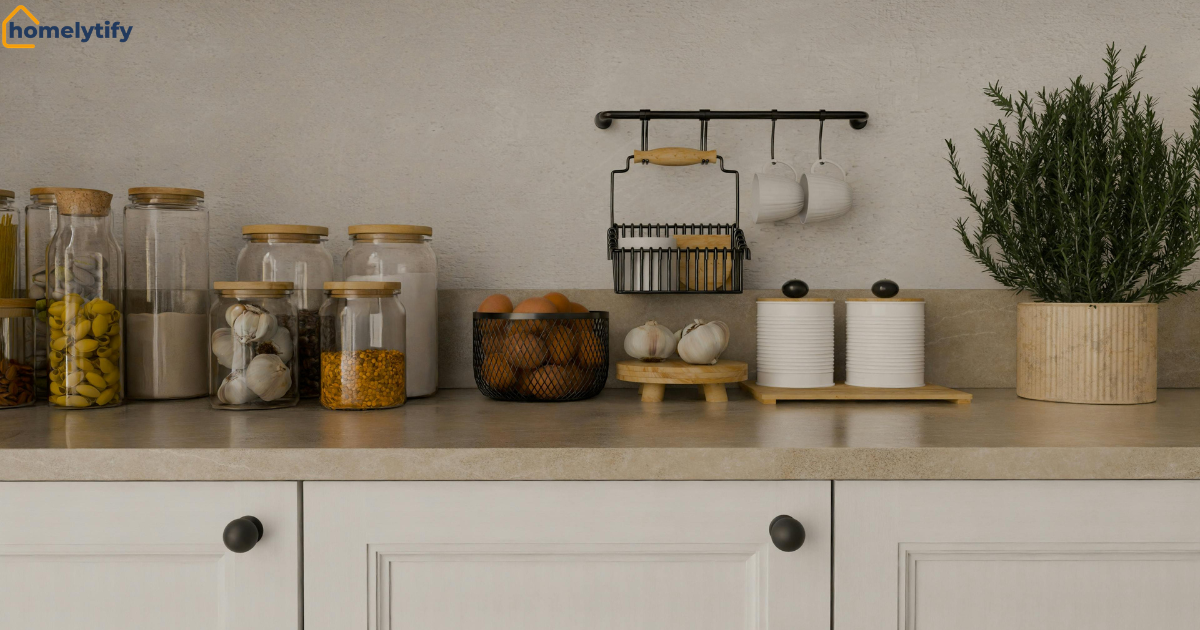
Most cabinet shelves have a foot of dead air above the cans and boxes. A simple two-tier riser or stackable bin set doubles usable space without any installation. I use clear bins labeled “baking,” “breakfast,” and “snacks” so I’m not digging through a wall of boxes to find one thing. A $22 two-tier riser was one of the cheapest changes I made in my own kitchen, and it’s still the one I’d buy first if I were starting over.
Make Your Drawers Work Harder Than Just Holding Silverware
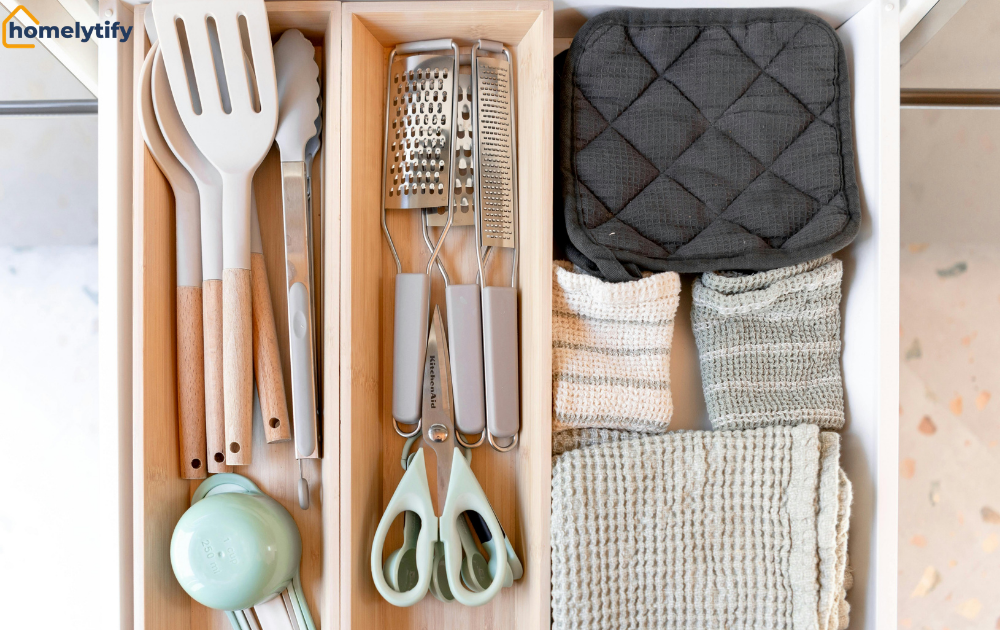
Drawers are underrated in small kitchen organization ideas because people default to using them only for cutlery. A shallow drawer near your stove can hold spice jars lying flat with labels facing up, which is faster to scan than a spinning rack.
Add adjustable dividers to keep things from sliding into one messy pile every time you open it. If you’re tight on cabinet space, one drawer can even serve as mini dry-goods storage with flat, stackable containers instead of tall boxes.
Claim Your Walls With Vertical Kitchen Storage
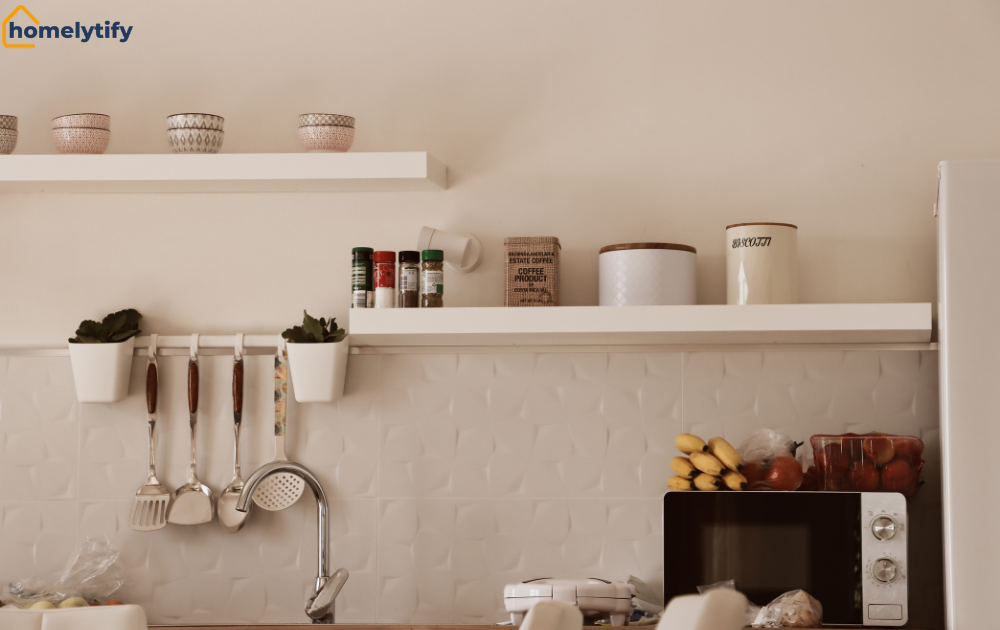
This is where things usually fall apart for people in tiny kitchens: they stop looking at walls as storage. Vertical kitchen storage is often the biggest untapped space in a no-pantry layout, and it doesn’t require a renovation.
Pegboards and Rail Systems for Pots and Tools
A pegboard mounted above your counter or stove can hold pots, utensils, and even small baskets on hooks. It looks intentional, not cluttered.
Rail systems with S-hooks do something similar for mugs, ladles, and measuring cups. I mounted mine above the stove for pots I used almost daily, and it freed up an entire lower cabinet I used to dig through every night.
No-Drill Floating Shelves for Renters
If you can’t drill into walls, tension-mounted shelves or adhesive-strip shelves hold surprising weight (check the label — most handle 10 to 20 pounds per shelf) and come down without damage. Use them for items you reach for often, like glasses or spice jars, so the display stays functional instead of just decorative clutter.
Don’t Ignore the Space Under Your Sink
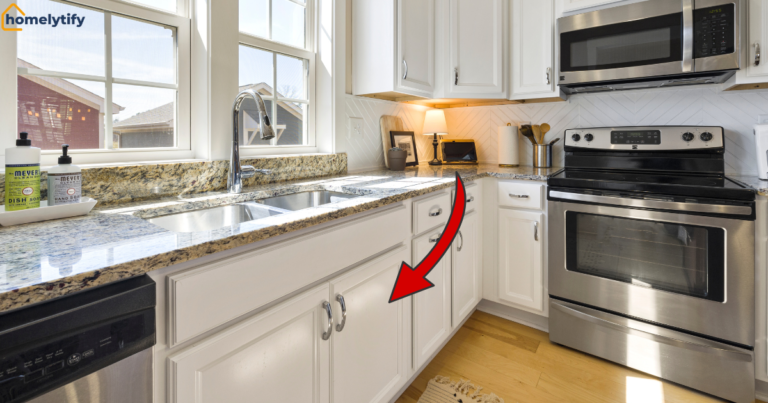
The area under the sink is usually wasted on a tangle of cleaning bottles nobody can find. A tension rod mounted a few inches down creates a spot to hang spray bottles by their trigger handles, instantly freeing the floor of the cabinet for bins or a small trash can.
Add an over-the-pipe shelf if there’s a gap around the plumbing. It’s a small addition, but in a kitchen with no separate storage room, every reclaimed inch counts.
Over-the-Door Storage: Most People Set Up Wrong
Over-the-door kitchen storage gets recommended constantly, but most people hang it on a pantry door they don’t have, then give up. It works just as well on a cabinet door, especially under the sink or next to the stove.
The mistake is loading it with heavy cans, which makes the door sag and the hooks bend over time. Reserve it for lighter items: foil, plastic wrap, small spice packets, or dish towels. Save the cans for a shelf that can actually bear the weight.
A Rolling Cart Can Work as a Fake Pantry
A narrow rolling cart tucked into a corner or the gap beside your fridge functions like a mini pantry on wheels. Three tiers are usually enough for canned goods, snacks, and baking supplies, and you can roll it wherever you’re cooking that day.
I’ll be honest, this was the single upgrade that made the biggest difference in my last apartment. A $38 three-tier cart tucked into the four-inch gap next to my fridge gave me back an entire cabinet that used to be crammed with cans.
What If Your Cabinets Are Already Full?
This is the question that comes up most often once people have tried the obvious fixes. If cabinets, drawers, and walls are maxed out, look sideways instead of up. A narrow bookshelf or bar cart in the dining area can hold dry goods in labeled jars, styled next to plates or cookbooks so it doesn’t look like an accident.
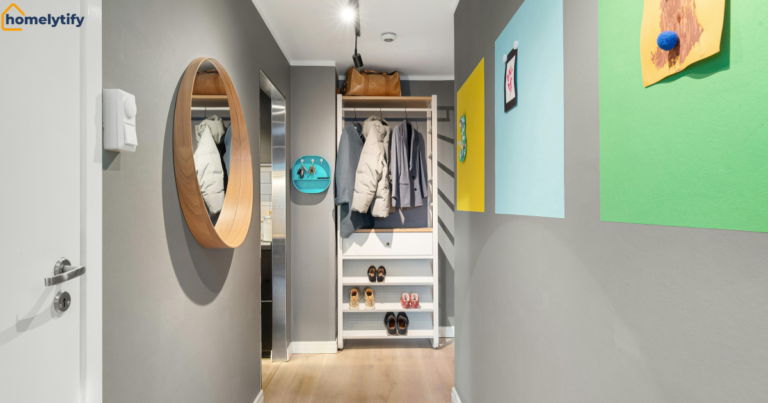
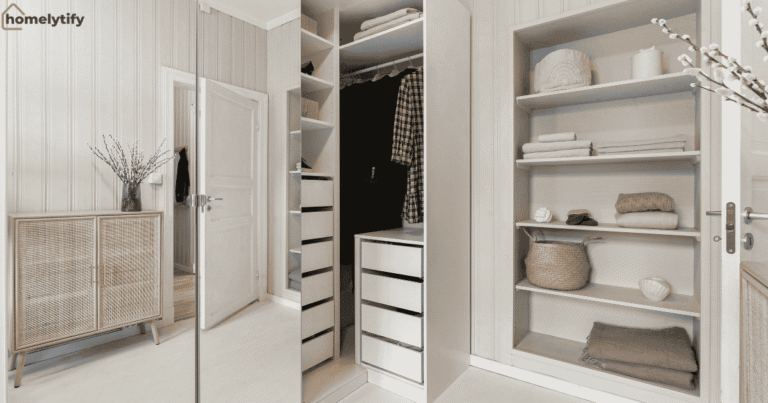
A coat closet near the kitchen, even a shallow one, can be converted into food storage with a few tension shelves. And if you have a sideboard or credenza in a nearby room, it can absorb bulky small appliances that rarely get used, freeing cabinet space for things you actually cook with weekly.
Renter-Friendly Storage Ideas That Won’t Cost Your Deposit
If you’re renting, permanence is the enemy. Skip anything that needs drilling; adhesive hooks rated for the weight you need are usually enough, and they come off clean if you follow the removal instructions (slow, at an angle, sometimes with a hair dryer to loosen the glue).
Freestanding shelving units, rolling carts, tension rods, and magnetic organizers give you real storage without touching the walls or cabinets your landlord cares about. When you move, everything goes with you instead of staying behind as a fixture.
Common Mistakes That Undo All This Organizing
Buying storage products before decluttering. It’s tempting to shop first, but bins bought for the wrong amount of stuff just add to the clutter. Always empty and sort first.
Loading over-the-door racks with heavy cans. This bends hardware and eventually rips the mounting hooks out. Keep it light.
Ignoring vertical space above eye level. People stop organizing at shoulder height and leave a foot of empty cabinet air above everything. That space can hold rarely used items on a riser.
Mixing categories in the same bin. A bin labeled “snacks” that also contains baking supplies and pasta defeats the purpose. One category per container, every time.
Forgetting to reassess after a grocery trip. Systems fall apart within a month if nobody puts things back where they belong. This is less about the setup and more about the habit.
How to Keep a No-Pantry Kitchen From Sliding Back Into Chaos
Most articles stop at the setup, but the setup isn’t the hard part. Keeping it organized is. My own system looked perfect for about three weeks, then slowly drifted back toward chaos after a couple of busy grocery runs.
What fixed it wasn’t more bins, it was a habit: putting things back in their zone the same day groceries came in, instead of “later.” Do a five-minute reset every time you unpack groceries: check expiration dates, return items to their zone, and toss anything that’s clearly not going to get used.
Once a season, pull everything back out for a mini version of the original declutter. Habits change, diets change, and what worked in your cabinets six months ago might not fit how you’re cooking now. A no-pantry kitchen that stays organized isn’t the one with the fanciest bins — it’s the one with a system someone actually maintains.
Conclusion
A missing pantry isn’t a design flaw you have to live with; it’s just a constraint that forces better habits. Once your cabinets are zoned, your walls are working, and your drawers are doing more than holding forks, the space stops feeling small and starts feeling functional. Pick two or three ideas from this list, set them up this weekend, and build from there instead of trying to fix everything at once.
Frequently Asked Questions
Do I really need a pantry to have a well-organized kitchen?
No. Cabinets, drawers, and wall space can handle the same job if they’re zoned by category and how often you use each item.
What’s the cheapest way to organize a small kitchen without a pantry?
Decluttering is free and makes the biggest difference. After that, adhesive hooks, tension rods, and shelf risers are the lowest-cost upgrades.
Where should I store bulky items like large appliances if I don’t have room?
Move rarely used appliances to a nearby closet, sideboard, or storage bench outside the kitchen, and keep only daily-use items in kitchen cabinets.
Is a rolling cart actually useful, or just decorative?
It’s genuinely useful. A three-tier cart can hold canned goods, snacks, and baking supplies, functioning as a mobile pantry you can roll wherever you need it.
How do I keep my kitchen organized long-term without having to redo it every few months?
Build a quick five-minute reset into your grocery unpacking routine, and do a full declutter once a season so the system keeps matching how you actually cook.