
Organize Small Spaces on a Budget: Simple Hacks That Actually Work
Trying to organize small spaces on a budget feels impossible when every drawer is stuffed, and every counter is covered. You moved into a smaller place, thinking you’d just make it work. Now tidying up feels like rearranging the same mess from room to room.
Sound familiar?
Here’s what nobody tells you: organizing a small home isn’t about having less stuff. It’s about making decisions, constantly, about where things live and why. And when you’re busy, tired, or working with almost no budget, those decisions pile up fast.
This guide won’t throw expensive bins and drawer dividers at you. Instead, you’ll get practical, room-by-room strategies that work with what you already own. You’ll also get honest advice on what actually makes a real difference versus what just looks good on Pinterest.
On top of that, you’ll see a few ideas you probably haven’t tried yet.
Why Is It So Hard to Organize Small Spaces on a Budget?
- Limited storage and surface space
- No “overflow” areas like garages or spare rooms
- Budget constraints limit buying solutions
- Clutter feels more visible and overwhelming
The short answer: because the standard advice assumes you have money, storage infrastructure, and free time.
Walk into any home organization article, and you’ll see the same suggestions for matching baskets, floating shelves, and label makers. And sure, those things help. But when you’re renting a 700-square-foot apartment with concrete walls and a landlord who won’t let you drill anything, those tips become useless fast.
Small-space living problems are also different in kind, not just in scale. You don’t have a garage to store seasonal items. There’s no spare bedroom serving as a junk-room buffer. Every single item in your home is visible, accessible, and actively taking up space all the time.
There’s also a psychological layer to this. Clutter in small homes feels more oppressive than in larger ones. A pile of papers on a desk in a big house barely registers. The same pile in a studio apartment feels like the whole room is collapsing.
How Do You Start Organizing a Small Space Without Spending Money?
Start with subtraction, not addition.
Before you buy anything, a single bin, one shelf bracket, spend an hour walking through your home and identifying what doesn’t belong. Not what you don’t love (that’s Marie Kondo territory, and it’s exhausting). Just what doesn’t belong?
A broken phone charger on the kitchen counter. A stack of magazines you’ve read. Three spatulas when you use one. These things are taking up prime real estate in your small home, and removing them costs nothing.
Here’s a framework that actually works for no-cost decluttering:
The “One Zone, One Day” approach. Don’t try to organize your whole home in a weekend. Pick one zone, the bathroom cabinet, the area under the sink, or one kitchen drawer. Spend 20–30 minutes. Finish it. Move on tomorrow.
This works because it’s completable. Most organization projects fail when they turn into multi-day marathons that get abandoned halfway through, leaving your home more disrupted than before.
The cardboard box method. Put a cardboard box near your front door. For the next two weeks, whenever you touch something you don’t actually use, put it in the box. At the end of two weeks, donate or trash the box without opening it again. You won’t miss anything in it.
The “guest visit” mental trick. Imagine someone you slightly want to impress is coming over in an hour. Walk through your space with fresh eyes. You’ll immediately spot the clutter you’ve gone blind to.
What Are the Best Decluttering Tips for Small Homes?
Decluttering a small home is different from decluttering a big one. You can’t just “move it somewhere else.” There is no one else.
The most effective approach is category-based decluttering, done room by room, but thinking across your whole home. Here’s how that looks in practice:
Clothes. Pull everything out. Not just the closet, the chair in the corner, the hooks on the door, the gym bag on the floor. See the full volume of what you own. Then ask honestly: what do I actually wear? Anything you haven’t worn in 12 months that doesn’t have a specific future occasion attached to it, let it go.
Paper. Paper is the silent killer in small spaces. Most of it can be photographed and thrown away. Bills, receipts, manuals, almost all of it exists digitally or can be scanned with your phone. Keep a single manila folder for documents that truly need originals (lease, insurance cards, passport). That’s it.
Duplicates. You probably own three of the things you only need one of. Scissors, tape dispensers, USB cables that fit nothing you currently own, expired medications, and half-empty cleaning products that all do the same thing. Duplicates are clutter hiding in plain sight.
Sentimental items. This is where most people stall. You don’t need to throw away memories, but you do need to contain them. Pick a single box (literally a shoebox or a small bin). Everything sentimental fits in that box, or it gets digitized. This keeps sentimentality from slowly spreading across your entire home.
Here’s the part most people miss: you’ll need to declutter again in six months. Not because you failed the first time. Because life keeps bringing things in, gifts, impulse purchases, freebies. Decluttering is maintenance, not a one-time fix.
How Can You Maximize Storage in Small Spaces Using What You Already Have?
Before buying anything new, take inventory of what you already own.
Most people have more storage capacity in their homes than they realize; it’s just being used badly. Here’s how to find it:
Shoe boxes and cardboard boxes make excellent drawer organizers. Cut them to size, stack them sideways in a closet for fold-over shoe storage, or use them in drawers to separate items. Cover them with leftover wrapping paper if you want them to look intentional.
Command hooks (the damage-free kind) turn blank wall and door space into functional storage. The inside of cabinet doors, the back of pantry doors, and the side of your refrigerator can all hold things like measuring cups, pot lids, cleaning supplies, or a small mail organizer.
Mason jars and glass containers you already own work perfectly for storing everything from cotton balls in the bathroom to dried pasta in the kitchen. Uniform containers on a shelf visually cut clutter in half, even when the volume of stuff stays the same.
Tension rods cost almost nothing and create dividers inside cabinets, hold cleaning bottles under the sink, or create a second level inside a drawer. This is one of the most underused small space hacks out there.
Over-the-door organizers. If you have a few dollars to spend, a cheap over-the-door shoe organizer (often under $10 at discount stores) becomes one of the most versatile storage tools in a small home. Use it in the bathroom for toiletries, in the pantry for snacks and spice packets, or in a bedroom closet for accessories.
What Are the Best Vertical Storage Ideas for Small Spaces?
In a small space, your floor area is fixed. Your wall space isn’t.
Vertical storage is the single biggest game-changer for small homes, and it doesn’t require expensive built-ins.
Wall storage ideas that work without heavy drilling:
- Floating shelves above doorways use space that’s almost always wasted. The area above a door frame can hold books, baskets, or decorative items you don’t need daily access to.
- Pegboards (wood or metal) in the kitchen or workshop space organize tools and utensils while keeping counters clear. They’re customizable, cheap, and you can move things around as your needs change.
- Ladder shelves lean against walls without any drilling and create four to five levels of storage in a footprint smaller than a coffee table.
- S-hooks on a rod across a window or between two anchor points hang mugs, pots, or bathroom supplies.
The key principle with vertical storage: put frequently used items at eye level or just below. Rarely used items go high. Heavy items stay low. This sounds obvious, but most people ignore it and end up with a storage setup that’s hard to live with daily.
If you’re in a rental and can’t drill, tension rod shelving systems are worth looking into. They press between the floor and the ceiling and hold real weight. Freestanding shelving units do the same job and move with you when you leave.
How Do You Organize Each Room in a Small Home Efficiently?
- Define each room’s main function
- Keep only items that support that function
- Remove items that belong elsewhere
- Store based on real usage patterns
Think of your home as one system, not separate rooms.
Before deciding where something belongs, ask: Does it belong in this room at all?
Most clutter exists because items are stored where they landed, not where they’re used. Fixing that alone improves the organization dramatically.
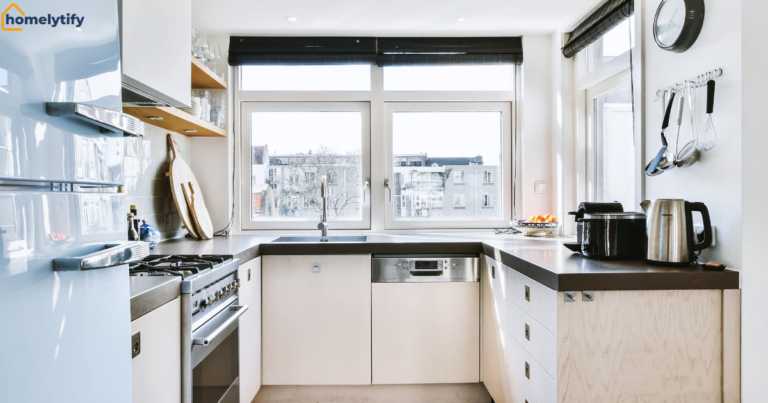
What Are Budget-Friendly Small Kitchen Organization Tips?
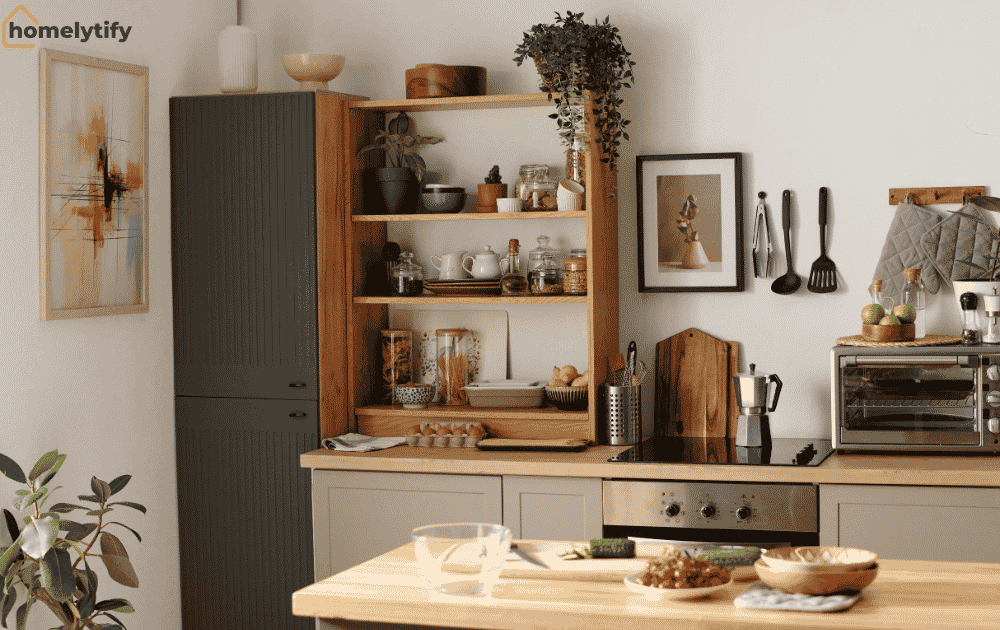
The kitchen is almost always the hardest room in a small home. Too many categories of items, too little surface and cabinet space, and it’s in use multiple times a day.
Start by clearing the counter completely. Everything off, even the things you use daily. Now, only put back what you use at least three times a week. Everything else finds a home in a cabinet, on a wall hook, or out of the kitchen entirely. Counter space is your most valuable kitchen real estate; don’t let it become default storage for things that could live elsewhere.
Small kitchen storage ideas that cost almost nothing:
- Stacking is underused. Pots nested inside each other, plates stacked by size, and lids stored vertically using a tension rod divider inside a cabinet.
- Drawer organizers don’t need to be purchased. Use the lids of shoeboxes, small cardboard trays from packaging, or even cut-down cereal boxes to separate utensils.
- Inside cabinet doors can hold a small wire rack for cutting boards or pot lids, a strip of cork for sticky notes, or hooks for measuring cups.
- The fridge top is real estate. A small basket up there can hold fruit, bread, or cooking oils you use daily but don’t want on the counter.
One insight that rarely appears in kitchen organization guides: most people have too many dishes for their actual household size. If you’re two people, do you need eight of everything? Reducing your dish count by 30–40% opens up dramatic cabinet space with zero cost.
How Can You Organize a Small Bedroom on a Budget?
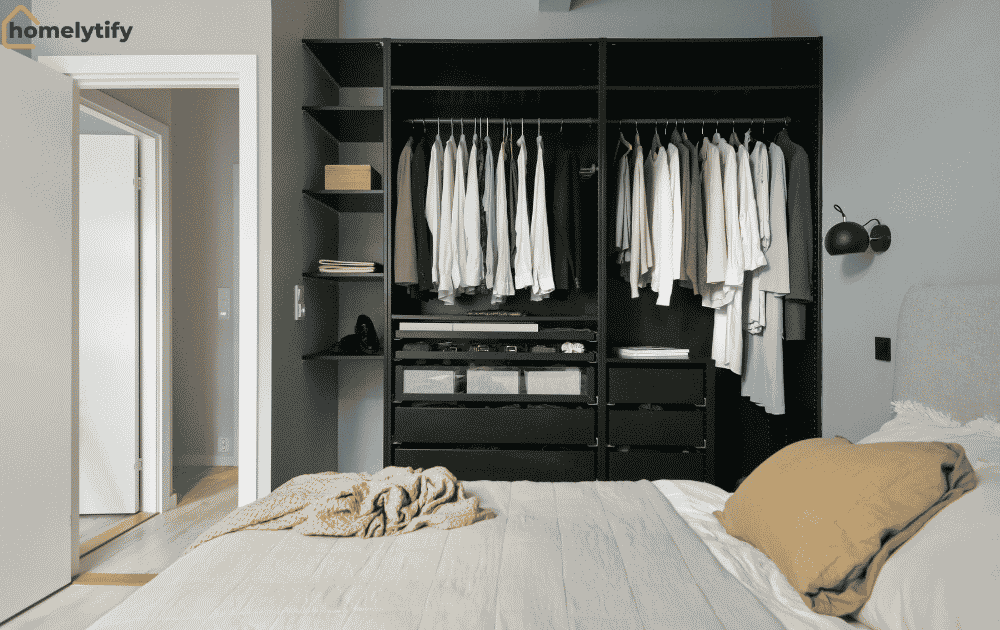
A small bedroom has one job: support sleep. Everything else is a secondary function that should be handled carefully.
The biggest storage opportunity in most small bedrooms is under the bed. Most people either use it for nothing or use it chaotically. Flat storage bins (often under $10 at discount stores, or improvised from flat boxes) used consistently for out-of-season clothes or extra bedding make a real difference.
Other bedroom organization moves that cost little to nothing:
- Hooks on the back of the door for tomorrow’s outfit, robes, bags, or gym clothes. This single change often eliminates the “chair pile” that most small bedrooms accumulate.
- Shelf risers inside your closet (or stacked boxes to simulate them) immediately double your closet storage by creating a second level for folded items or shoes.
- Drawer audit. Most bedroom dressers are 30–40% clothes you don’t actually wear. An hour spent pulling everything out and being honest about what you actually reach for frees up surprising space.
- Vertical storage on the nightstand instead of a pile. A small tray keeps items contained visually. Phone, book, lip balm on a tray, it looks intentional. Loose on the surface, it looks like clutter.
What Are Simple Small Bathroom Organization Hacks?
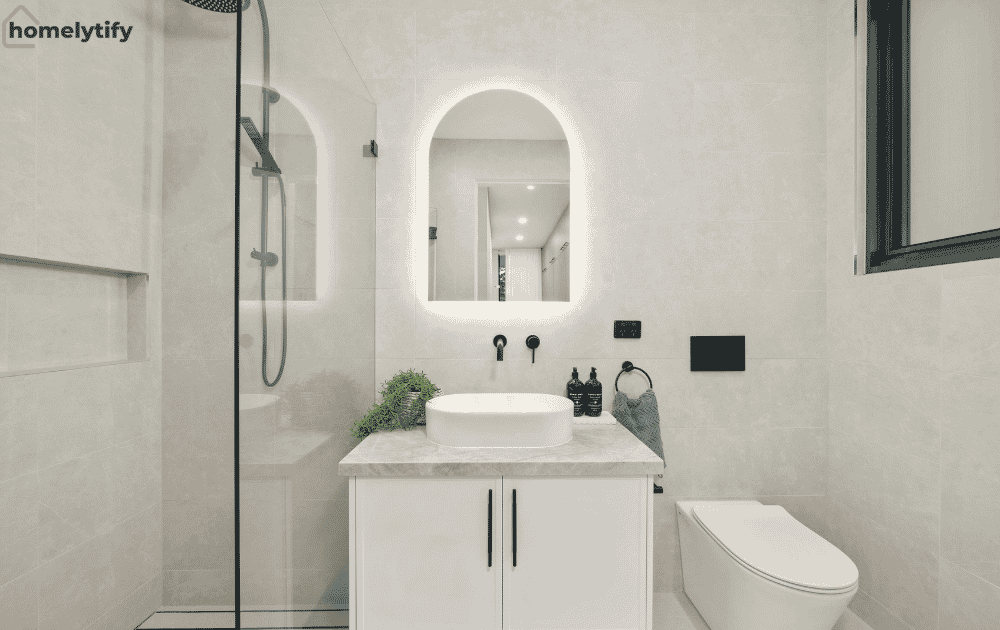
Bathrooms in small homes are often the most disorganized rooms simply because they’re cramped and full of small items.
The highest-impact change costs almost nothing: go through everything in your bathroom. Then throw away what’s expired, empty, or genuinely unused. Most people find they can clear a quarter of their bathroom storage this way.
Beyond that:
- Over-the-toilet shelving (freestanding, no drilling required) adds three levels of storage in a footprint you’re already not using.
- A small tension rod under the sink lets you hang spray bottles by their necks, immediately doubling the usable space under there.
- Magnetic strips on the inside of cabinet doors hold bobby pins, nail clippers, and tweezers. They also hold other small metal items. These items otherwise rattle around in drawers.
- Divided trays in drawers are worth buying for the bathroom specifically. Small items multiply and disappear without them.
How Do You Keep a Small Living Room Clutter-Free?
The living room collects clutter fast because it’s a multi-use space. It’s where you relax, where guests sit, where kids play, where things get set down on the way to somewhere else.
The clutter-free living room isn’t one with less stuff. It’s one where everything has a designated spot it reliably returns to.
Practical living room organization on a budget:
- A basket or bin with a lid near the seating area handles the daily drift. This includes remotes, charging cables, the TV guide nobody uses, and the book you’re halfway through. One contained space for “life debris” keeps the rest of the room clear.
- A coffee table with storage is worth prioritizing if you’re ever replacing furniture. A lift-top coffee table or one with a lower shelf adds meaningful storage in a footprint you’re already using.
- Wall-mounted TV and shelving clear floor space dramatically and visually open up the room.
- Limit surfaces. Every flat surface in a living room will eventually become a landing pad for stuff. When there are fewer surfaces, less clutter accumulates.
For families with kids: a single large bin or basket in the living room for toys is far more sustainable than elaborate toy organization systems. Kids won’t use them. A single easy bin they can throw things into, they’ll actually use that.
What Cheap Storage Ideas Actually Work for Small Spaces?
Let’s separate the genuinely useful cheap storage solutions from the ones that look good but create more work.
Actually worth buying (all under $15–20):
- Over-the-door organizers (shoes, toiletries, anything)
- Tension rods (create dividers, double space under sinks)
- Command hooks in bulk
- Flat under-bed storage bins
- Drawer dividers or simple acrylic organizers
Overrated or more trouble than they’re worth:
- Clear stackable bins without labels, you can’t tell what’s in them, and they become a jumble fast
- Intricate modular systems that require everything to be perfectly sorted to work
- Anything that requires significant setup time every time you access it
The best cheap storage solutions share one feature: they make it easier to put things away, not harder. If an organizational system takes effort to use, you won’t use it consistently. Simplicity beats aesthetics every time in a real home.
How Do You Maintain an Organized Small Home Every Day?
Getting organized is the easy part. Staying organized is where most people fail, not because they’re lazy, but because they don’t have systems that work with their actual behavior.
Here’s what makes daily maintenance realistic:
The “don’t put it down, put it away” rule. Every time you’re about to set something on a counter, table, or chair, take two extra seconds. Put it where it actually belongs.
This sounds simple. It’s where things fall apart. The dish goes back in the cabinet, not on the counter, to “deal with later.” The jacket goes on the hook, not the chair. The habit compounds.
A 10-minute reset at night. Not a deep clean, just a reset. Every surface cleared, dishes dealt with, and anything out of place returned to its home. This one habit does more for maintaining a small home than any storage product.
One-in, one-out. Every time something new enters your home, a purchase, a gift, anything, something else leaves. This keeps your total volume of possessions stable and prevents the slow creep of clutter.
Weekly or monthly “audit zones.” Pick one area each week that tends to accumulate drift: the junk drawer, the entry table, the bathroom cabinet. Spend five minutes resetting it. This is preventive maintenance, not emergency decluttering.
Daily organization habits don’t require motivation. They require friction reduction, making the right choice the easy choice.
What Mistakes Make Small Spaces Feel More Cluttered?
These are the most common mistakes people make when trying to organize small homes, and most of them are well-intentioned.
Buying storage before decluttering. This is the most expensive mistake. People buy bins, baskets, and organizers hoping to contain the clutter. But what they actually need to do first is reduce the volume of stuff. New storage just gives clutter a nicer place to live.
Organizing without a system. You can put everything in labeled bins, but that alone doesn’t fix the problem. If there’s no logic to where things go, you won’t put them back consistently.
Every item in your home needs a “home” that makes intuitive sense. If the home isn’t intuitive, you won’t use it.
Optimizing for looks over function. Open shelving with aesthetically arranged items looks beautiful in photos. In a really small home, it just means you’re dusting decorative objects instead of actually organizing. Closed storage is almost always more functional in a small space.
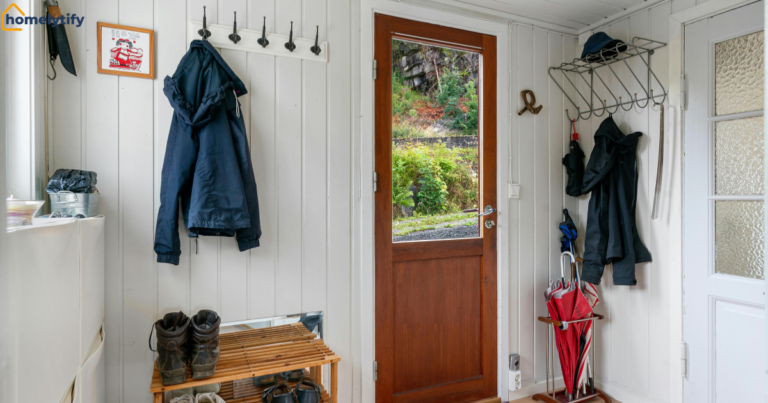
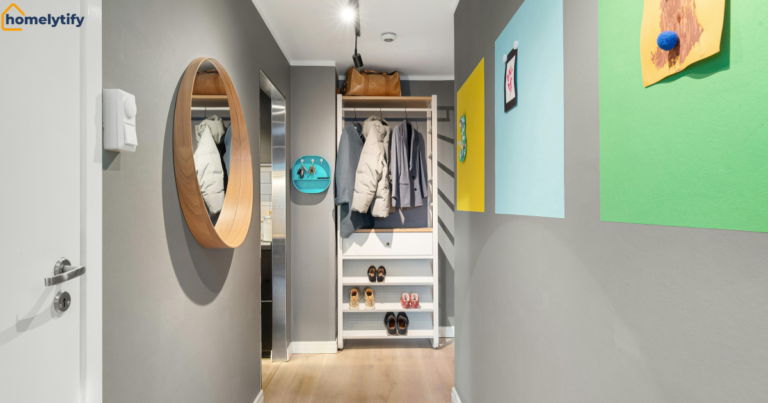
Ignoring high-traffic zones. The entry point to your home is the first place you land when you walk in. It determines whether clutter accumulates or gets dealt with.
If there’s no hook, no tray, no clear place for keys, bags, and shoes, those things will end up everywhere. Fixing the entry zone has an outsized effect on the rest of the home.
Trying to fix everything at once. Organization fatigue is real. When people attempt a full-home overhaul in a single weekend, they usually finish one room.
They run out of energy and stop midway. The result is a partially organized home that often feels worse than before. Slow and steady, one zone at a time, actually gets finished.
Conclusion
Here’s the truth: a small home that’s genuinely organized is the result of someone making many small decisions. These decisions are consistent over time and shape how everything is arranged.
It’s not about a perfect system or the right products. It’s about reducing what you own to what you actually use and giving every item a logical home. It also means building a few simple daily habits that keep things from drifting.
You don’t need a bigger place. You need less tolerance for clutter and a bit more intention about how you use the space you have.
Start with one drawer, then one cabinet, then a full room. You’ll find the momentum builds. Once you see what an uncluttered small space actually feels like to live in, maintaining it gets a lot easier.
Frequently Asked Questions
How do you organize a small space on a budget?
Start by removing what you do not use before buying anything. Use what you already own, such as shoeboxes as drawer dividers, tension rods under the sink, and command hooks on doors. Only buy storage products after decluttering and only for specific problems that free solutions cannot fix.
What is the best way to declutter a small home?
Work one zone at a time. Pick one drawer or cabinet, spend 20 minutes finishing it, then move on. Use the one-year rule: if you have not used something in 12 months and have no specific upcoming need for it, let it go.
How do you maximize storage in a small space without spending money?
Use vertical wall space with ladder shelves or floating shelves above doorways. Repurpose shoeboxes as drawer dividers. Use tension rods under the sink and command hooks on the backs of doors. Store items where you actually use them, not where they first landed.
How do you keep a small home organized every day?
Three habits make the biggest difference. Never put something down without putting it away properly. Do a 10-minute reset every night. Follow the one-in-one-out rule when something new enters your home, something else leaves.
What mistakes make small spaces feel more cluttered?
The most common mistakes are buying storage before decluttering, organizing without a logical system, and ignoring the entry point of your home. Trying to organize everything at once also leads to burnout and an unfinished, more chaotic home.