
How to Organize an Apartment With Roommates: Easy Ideas
How to organize an apartment with roommates can be difficult when several people share the same home. The kitchen, bathroom, living room, and storage spaces are used by everyone, so these areas can quickly become messy when everyone has their own things.
The problem is not always that your roommates are messy. Sometimes, no one has decided where things should go or which space belongs to each person. When everyone knows where to keep their things and which items are shared, it becomes much easier to keep the apartment organized.
In this article, I’ll share easy ideas for organizing an apartment with roommates. You’ll learn how to divide storage space, organize shared rooms, and create simple cleaning and storage rules that everyone can follow.
Why Shared Apartments Get Cluttered Faster
A shared apartment can get messy quickly because many people use the same spaces every day. Groceries, dishes, clothes, bags, and packages are always coming and going, so these small messes can build up quickly.
Common areas are also used many times during the day. The bathroom, kitchen, and living room may need to be cleaned more often than a private room.
Roommates may also have different ideas about what “clean” means. One person may like to clean the kitchen after every meal, while another may prefer to leave things until later. These different habits can cause problems if you do not talk about them and agree on some simple rules.
How to Organize an Apartment With Roommates From Day One
It is easier to organize a shared apartment before everyone has unpacked. Take some time at the beginning to decide how you will use the shared spaces. This can help you avoid having to change everything later.
Have a Quick Walkthrough Before Unpacking
You and your roommates should walk through the apartment together before putting your things away. Look at the shared areas, such as the kitchen, bathroom, entryway, and living room.
Talk about simple things such as:
- Where will shoes, bags, and keys go?
- Which areas can each person use for personal items?
- Which items will be shared?
- Where will cleaning supplies and other shared items stay?
At the beginning, you do not need to make a complicated plan. A short conversation before unpacking can make things much easier later.
Before moving in, it can also help to discuss shared spaces, chores, food storage, and other household rules with your roommates.
Give Each Person Some Personal Storage Space
Each roommate should have some space for personal belongings. This may be a drawer, shelf, cabinet section, basket, or part of a closet.
For example, you could give each person:
- A shelf or drawer in the bathroom
- Some cabinet or pantry space in the kitchen
- A place for shoes and bags near the entrance
- Part of a closet or storage cabinet
The amount of space each person gets will depend on the size of the apartment and the available storage. The important thing is to make sure everyone has a clear place to keep their everyday belongings.
How to Organize a Shared Kitchen With Roommates
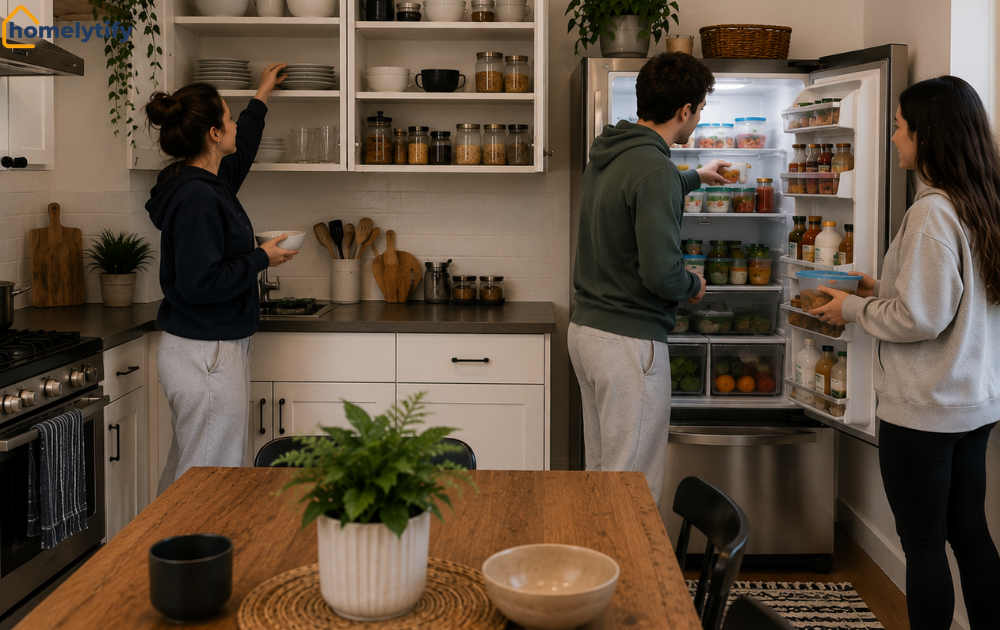
The kitchen is one of the most-used shared spaces in an apartment, so it can become messy quickly. A simple system for personal and shared items can make it easier for everyone to use the kitchen.
Divide Cabinet and Fridge Space
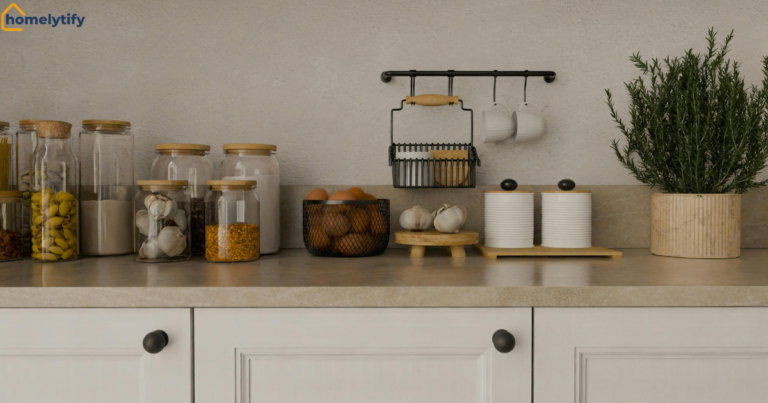
First, all the roommates should divide some space for their personal food and kitchen items. This could be a cabinet shelf, pantry shelf, or part of the fridge.
Items that everyone uses, such as plates, cooking pans, spices, and basic cooking tools, should be kept in shared areas.
Do not try to fill every shelf completely. Leaving some extra space makes it easier to put groceries away and keeps the kitchen from feeling crowded.
Keep Food and Shared Items Easy to Identify
You can use simple labels if roommates often have similar food or containers. Writing a name or initial on a container is usually enough.
Set aside a small area for shared foods, such as coffee, tea, and snacks. This way, everyone knows which items they can use.
If you keep leftovers in the fridge, agree on how long they should stay there. This can help prevent old food from taking up space and make it easier to keep the fridge clean.
Keep the Kitchen Easy to Reset
All the roommates should agree on how they will clean the kitchen and other shared spaces. Everyone should clean up their own dishes and food items after using the kitchen. Wipe the counter after cooking and put ingredients back when you are finished.
You do not need to make the kitchen perfect after every use. The goal is simply to leave it ready for the next person.
How to Organize a Shared Bathroom
Bathrooms can also become cluttered when several people keep their toiletries in the same space. A few simple ideas can help keep the counter, shower, and cabinets organized.
Keep Personal Items Together
If there is enough storage, give each roommate a drawer, shelf, or small basket for personal items. Keeping everyday products together makes it easier to avoid spreading them across the counter.
A small basket can hold items such as skincare products, hair products, or other toiletries that are used often.
Keep the Shower Area Simple
Do not keep too many bottles in the shower because they can make a small space feel crowded. Each roommate can use a shower caddy or basket to keep personal products together and take them out when they are needed.
Keep shared items, such as soap or cleaning supplies, in one easy-to-reach place.
Keep the Counter Clear
If several people use the same bathroom, try to keep the counter clear for the next person. Put your personal items away after using them instead of leaving them around the sink.
If storage space is limited, an over-the-door organizer or small wall shelf can give you extra storage without taking up counter space.
A simple bathroom setup makes it easier for everyone to get ready without having to move someone else’s things first.
Building a Cleaning Schedule Your Roommates Will Actually Follow
A cleaning schedule can make shared chores easier because everyone knows what needs to be done. Keep it simple and divide the work fairly instead of making a long list of rules.
Divide the Main Chores
First, make a list of the regular chores and decide who will handle each one. Divide the work by task and change the tasks each week so that one person does not always get the same job.
For example:
- One person can clean the kitchen and take out the trash.
- Another can clean the bathroom.
- Another can vacuum or sweep the common areas.
If there are only two roommates, divide the tasks between the two people and switch them regularly.
Keep the Schedule Where Everyone Can See It
Put the schedule somewhere everyone can easily see it, such as in a shared notes app or on the fridge. This is better than keeping the plan in a busy group chat where it can easily be forgotten.
You can also choose one regular day for the main cleaning, such as a weekend day that works for everyone.
Do a Quick Daily Reset
A few small tasks each day can keep the apartment from becoming too messy. Everyone should put away their own things, wash or put away their dishes, and clean up after using shared spaces.
The cleaning schedule is for regular chores. The daily reset is simply about leaving the shared areas ready for the next person.
Be Flexible When Someone Gets Busy
Sometimes a roommate may have a busy week because of work, studies, or other responsibilities. If someone cannot do their task, talk about it and change the plan for that week.
The goal is to keep the apartment manageable, not to create another source of stress.
Keeping Common Areas Organized
Shared areas such as the living room, hallways, and other common spaces can become messy quickly because everyone uses them. A few simple rules can help keep these spaces organized.
- Keep personal items out of shared spaces. Personal belongings such as bags, clothes, laptops, and other items should go back to each person’s room when they are no longer needed.
- Keep shared items together. Common items such as remotes, games, chargers, and blankets should be kept in one place so they are easy to find.
- Clear shared surfaces regularly. Do not let the coffee table, dining table, or other surfaces become a place for everyone’s belongings.
- Reset the room after using it. If you eat, study, or spend time in the living room, put your things away when you are finished.
If roommates often have guests, agree that the person who invites them will help return the shared area to normal afterward. This keeps the responsibility from always falling on the roommate who notices the mess first.
What’s the Best Way to Store Shared Items in a Small Apartment?
When shared items do not have a regular place to stay, they can take up a lot of space. All the roommates should choose a common place that everyone can easily reach. Keep shared items together so everyone knows where to find them and where to put them back.
Try these simple ideas:
- Use vertical space. Wall shelves or over-the-door organizers can hold items without taking up floor space.
- Use storage under furniture. The space under a bed or sofa can be useful for things that are not needed every day.
- Use baskets or bins. Keep shared items such as extra towels, cleaning supplies, or games together instead of spreading them around the apartment.
- Use furniture with storage. An ottoman, bench, or coffee table with storage can be useful when floor and cabinet space is limited.
Before buying new storage, check what you already have. You may be able to free up space by removing things you no longer use or moving rarely used items to a less convenient area.
Mistakes That Can Make Roommate Organization Harder
Even simple organizing ideas can stop working if roommates do not keep up with them. These common mistakes can make a shared apartment harder to manage.
Making Too Many Rules
You do not need to create a long list of rules for every room. Too many rules can be difficult to remember and may interfere with everyone’s normal routines.
Start with a few basic rules for shared spaces and add more only when a real problem comes up.
Leaving Temporary Clutter for Too Long
A box or bag that needs to be unpacked later can easily stay in the hallway for months. The same can happen with packages or things that need to be sorted.
If something is only there temporarily, decide what needs to happen with it. Keep it, move it to another place, or deal with it instead of letting it stay there for too long.
Waiting Too Long to Talk About a Problem
Small problems are easier to solve when you talk about them early. If a roommate keeps leaving dishes in the sink or personal items in the living room, discuss it before you become frustrated.
Try to talk about the problem calmly and agree on a simple solution instead of blaming each other.
Buying Storage Before Checking What You Have
It is easy to think you need more storage and start buying baskets or bins when an apartment feels crowded. But extra storage will not solve the problem if you already have more things than you need.
Check what you have first, remove things that are no longer needed, and then decide whether you need additional storage.
Not Deciding What Happens to Shared Items
If roommates buy something together, such as a kitchen appliance, a vacuum, or a piece of furniture, decide who will keep it if someone moves out.
This small conversation can prevent confusion later.
Conclusion
Organizing and keeping an apartment organized with roommates does not have to be difficult. A few simple rules and clear arrangements can make shared spaces easier for everyone to use.
Start by giving each person some personal storage space, keeping shared items together, and making a simple cleaning schedule. It also helps to talk about small problems early instead of letting them turn into bigger disagreements.
You do not need to organize the whole apartment in one day. Start with the kitchen or another shared space that causes the most problems, then work on the rest of the apartment as you go.
Frequently Asked Questions
What Should a Roommate Agreement Include?
A roommate agreement should cover things that can cause problems later, such as cleaning, shared expenses, guests, quiet hours, and the use of shared spaces. You can also agree on how to divide storage space and what happens to shared items if someone moves out.
What Should You Ask Roommates Before Moving In?
Before moving in, talk about cleaning habits, shared expenses, guests, food, storage space, and how you will handle chores. It is better to discuss these things early so everyone knows what to expect.
What Is the Golden Rule for Roommates?
The golden rule for roommates is to respect each other’s space, belongings, time, and routines. Clean up after yourself and talk about problems calmly instead of letting them build up.
What to Do When a Roommate Doesn’t Clean?
Talk to your roommate about the problem instead of silently doing all the cleaning yourself. Explain what needs to be done and agree on a simple cleaning schedule or division of chores that works for everyone.
How Do You Divide a Fridge With Roommates?
Give each roommate a specific shelf or section for personal food and keep shared food in a separate area. If space is limited, use containers or small bins to keep each person’s food together and make the fridge easier to manage.