Organization Systems for Small Kids’ Bedrooms That Save Space
You spent the whole weekend organizing your child’s bedroom. By Tuesday, it looks like a toy store exploded. Sound familiar? The problem usually isn’t the stuff. It’s the system. Or the lack of one.
Organization systems for small kids’ bedrooms don’t have to be expensive or complicated. What they need to be designed for is how kids live, move, and think. Most advice online tells you to “add more storage” or “buy a bigger dresser.” That’s not always helpful when you’re working with 90 square feet and a five-year-old who treats the floor as a drawer.
This guide covers real systems you can set up this weekend. No jargon, no product hauls. Just practical setups that have a fighting chance of surviving real family life.
Why Most Kids’ Room Organization Fails Before It Even Starts
Most kids’ room organization fails because it was designed for adults. Pretty baskets, matching labels, and color-coordinated bins look great on Pinterest. But if a six-year-old can’t use the system independently, you’ll be reorganizing every two weeks.
The number one reason these setups collapse is too many steps. If getting a toy back into its spot involves opening a lid, moving something else, and remembering a category name, it’s not going to happen. Kids default to whatever is fastest, which is usually the floor.
Before you buy anything, ask one question: Can my child use this without my help? If the answer is no, the system needs to change, not the child.
Start With a Declutter, Not a Shopping Trip
Every parent’s instinct when facing a chaotic kids’ room is to buy more storage. But you can’t organize clutter. You can only contain it temporarily. A month later, you’re back to square one.
Go through everything in the room and remove what doesn’t belong: outgrown clothes, broken toys, duplicates, and anything left untouched for 3 months. The goal is to make sure the storage you have fits the things that need to stay.
A useful method is the three-pile rule: keep, donate, and maybe. The “maybe” pile goes into a box in a closet for 30 days. If the child doesn’t ask for anything in it, it goes. You’d be surprised how rarely they notice.
The Vertical Wall System: Your Best Friend in a Small Room
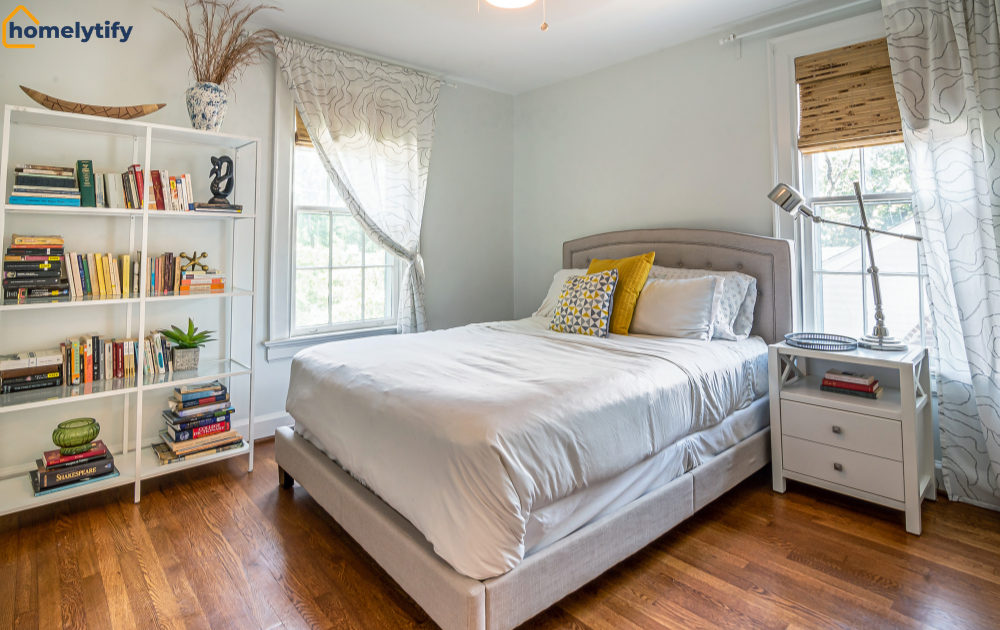
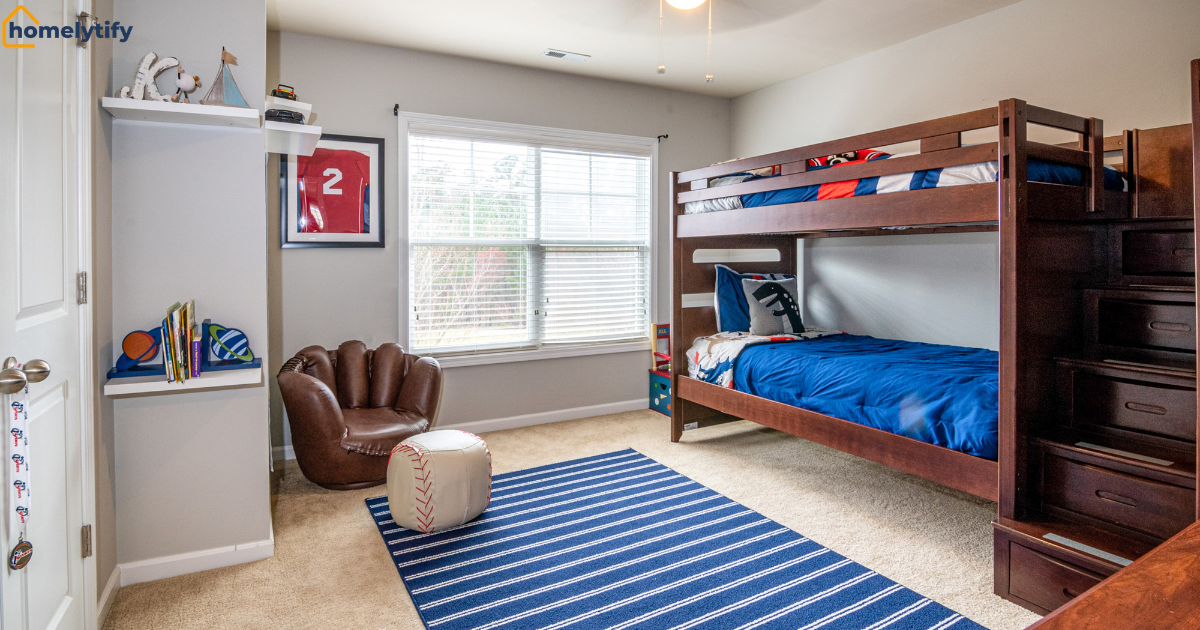
Floor space in a small bedroom is a premium. Wall space usually isn’t being used at all. This is the easiest win when setting up small bedroom storage solutions for kids.
Floating shelves, mounted pegboards, and wall-hung cubbies move storage off the floor without taking up any square footage. A pegboard above a desk can hold art supplies, headphones, and small bins without touching the desk surface. A row of shelves at mid-wall height gives kids something they can actually reach without a step stool.
One practical tip: mount your lowest shelf at the child’s shoulder height, not adult eye level. If they can reach it easily, they’re far more likely to put things back.
What to put on walls:
- Floating shelves for books and small toys
- Pegboards for art supplies and accessories
- Wall-mounted hooks at kid height for backpacks, robes, and bags
- Hanging fabric organizers behind the door for shoes and small items
- Magnetic strips for metal toy pieces or artwork display
Under-Bed Storage Done Right (Most Parents Get This Wrong)
The space under the bed is one of the most underused storage zones in a small kids’ room, and most parents use it incorrectly.
The wrong way: throw whatever doesn’t fit anywhere else under there. Within a month, it becomes a dark pile that the vacuum can never reach. Things get lost, forgotten, and crushed.
The right way is to use it intentionally for items that don’t need daily access: seasonal clothes, extra bedding, art supplies that only come out on weekends, or toys in rotation. Use flat, wheeled bins or drawer-style organizers so things can actually be pulled out without a full excavation.
If the bed sits low, add bed risers to create more clearance. They’re inexpensive and can turn an unusable 4 inches into a real storage zone.
Organization Systems for Small Kids’ Bedrooms by Age Group
A system that works brilliantly for a three-year-old will frustrate an eight-year-old. The best space-saving kids’ room ideas are calibrated to your child’s actual age.
Ages 2-5: Visual Everything
Kids this age can’t read labels, but they understand pictures and colors perfectly. Use clear bins with photo labels: a picture of blocks on the blocks bin, stuffed animals on that bin. Keep everything at floor level or just above, and use open-top bins because replacing a lid is one step too many.
Ages 6-12: Ownership Changes Everything
Kids in this group can handle more complexity, but only if they have a say in how things are set up. Involve them from the start and let them decide what category names make sense. “Lego stuff” might work better than “Construction Toys” for a nine-year-old.
A homework zone also starts mattering at this age. A small desk, a shelf for school supplies, and a designated spot for their backpack reduce the morning scramble significantly. If desk space is tight, a fold-down wall-mounted desk takes up almost no room when closed.
The Zone Method: Divide the Room, Multiply the Space
This is one of the most effective kids’ room storage ideas that doesn’t require buying much at all. The zone method means dividing a small room into distinct activity areas and only storing what belongs in each zone within that zone.
Most kids’ rooms are just one big mixed space. Toys are near the bed, books are near the desk, and clothes are on the floor. Everything is everywhere, so nothing ever has an obvious home.
I tried this after months of daily chaos in my daughter’s 100-square-foot room. Her Legos were next to the bed, stuffed animals by the desk, and books somehow behind the door. One Saturday afternoon, I rearranged things into three zones using furniture we already had. A low bookshelf became the divider between her sleep and play zones. Her desk got a single floating shelf with nothing but school things on it.
The window corner became the play area with one bin of current toys. I didn’t buy anything new. But by the following week, she was putting things away on her own because everything finally had an obvious home.
The Play Zone
Keep all toys, games, and creative supplies in one corner. Use a low bookshelf or cubby unit as a visual boundary. Everything that belongs in the play zone stays there.
The Sleep Zone
The area around the bed should be calm and clear. A small nightstand with one drawer holds books, a water bottle, and a lamp. Don’t let it become overflow toy storage.
The Homework Zone
A small desk against a wall with one floating shelf above it is enough to create a zone. Keep only school-related items here. When a child sits down at this spot, the environment signals “work time,” which actually helps them focus.
Closet Organization Systems That Work Even Without a Real Closet
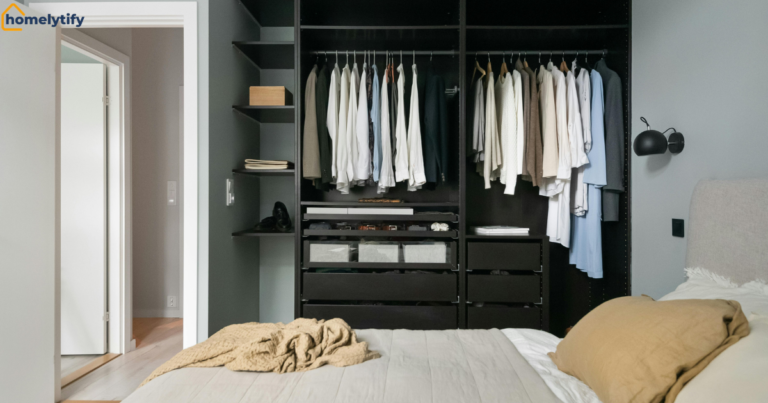
Kids’ closet organization is often an afterthought. One rod, one shelf, done. But a few adjustments can make a standard closet hold twice as much.
The biggest change is adding a second rod. Most kids’ clothes are short enough that hanging them only fills the top half of the closet. A second rod below doubles the hanging space without adding depth.
Use the closet floor for a shoe rack or laundry basket, the shelf above the rod for out-of-season bins, and the inside of the door for hanging organizers: ideal for socks, underwear, and small accessories.
No Closet? No Problem
A freestanding wardrobe with a mix of hanging space, shelves, and drawer handles the job in rooms without a built-in closet. Placed in a corner, it takes up less visual space than a dresser plus the usual chair pile.
Open-rail clothing racks are another option. They’re inexpensive, minimal on floor space, and give kids full visibility of their clothes, which speeds up morning routines considerably.
Shared Kids’ Bedroom Organization: The Rules Change When Two Kids Live in One Room
A shared bedroom isn’t just a space problem. It’s an ownership problem. When everything is communal, nothing gets put away because nobody feels responsible for it.
The Divide-and-Label Rule
Divide storage wherever possible. Each child gets their own bins, their own closet section, their own shelf. Use different colors per child. Kids as young as three understand “my color is blue, your color is green,” and that single distinction prevents most daily arguments. Even in a tiny room, give each child at least one shelf or cubby that is entirely theirs.
Two Kids, One Dresser: Here’s How
Split the dresser by drawers, not by furniture. Child A gets the top two, Child B gets the bottom two. Label each clearly. This removes the “I don’t know where it goes” excuse and keeps laundry from mixing.
And in a shared room, toy rotation becomes even more valuable. Fewer toys out at once means less conflict over square footage and less clutter overall.
The Toy Rotation System Nobody Talks About Enough
This is one of the best space-saving kids’ room ideas available, and it costs nothing to implement.
Keep half the toys out and store the rest in a bin in the closet or under the bed. Every two to four weeks, swap them. The stored toys come out, the current ones go away.
Kids treat the returning toys like new ones, playing longer and more intentionally. The room runs at half the clutter. Cleanup is faster.
This isn’t just a parenting instinct. It’s backed by research. According to a March 2026 report by Collaborative for Children, a Houston-based child development organization, when a play space is cluttered, children are pulled in too many directions at once, which shortens attention spans and increases frustration.
With fewer toys available, children tend to play longer, explore more deeply, and use imagination instead of constantly switching activities. Families who tried rotation also reported that clean-up became easier and play became calmer overall.
Keep everyday essentials out: building blocks, drawing supplies, and a favorite stuffed animal. Rotate the things that only get played with sometimes. If something never gets unpacked over several cycles, it’s ready to donate.
Common Mistakes Parents Make When Organizing a Small Kids’ Room
Even with the best intentions, a few errors undo most of the effort.
Buying storage before decluttering. You’ll fill the new bins and land back at square one. Declutter first, then figure out what storage you actually need.
Creating a system that the child can’t maintain on their own. If putting things away requires adult help, a complicated system, or hard-to-open lids, it won’t happen. Every extra step is a reason to use the floor instead.
Ignoring vertical space. Most small rooms have 8 or 9 feet of wall height. Parents use maybe 3. Wall shelves, tall bookshelves, and over-door organizers reclaim that space without touching the floor.
Organizing once and walking away. A system built for a four-year-old won’t work at seven. Do a quick check-in every six months. Not a full overhaul, just a reset to match who your child is now.
Choosing pretty over practical. Matching baskets hide what’s inside, which means your child has no idea where anything goes. Clear or open-top bins almost always outperform beautiful closed ones in daily use.
Conclusion
A well-organized small kids’ bedroom isn’t about perfect furniture or maximum storage. It’s about building a system a real child can use every day, one that fits their age, their habits, and the space you actually have.
Start with one or two of these changes rather than overhauling everything at once. A clear bin system or a simple toy rotation can make a bigger difference than you’d expect. Small spaces are workable. Messy kids are normal. The right system makes both manageable.
Frequently Asked Questions
What’s the best organization system for a very small kids’ bedroom?
The zone method is combined with vertical wall storage. Divide the room into sleep, play, and study zones, then move as much storage as possible onto walls to free up the floor.
How do I organize a kids’ room on a tight budget?
Declutter first. That costs nothing and often creates more space than any purchase. Then repurpose what you have: shoe boxes as drawer dividers, existing shelves reorganized by zone, discount store under-bed bins.
At what age can kids maintain their own room organization?
As young as 3, if storage is at their height, uses picture labels, and require only one step to put things away. By age 6-8, most kids can manage a more structured system with minimal reminders.
How often should you reorganize a kid’s room?
A light refresh every six months. Major declutters work well at the school year start and after the holidays, when new items come in, and old ones can go out.
What’s the easiest toy storage idea for a small bedroom?
Toy rotation paired with open-top labeled bins. It cuts clutter, speeds up cleanup, and keeps kids genuinely interested in what they have.