15 Small Laundry Room Organization Ideas to Maximize Every Inch
Are you looking for small laundry room organization ideas that actually work? Maybe your detergent bottle keeps leaking onto the shelf. The dryer sheets disappear under a pile of socks, or the laundry basket has been sitting by the door “temporarily” for months.
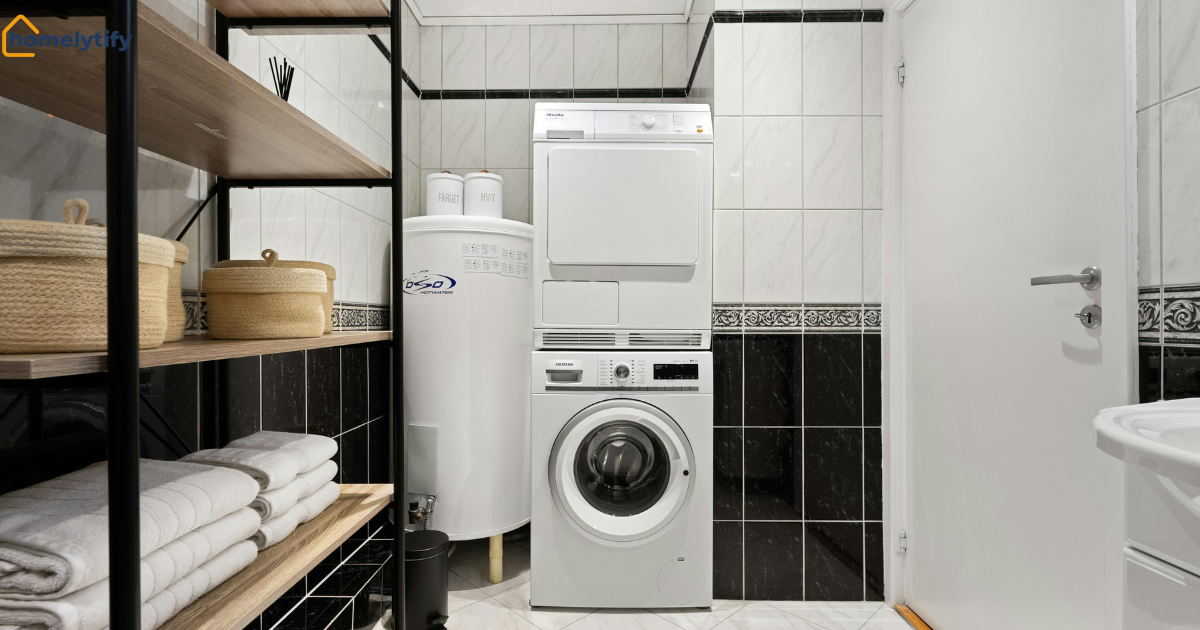
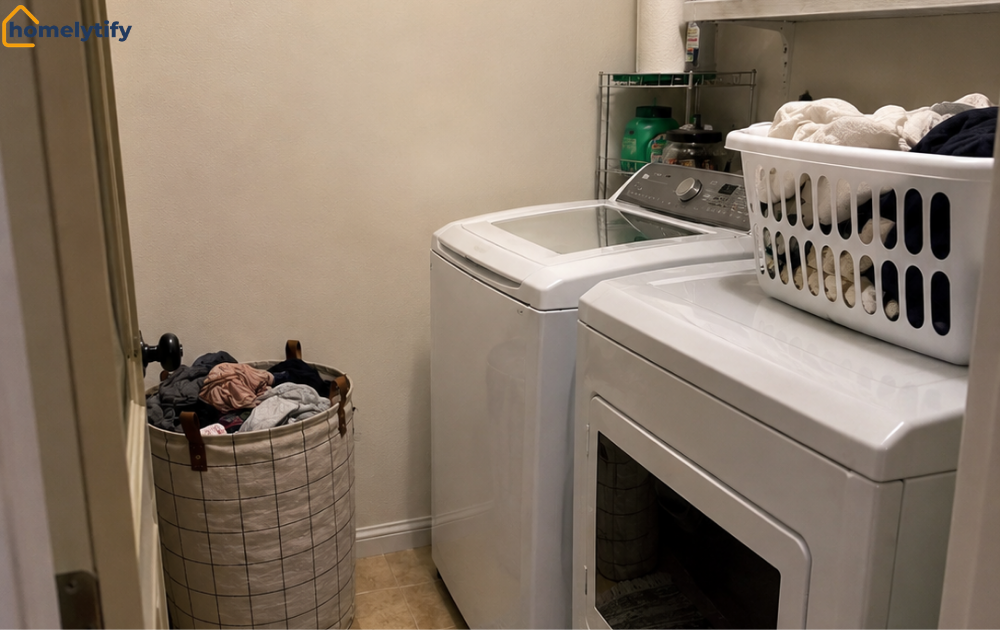
Small laundry rooms can quickly become cluttered. The washer and dryer take up most of the floor space, leaving little room for detergents, baskets, and cleaning supplies. There may also be clothes waiting to be washed or folded.
The good news is that you don’t need a renovation or expensive cabinets to make your laundry room work better. You can use the walls, doors, space above the machines, and even narrow gaps as useful storage areas.
In this guide, you’ll find 15 practical and budget-friendly ideas to help you organize a small laundry room and make better use of every inch.
Before You Organize Your Small Laundry Room
Before buying any kind of shelves, bins, or a rolling cart for your laundry room, take a few minutes to look at the space you already have.
First, you should measure the gaps beside and above your washer and dryer. Then, you can check how far the doors open and note any shelves or cabinets that aren’t being used properly. This will help you avoid buying storage items that don’t fit or make the room harder to use.
Then, you can easily decide what actually needs to stay in the laundry room. You should keep frequently used laundry supplies within easy reach and move rarely used items to higher or less accessible storage.
One more thing you should consider is what you need to store and where you have available space. Once you know this, you can start using the walls, doors, and vertical space more effectively.
Small Laundry Room Organization Ideas That Start With the Walls
When your floor space is limited, look up. At this point, the walls and the space above your machines can help you hold many of the things that would otherwise end up on the floor or piled on top of the dryer.
1. Install Wall-Mounted Shelves Above the Machines
The wall above a washer and dryer is often unused and left empty. It can provide some of the most useful storage in the room. You can keep items that you use regularly, like detergent, dryer sheets, stain removers, and other supplies, on the shelves.
If you have enough wall space, you should consider installing two shelves instead of trying to fit everything on one shelf. You can keep the supplies you use every day on the lower shelf and move less frequently used items, such as extra hangers or seasonal laundry products, to the higher shelf.
One of the most important points is to measure the space before installing anything. You should also make sure your dryer has a properly vented exhaust system to allow moisture and air to escape safely.
2. Add a Pegboard for Small Supplies
An empty wall can turn into a useful and flexible storage area if you use a pegboard, without taking up any floor space. You can use hooks or small baskets to keep lint brushes, clothespins, spray bottles, and other small laundry supplies off the shelves.
The useful part is that you can move the hooks around easily when you want to change the arrangement. If your storage needs increase and you want more space, you can easily adjust the pegboard and add more hooks or baskets.
3. Use Over-the-Washer Storage
If there is spare and unused space above or between your machines, you can use an over-the-washer storage rack to turn it into a useful storage zone. Depending on the layout, you can use the shelves for detergent, folded towels, baskets, or cleaning supplies.
Measuring the space is necessary before buying one. Without taking measurements, some racks can make it difficult to open a washer lid, load the machines, or access the connections behind them. These storage solutions are only helpful if you can still use the machines comfortably.
4. Add a Tension Rod for Hanging Clothes
A tension rod can give you a simple place to hang shirts, delicate items, or clothes that need to air-dry. You can easily install one between two suitable surfaces or use a rod designed for an existing cabinet or laundry area.
This is especially useful if you often move damp clothes from the washer or dryer to another room to hang them. Keeping a small hanging area in the laundry room can save you that extra trip and prevent clothes from ending up on door handles or furniture.
5. Use the Back of the Door for Storage
You can use the back of the laundry room door, which is easy to overlook, but it can provide valuable storage in a small space. A slim rack can hold items such as cleaning cloths, lint rollers, stain-removal supplies, or other small products.
If you need to store a broom, mop, or dustpan, a narrow wall-mounted holder can also keep them together without taking up floor space.
You should check that the door can still open and close fully before adding anything. In a narrow laundry room, even a few extra inches can affect how easily you move around.
6. Choose Shallow Storage Instead of Deep Cabinets
In a small laundry room, deep cabinets can be difficult to use because smaller bottles and supplies often get pushed toward the back. They are easy to forget and difficult to reach.
Instead, try using shallow shelves or cabinets that let you see most of your supplies at a glance. If you do not use vertical space yet, you can also stack smaller storage units rather than using one large cabinet.
7. Add Pull-Out Storage for Bottles
In the laundry room, two items, detergent and stain removers, can take up more space than you expect, especially when they are stored inside a deep cabinet. You can use a pull-out shelf or narrow sliding organizer to bring the bottles forward. In this way, you do not have to reach into the back of the cabinet.
This can be especially useful for heavy detergent bottles that are difficult to move around. You can keep the products that you use regularly together and see them more easily when you open the cabinet.
You should check the weight limit and measure the inside of the cabinet before adding pull-out storage.
8. Use Cabinet Door Storage
You can use the inside of a cabinet door as extra storage without taking up more floor or shelf space. A small door-mounted organizer can be attached to the inside of the cabinet door. It can hold items such as stain-removal pens, clothespins, dryer balls, or cleaning cloths.
You can also use adhesive hooks for smaller items. You can use them to hang a small brush, measuring cup, or laundry bag where it is easy to reach.
Just make sure the organizer is not too bulky. If it prevents the cabinet door from closing properly, it can make the storage harder to use instead of making it better.
9. Create a Laundry Sorting Station
You should create a simple sorting station with two or three separate baskets or bins if you have enough space. Sometimes, sorting clothes on laundry day can become a bigger task when everything is mixed together in one large hamper.
You could use one for lights, one for darks, and another for delicate items. If you feel the floor space is limited, then look for narrow bins that fit under a shelf or beside the machines.
The goal is not to create a complicated system. The main purpose is to make things easier for you. When you sort clothes as they come into the laundry room, you do not have to make one large pile and separate everything later.
10. Stack Bins Vertically
When the floor space in your laundry area is limited and several baskets are spread across the room, stacking bins vertically allows you to use the same floor space while creating more storage.
You should choose bins that are designed to stack securely and use them for items that are easy to store together, such as extra laundry supplies, cleaning cloths, or spare hangers.
You can use the lower bins for heavier items and the higher bins for lighter items. Also, avoid stacking bins so high that you need a step stool to reach things you use every day.
11. Create a Lost-Sock Station
You can use a small basket, box, or any other kind of bin and place it somewhere close to the machines. This can become your lost-sock station.
Whenever you find a sock without its pair, put it in the container instead of leaving it on a shelf. You can check the bin when you fold laundry and match the pairs that turn up. This is a simple system, but it gives those loose socks a specific place to go and keeps them from becoming another source of laundry room clutter.
In my case, when my children come back from school, they throw their socks anywhere, and I cannot always find the matching pair. When I find a sock without its pair, I put it in the basket that I keep in the laundry area for this purpose. When I fold the laundry, I can easily match the pairs.
12. Organize Detergent and Small Supplies
Managing your laundry products is not difficult if you have a clear space in your laundry area. You can keep everyday supplies such as detergent, dryer sheets, stain removers, and laundry bags together instead of spreading them across different shelves.
You can use a small tray or open bin for smaller products. This makes it easier to pull several items out at once and return them to the same place when you’re finished.
13. Use a Small Caddy for Frequently Used Items
A small handled caddy can be useful in the laundry room. It can keep your most-used laundry supplies together and make them easy to move around. You might keep stain remover, a lint brush, clothespins, and a measuring cup inside it.
This works especially well if you do not have enough shelf space for several small items. Instead of leaving them scattered around the machines, you can keep them together in one portable container.
You should choose a caddy that is small enough to fit on your shelf or inside a cabinet. If you use it regularly, returning it to the same spot after each laundry session will help keep the system working.
14. Make Use of Narrow Gaps
The small gaps beside a washer, dryer, cabinet, or wall can become useful storage areas when the room is short on space. A narrow shelf, slim organizer, or small rolling storage unit may fit into a space that would otherwise remain unused.
When you want to buy anything, first measure the width and depth of the gap carefully. Also, check whether you need access to hoses, outlets, vents, or other connections behind the machines.
You can use these narrow spaces for items that fit comfortably, such as cleaning supplies, extra laundry products, or small baskets. The goal is to use an awkward space without making it harder to reach the machines.
15. Add a Slim Rolling Cart
A slim rolling cart can be useful when you need extra storage but do not have room for another cabinet. Choose one that fits beside the washer or dryer and is narrow enough to leave a comfortable walking path.
You can use its shelves for detergent, stain removers, dryer sheets, cleaning cloths, or other supplies. Because the cart can move, you can pull it out when you need something and push it back when you’re finished.
Before buying a cart, measure the available gap and check the height of the shelves. A cart is only helpful if it fits the space without blocking doors, machine controls, or your normal path through the room.
Common Small Laundry Room Organization Mistakes
A small laundry room can become cluttered if the system is difficult to use, even after adding storage. When you organize your laundry room, avoiding a few common mistakes can help you keep the space organized for longer.
- Buying storage before decluttering: Sort through your laundry supplies first. Get rid of empty, broken, or unused items before adding more bins or shelves.
- Using too much floor space: Avoid large baskets and bulky storage units that make it difficult to move around. Use walls, doors, and vertical space instead.
- Keeping rarely used items in easy-to-reach spots: Save the most accessible shelves for everyday supplies. Move extra and seasonal items to higher or less convenient storage.
- Ignoring the back of the door: Use the back of the door for lightweight items such as cleaning cloths, lint rollers, or small laundry supplies.
- Making the system too complicated: Keep storage simple so everyone knows where things belong and can put them away easily.
How to Organize a Small Laundry Room on a Budget
You do not need to buy expensive cabinets or completely remodel your laundry room to make it more organized. You can find cheap storage without buying furniture and make better use of the space you already have.
First, declutter the room and remove empty containers, broken items, and supplies that you are not using. After that, look for unused areas, such as the wall above the machines, the back of the door, or a narrow gap beside the washer or dryer.
For storage, start with simple solutions that fit your space. A few shelves, stackable bins, hooks, or a small caddy can help you keep everyday supplies together without taking up much room. You can also reuse containers you already have instead of buying new ones for every category.
If you still need more storage after decluttering, add one solution at a time. For example, you might start with a shelf for everyday laundry products and add a narrow cart later if you still need more space.
The goal is not to fill every empty area with storage. The main purpose is to create a simple system where the things you use regularly are easy to reach and easy to put away.
Conclusion
A small laundry room does not need a lot of storage items or an expensive renovation to work better. You can use the walls, the back of the door, the space above the machines, and narrow gaps more effectively.
You should start by decluttering the room and keeping only the supplies you actually need. Then, choose a few storage ideas that fit your space and your daily laundry routine. You do not need to use all 15 ideas at once.
The best organization system is one that makes your laundry routine easier and gives everything a clear place to go. You can start with one small area, make it work for you, and build from there.
Frequently Asked Questions
How can I maximize storage in a small laundry room?
You can use empty spaces such as the walls, the area above the machines, the back of the door, and narrow gaps beside the washer or dryer. You can also add shelves, hooks, stackable bins, and slim carts without taking up much floor space.
What is the best way to organize a small laundry room?
You should start by decluttering and keeping only the items you actually use. Then, group similar supplies together and use walls, doors, and vertical space to keep everyday items easy to reach.
How can I create a folding area in a small laundry room?
If you do not have room for a folding table, you can use a countertop above front-loading machines or a wall-mounted folding surface. Choose an option that can be folded away when not in use so it does not take up valuable space.
What should I put on shelves above the washer and dryer?
Keep everyday items like detergent, dryer sheets, and a spare basket on the lowest, most reachable shelf. Save higher shelves for things you use less often, like extra hangers or seasonal supplies.
Do I need to renovate to organize a small laundry room?
No. Most small laundry room organization ideas rely on shelving, bins, and wall storage rather than construction. A renovation only becomes necessary if you’re changing the room’s layout entirely.