How to Organise a Closet Without Shelves (Step-by-Step Guide)
You open your closet, and something falls on you. Sound familiar? No shelves, one hanging rod, and a pile of clothes and shoes that somehow multiplies overnight. If you’re renting an apartment, living in a shared space, or just stuck with a bare closet that came with zero storage built in, knowing how to organise a closet without shelves feels like a real puzzle.
The good news is you don’t need to drill a single hole or spend a lot of money to fix it. Most of the solutions here cost under $30, work for renters and students, and can be set up in an afternoon. By the end of this guide, you’ll know exactly what to buy, what to skip, and how to make even the most stripped-down closet feel like it was designed for you.
The Bare Rod Problem: Why Most Closets Fail Before You Even Start
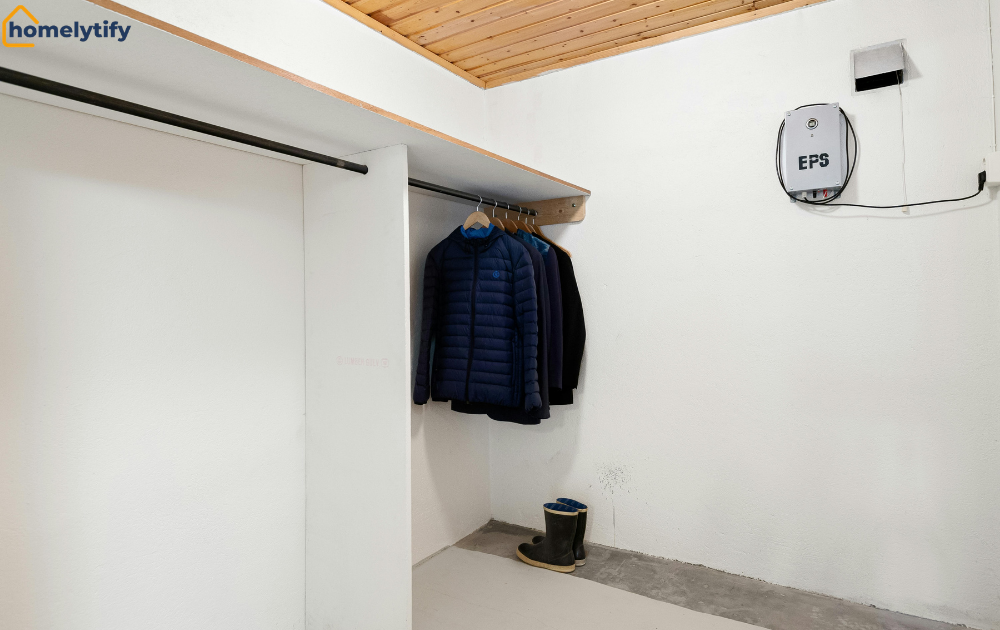
Most rental closets come with exactly one thing: a single hanging rod. That’s it. No shelves, no hooks, no floor racks. Builders do this to keep costs low, and landlords often leave it that way to avoid maintenance. The result? You end up shoving everything onto that one rod, piling shoes on the floor, and folding nothing because there’s nowhere to put folded things.
Here’s where most people get stuck: they go out and buy a bunch of organisers before they understand the actual problem. They end up with baskets they can’t fit, hanging shelves that are too tall, and stuff that still doesn’t have a home. The fix starts with understanding your specific space, not copying someone else’s Pinterest board.
Step 1: How to Organise a Closet Without Shelves: Start by Emptying It Out
Before you buy anything or move anything around, pull everything out. Every shoe, every hanger, every bag you forgot about. Lay it all on your bed or floor.
This step matters more than people think. You’re going to find three things: items you actually wear regularly, items you wear occasionally, and items that haven’t been touched in months. That last group is your biggest enemy in a small closet. A closet decluttering system only works if you’re honest about what you actually use.
Sort into three groups: keep, donate, and seasonal storage. Seasonal items (winter coats in summer, or sandals in winter) don’t need to live in your main closet. A flat storage bin under your bed or on a high shelf in another room frees up significant space before you’ve added a single organiser.
Once you’ve done the edit, measure your closet. Height from floor to the rod, rod length, width of the space, and how deep the closet is. Write it down. You’ll need these numbers before you order anything online.
Step 2: Master the Closet Rod Before Adding Anything Else
The single rod you inherited is actually more useful than it looks. Most people just don’t use it well. Before buying anything extra, optimise what’s already there.
Start by getting matching slim velvet hangers if you don’t have them. Standard plastic hangers take up about twice the space. Switching to slim hangers on a standard 40-inch rod can double the number of items you can hang. That’s not an exaggeration, it’s a genuine, immediate upgrade.
Double Your Hanging Space With a Simple Rod Extender
A cascading rod extender hooks onto your existing rod and drops down to create a second hanging level below it. These cost about $8–$15 and require zero installation. They work best for shorter items like shirts, folded pants, or jackets. If your closet is tall enough, this one addition can nearly double your hanging capacity without touching the walls.
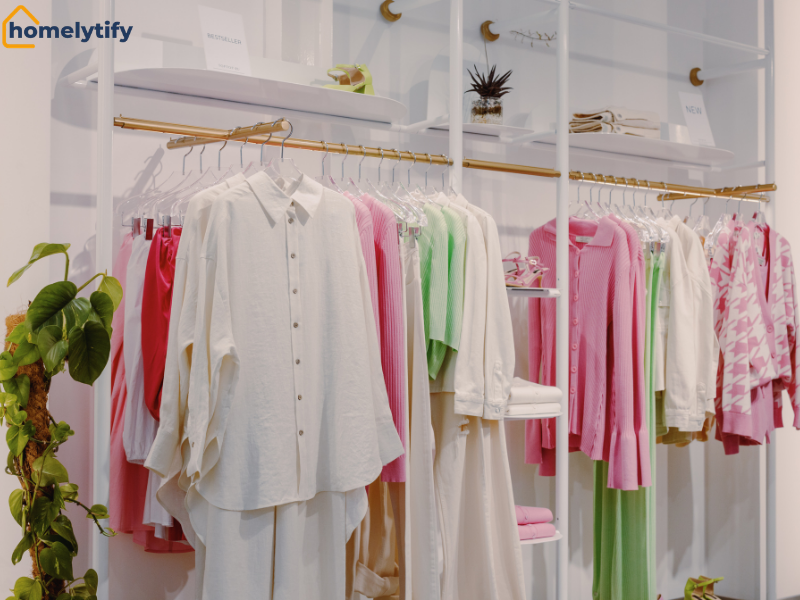
One thing people miss: leave the lower rod slightly shorter than the upper one, or you’ll find that longer items from the upper rod get tangled with what’s on the lower one.
Sort by Category, Not by Colour
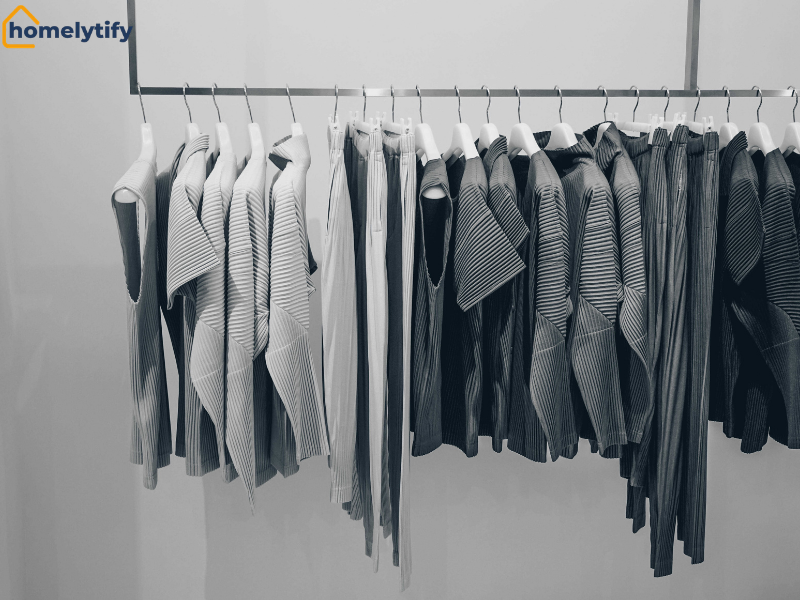
Colour-coded closets look great in photos but fall apart in real life. What actually works is grouping by category all shirts together, all pants together, all jackets together. This way, when you’re getting dressed, you go straight to the right section instead of scanning the entire rod. It takes about twenty minutes to reorganise and makes every morning faster.
Step 3: Small Closet Organisation Ideas Using Vertical Space
Once your rod situation is handled, the next biggest opportunity is the vertical space above and below it. Most bare closets have significant wasted height that’s easy to use without any drilling.
Vertical storage is the core of any space-saving closet strategy. The floor-to-ceiling height in most standard closets is between 7 and 8 feet, and the hanging rod usually sits around 5 to 6 feet up. That leaves meaningful open space both above the rod and below your hanging clothes.
Fabric Hanging Shelves for Closet Storage
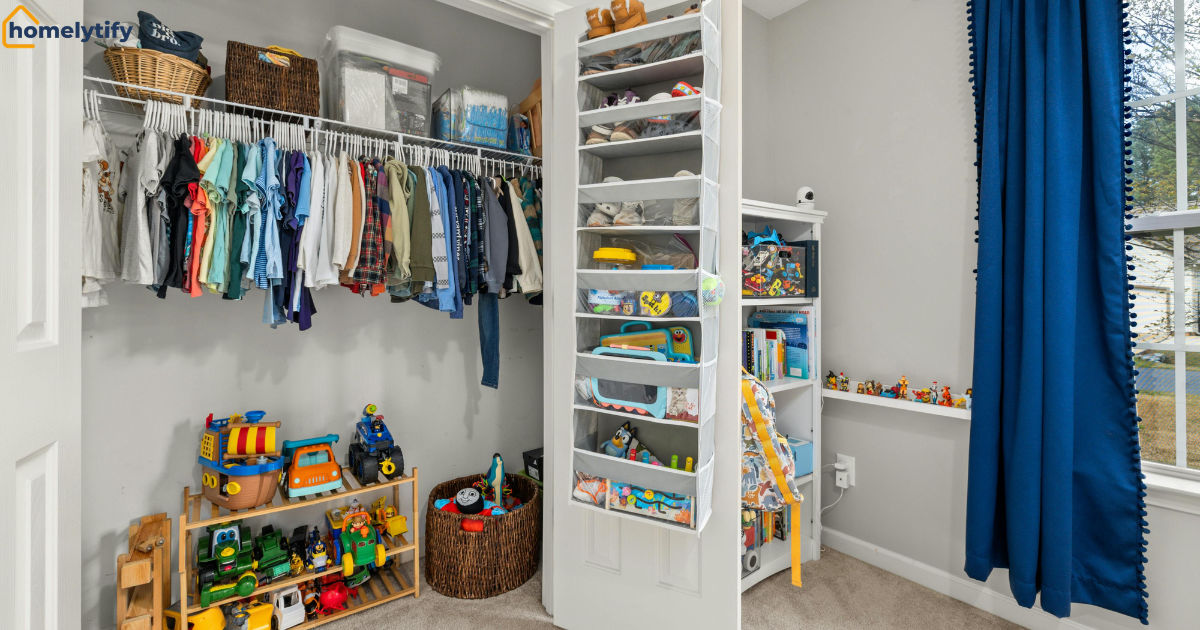
Fabric hanging shelves, sometimes called hanging cube organisers, loop over your closet rod and create 4 to 6 horizontal compartments below it. They’re ideal for folded sweaters, jeans, t-shirts, or even shoes. A decent one costs around $15–$25 and takes about two minutes to set up.
I tested this myself in a narrow rental closet that had nothing but a single rod and a bare bulb overhead. The one that genuinely worked was the IKEA SKUBB 6-compartment hanging organiser. It hooks directly onto the closet rod using two fabric loop straps, needs zero assembly, and folds flat when you want to store it away.
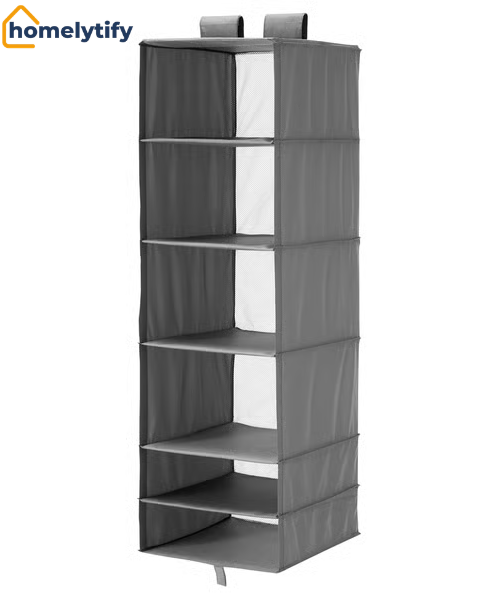
I used it for folded t-shirts and light sweaters, and within a week, I’d completely cleared the floor pile that had been living there for months. The compartments are deeper than they look. Each one holds a full stack of clothes without sagging. At around $15, it’s one of the best-value closet upgrades you can make without touching a wall.
The key is placing them at one end of the rod, not the middle. That way, they don’t push your hanging items together. If you have a shorter hanging section for shirts, put the fabric shelves on that side; they work well underneath items that end above the knee.
Hanging Closet Organiser Ideas for Folded Clothes and Accessories
Beyond the standard cube shelves, there are narrower hanging organisers built specifically for accessories, bags, belts, scarves, and small shoes. These hang like a slim vertical panel with individual pockets. They’re perfect for items that would otherwise pile up on the floor or get tangled on the rod.
One underrated version: a hanging shoe organiser. The kind with clear plastic pockets that typically go on the back of a door can also hook over a closet rod. Each pocket fits one pair of flats or sneakers, or you can use it for non-shoe items like rolled socks, underwear, or charging cables. It sounds odd, but it works.
Step 4: Over-the-Door Storage Solutions That Actually Work
The back of your closet door is one of the most underused surfaces in any small space. Over-the-door storage solutions don’t require any drilling; the hook sits on top of the door frame, and that’s it.
For a closet without shelves, the most useful over-door organisers are:
Pocket organisers with multiple rows are great for shoes, small bags, or folded items like scarves and hats. Look for models with reinforced pockets so they don’t sag under weight.
Hooks with hanging bars allow you to hang belts, ties, bags, or even a second row of lightweight clothing. A set of three or four hooks across the door can hold a surprising amount.
Narrow shelf units, some over-door systems include small flat shelves rather than pockets. These are better for bulkier items like folded jeans or a small stack of books, though you have to be careful about weight limits.
One important note: measure the gap between the bottom of your door and the floor before buying any over-door organiser. If the door opens into the closet, a thick organiser on the back can catch on your hanging clothes.
Step 5: Organise the Closet Floor Without Making It a Dumping Ground
Here’s where things usually fall apart. The floor becomes the default landing spot for everything: shoes, gym bags, laundry, stuff you’ll “deal with later.” Without shelves, it gets bad fast.
The goal for the floor is to give every item a defined home and to keep the layout accessible. Stackable bins or open-top baskets work much better than closed boxes here. When you can see inside a container without lifting the lid, you actually put things back where they belong.
For shoes specifically, a freestanding tiered shoe rack is the most practical solution. A three-tier metal rack typically holds 12–15 pairs and costs around $15–$20. Place it on one side of the closet so it doesn’t block the centre floor space. If you have boots or shoes with taller profiles, put them on the bottom tier.
For bulky items, a gym bag, an extra blanket, and that bag of items you keep meaning to donate, get one or two medium fabric storage bins with handles. Keep them on the floor, tucked toward the back. The handles matter: you’re more likely to move them when cleaning if you can grab them easily.
How to Organise a Closet Without Shelves When the Space Is Tiny
Some closets are so small or so shallow that even the basic setup described above won’t fully work. And some people don’t have a closet at all, just a corner or a few square feet of wall space. This situation is more common than most organisation guides acknowledge.
If your closet is essentially unusable or you’re working without any wardrobe, a freestanding garment rack is your best alternative. A basic metal rolling rack with a lower shelf costs around $25–$40. Place it against a wall, add your hanging items on top and folded items or bins on the bottom shelf, and you’ve created a functional open wardrobe.
To keep it from looking chaotic, keep all your hanging items in the same colour family of hangers, and fold anything that isn’t hung. An open rack with mismatched plastic hangers and items draped everywhere looks messy even in a large room. The same rack with matching hangers and intentionally placed items looks organised and intentional.
For apartments where even a garment rack feels too visible or space-consuming, a compact wardrobe cabinet (the kind that comes flat-packed and snaps together) is a good middle ground. These typically cost $40–$80, require no tools, and give you a mix of hanging space and small shelves. They’re not built for decades of use, but for a renter or student, they work well.
The Real Reason Most Attempts to Organise a Closet Without Shelves Don’t Last
Most closet organisation attempts fail within a few weeks, not because the products are bad, but because of avoidable setup errors. Here are the ones worth knowing before you start.
And there’s real data behind why this matters. A 2025 study published in the Journal of Environmental Psychology found that clutter directly lowers life satisfaction and raises cortisol levels — the body’s primary stress hormone. You can read more about that research here: 7 Home Organisation Statistics That Explain Why Clutter Feels Expensive. The point isn’t to stress you out further — it’s to confirm that getting this right actually improves how you feel day-to-day, not just how your closet looks.
Buying organisers before measuring. A hanging shelf that’s two inches too tall will bunch against your clothes. An over-door rack that’s three inches too wide won’t sit flush. Measure everything first. This sounds obvious, but gets skipped constantly.
Overloading the hanging rod with fabric shelves. If you hang a six-shelf fabric organiser, a shoe organiser, and a cascading rod extender all on the same rod, you’ve turned one storage solution into three problems. Each add-on compresses the remaining space for actual hanging clothes. Choose one or two additions, not five.
Ignoring the weight limits of hanging organisers. Fabric hanging shelves are not load-bearing units. They’re meant for light clothing and small items, not stacks of heavy sweaters or shoes. Overloading them stretches the fabric and tips the whole thing. Jeans and sweaters need to go in sturdier solutions.
Not editing before organising. Organising clothes you don’t wear just moves the clutter around. If you skip the declutter step, you’ll run out of space no matter how many organisers you add. Every item that leaves the closet is worth more than any organiser you can buy.
Choosing style over function. Matching woven baskets and aesthetic bins are appealing, but if they don’t actually fit your closet dimensions or they’re hard to open quickly, you won’t use them properly. Function first, look second, especially in a space you access every single morning.
Conclusion
A closet without shelves isn’t a problem that needs a renovation; it’s a layout challenge that needs the right tools and a clear starting point. Empty the space first, measure before you buy anything, use your rod more effectively than you currently are, and then layer in vertical organisers and floor storage that match how you actually live.
You don’t need to spend a lot, and you don’t need to drill a single hole. Most of what works in a bare closet costs under $50 total and can be set up in a few hours. Start with one thing, even just switching to slim hangers and adding a rod extender, and build from there. A functioning closet doesn’t need to be perfect. It just needs to make your mornings easier.
Frequently Asked Questions
Can I really organise a closet without drilling holes?
Yes. Hanging organisers that attach to your existing rod, over-door hooks that sit on the door frame, and freestanding floor racks all require zero drilling. These are standard solutions designed specifically for renters.
What’s the single most useful thing to buy for a closet without shelves?
A fabric hanging shelf organiser (also called a hanging cube organiser) is the highest-value addition for most bare closets. It adds 4–6 storage levels instantly, costs around $15–$25, and works for folded clothes, shoes, or accessories.
How do I organise shoes in a closet that has no shelves?
A freestanding tiered shoe rack placed on one side of the closet floor is the most practical solution. Over-door shoe pocket organisers are also useful if the shoe rack takes up too much floor space.
My closet is very small. What’s the most important thing to do first?
Declutter before you organise. In a small closet, every item you remove creates more space than any organiser you add. Start by pulling seasonal items out of the main closet and storing them elsewhere.
Are fabric hanging shelves strong enough to hold heavy items?
No. Fabric hanging shelves are designed for light-to-medium items like t-shirts, light sweaters, or small accessories. Heavy items like boots, thick coats, or stacks of denim should go in sturdier floor-based storage bins or on a freestanding rack.