
How to Organize a Rental Home Without Drilling Holes (Budget-Friendly Ideas)
Trying to organize a rental home comes with a frustration that homeowners never have to think about: you cannot touch the walls.
No holes, no screws, and no permanent shelves. And if you damage anything, you lose part or all of your security deposit. So you end up with stuff piled on counters, bags thrown on the floor by the door, and a bathroom cabinet that has quietly become a disaster zone.
The apartment is technically yours, but it does not feel like it functions for you. The good news is that renters now have access to better damage-free storage solutions than at any point before. And most of them are affordable.
This guide walks through every room in a rental home and shares practical organization ideas for each space. Every tip is renter-friendly, requires no drilling or wall damage, and works on a budget without making you overthink every purchase.
You will also learn what most renters get wrong, which products are worth buying, and exactly where to start if you have no idea what to do first.
Why Renters Struggle With Home Organization
Rental home organization is genuinely harder than organizing a home you own. That is not an excuse; it is a structural reality that most organizational advice ignores completely.
The frustration is real, and it goes deeper than just the no-drilling rule.
The “Can’t Drill” Problem Nobody Talks About
When you own a home, storage problems have obvious solutions. No shelf above the toilet? Install one. Kitchen cabinets overflowing? Add a floating shelf on the wall beside them. No hooks in the entryway? Screw a rail in and forget about it.
Renters cannot do any of that without risking their deposit. And this matters more than it sounds because the most effective storage solutions, floating shelves, wall-mounted racks, and built-in organizers, all require wall penetration. The entire category of permanent wall storage is simply off the table.
This forces renters into a narrower set of solutions. And that narrower set requires more creativity, more knowledge of what actually works, and a willingness to think differently about how space gets used.
How Clutter Builds Up Faster in Rental Spaces

Rental homes, especially apartments, tend to have less built-in storage than owned homes. Fewer cabinets, smaller closets, limited pantry space, and bathrooms designed with aesthetics over function. Items accumulate with nowhere logical to go, so they land on the nearest flat surface and stay there.
And the consequences go beyond a messy countertop. A 2025 study published in the Journal of Environmental Psychology found that people who considered their homes more cluttered had lower levels of well-being and life satisfaction, as well as higher levels of negative feelings.
Clutter also reduces the psychological attachment people feel to their own homes, meaning a disorganized rental can quietly start to feel like a place you tolerate rather than a place that belongs to you.
The problem compounds in shared apartments, in spaces with awkward layouts, and in rentals with families or multiple occupants. More people are generating more items in a space that was not designed to hold them.
The practical answer is not to fight the layout. It is to work within it using systems that do not require permanent changes.
Smart Ways to Organize a Rental Home Without Touching the Walls
The best renter-friendly storage solutions share one characteristic: they create usable space without making any contact with your walls that a landlord would notice or penalize.
This section covers the two foundational tools that make everything else in this guide possible.
Command Strips and Adhesive Hooks: The Renter’s Best Friend
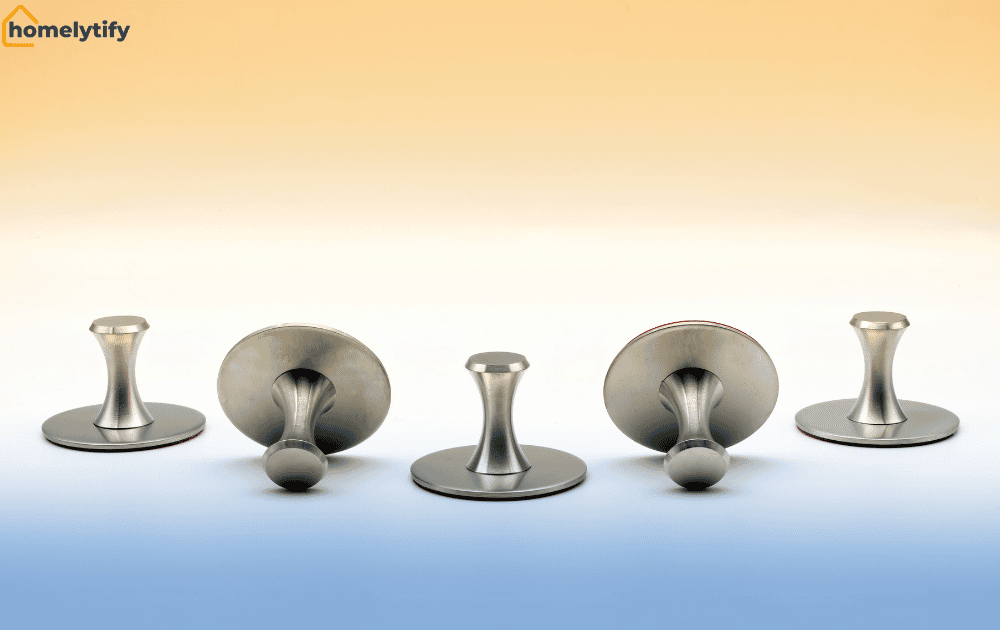
Command strips and adhesive hooks have genuinely changed what is possible for renters. Used correctly, they hold meaningful weight, remove cleanly from most painted surfaces, and leave zero trace.
The key phrase is used correctly.
Most people who say Command Strips failed usually applied them to a surface that was not completely clean and dry. Others hung something before waiting the recommended one hour. Follow the actual instructions, and they perform remarkably well. What you can actually hang with command strips:
A small mirror on the back of a bedroom door. Hooks beside the front door for coats and bags. A utensil holder on the side of a kitchen cabinet. A towel ring in the bathroom without touching the tile. A fabric organizer pocket beside a desk. Photo frames and lightweight artwork throughout the apartment.
Check the weight limit on every product before buying. Standard command hooks hold up to seven pounds. Heavy-duty versions handle up to sixteen. Stay within those limits, and they will last the duration of your tenancy without damaging anything.
One practical note: command strips perform poorly on textured walls, brick, and some older painted surfaces. Test one in a low-visibility spot before committing to a large installation.
Freestanding Furniture That Does Double Duty
Freestanding furniture is the most underused tool in rental home organization. Because it requires no installation at all, it is completely landlord-approved by definition, and it moves with you when you leave.
A slim bookcase placed in an awkward corner becomes a pantry when the kitchen has no storage. A storage bench at the foot of the bed handles blankets, seasonal items, and bags without touching a wall or taking meaningful floor space.
A narrow freestanding shelf unit beside the refrigerator, if there is a gap, adds a full pantry’s worth of storage for under forty dollars. The specific products worth knowing about:
Ladder shelves lean against any wall without mounting, provide four to five levels of storage, and are available at most home goods stores for twenty to sixty dollars. They hold books, baskets, plants, and folded items without drilling a single hole.

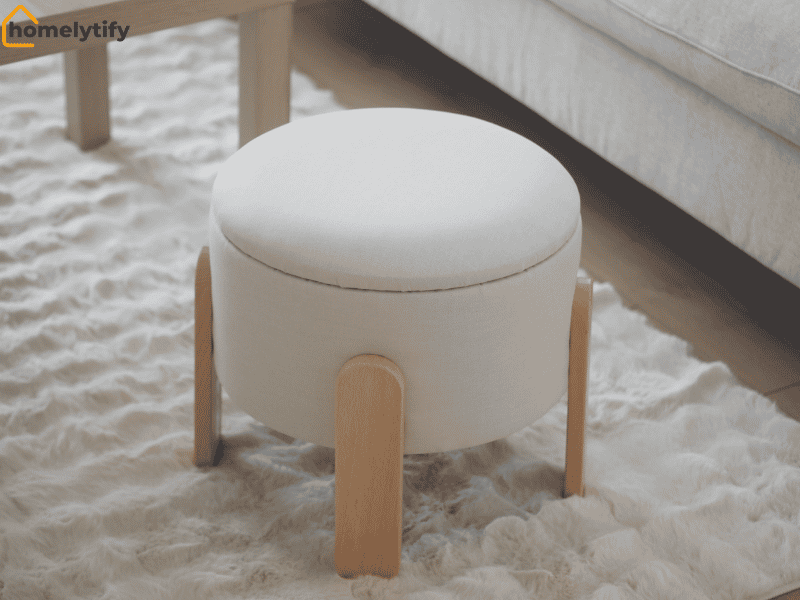
Storage ottomans function as seating, a surface, and closed internal storage simultaneously. For small rental living rooms, this is one of the highest-value single purchases available.
Rolling carts move between rooms, tuck under counters, and provide open storage that is easy to reorganize. In a rental kitchen with no counter space, a rolling cart creates an extra work surface that wheels away when not needed.
How to Organize a Rental Home on a Tight Budget
Most renter-friendly organization content assumes you have money to spend on matching bins, premium command strips, and coordinating baskets. The reality is often different.
The good news is that the most effective rental organization solutions are cheap and in many cases completely free.
Dollar Store Finds That Actually Work

Dollar stores are consistently underestimated as organizational resources. Several specific products consistently deliver real value at minimal cost.
Tension rods one of the most versatile, cheap storage tools available. Under a kitchen sink, a tension rod stretched between the two side walls holds spray bottles by their triggers, freeing up the floor of the cabinet for bulkier items.
Inside a cabinet, a tension rod creates a vertical slot for baking sheets and cutting boards. In a bathroom vanity, it organizes cleaning supplies at eye level.
Small baskets and bins from the dollar store work identically to twenty-dollar versions from home goods stores. Use them for drawer organization, pantry grouping, bathroom surface containment, and remote control corralling on a living room shelf.
Adhesive hooks available in multipacks at dollar stores; these handle light loads effectively. Use them inside cabinet doors for measuring cups, on the back of bathroom doors for robes or bags, and on the side of refrigerators for frequently used items.
Clear stackable boxes, the cheap versions stack reliably and let you see the contents without opening them. For pantry items, bathroom products, and under-sink storage, clear containers consistently outperform opaque ones because nothing gets lost or forgotten.
Thrift and Repurpose Before You Buy New
Before buying any storage product, look at what you already own that could serve a storage function in a different location.
A basket from another room that is rarely used. Shoeboxes that can become drawer dividers when cut to fit. Glass jars that become bathroom organizers for cotton rounds, hair ties, and clips. A tray from the kitchen that defines and contains items on the bathroom counter.
The repurposing mindset has an additional benefit for renters specifically: it prevents the common mistake of buying storage products before knowing exactly what needs to be stored and where. Spend two weeks using what you have first. Then identify the specific gaps that genuinely require a purchase.
Room-by-Room No-Drill Organization Ideas
I learned this the hard way in my first rental. I spent the first three months fighting the space, buying bins before I knew what I needed, stacking things on every flat surface, and wondering why the apartment still felt chaotic even after I’d “organized” it twice.
The turning point was simple: I stopped trying to fit my old habits into a new layout and started working with the rooms as they actually were. The kitchen had no pantry, so I stopped looking for one.
The bathroom had a dead corner above the toilet that I’d been ignoring. Once I started solving the real problems instead of the imagined ones, the whole apartment clicked into place in about a weekend.
Generic organization advice helps to a point. Room-specific advice is where renters actually solve their problems. Every room in a rental home has unique challenges and unique opportunities.
Kitchen — Maximize Cabinet and Counter Space
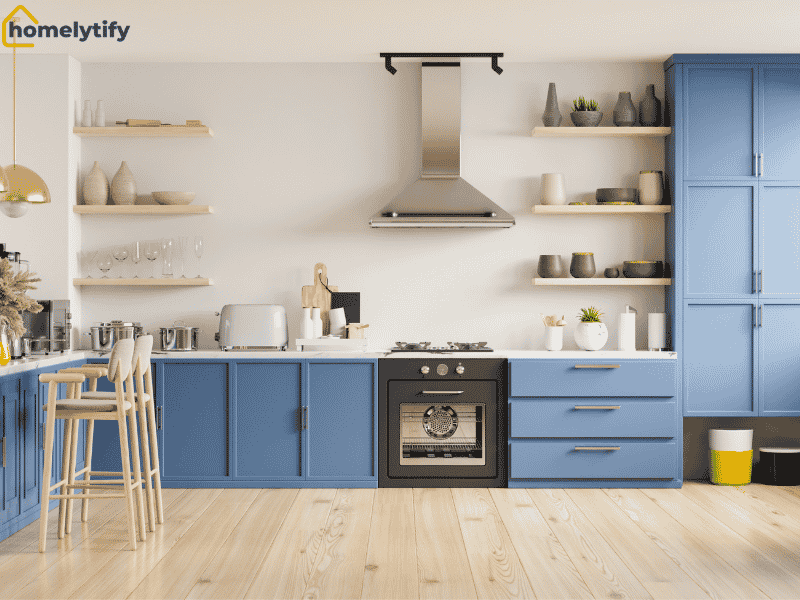
The rental kitchen typically has one of three problems: not enough cabinet space, not enough counter space, or both simultaneously. The solutions for each are different.
For cabinet overflow: Use stackable shelf risers inside existing cabinets to create a second level where only one existed. Plates on the bottom, bowls on the riser above. Mugs on one shelf, glasses on the riser. This effectively doubles cabinet capacity with a three-dollar product.
Install a tension rod inside the cabinet under the sink to hang spray bottles. Add adhesive hooks to the inside of cabinet doors for measuring cups, oven mitts, or aluminum foil boxes. These two changes together recover meaningful space from areas most people never use.
For counter space: Only items used daily earn counter real estate. Everything else finds a home elsewhere. A rolling cart beside the counter or the refrigerator handles appliances, coffee supplies, and cooking oils without using the existing counter at all.
Mount a magnetic knife strip to the side of a cabinet or the refrigerator using adhesive strips. This removes the knife block from the counter and puts knives within easier reach at the same time.
For apartments with zero pantry space, a narrow freestanding shelf placed against a kitchen wall or in an adjacent space becomes a functional pantry without any installation.
Bedroom — Storage Without a Built-In Closet
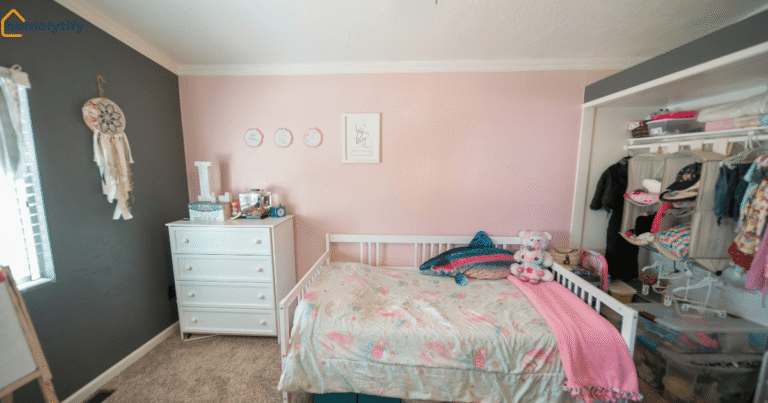
Small rental bedrooms face two consistent problems: not enough closet space and not enough floor space to add furniture that would solve the closet problem.
Under-bed storage is the most consistently underused asset in a small rental bedroom. Flat storage bins slide under most bed frames and hold seasonal clothing, extra bedding, and items used infrequently. If the bed frame does not have clearance, bed risers add four to six inches for under ten dollars.
Behind the door is the next most valuable real estate. An over-the-door organizer, the kind designed for shoes, holds accessories, small bags, folded items, or anything that does not have a clear home in the closet. These hang from the top of the door with no drilling and no adhesive.
For renters without a built-in closet at all, a freestanding clothing rack creates a functional wardrobe that moves with you. Keep it curated; a rack overloaded with clothes looks chaotic, regardless of the room size.
A deliberately selected capsule of frequently worn items on a rack looks intentional and can actually make a small bedroom feel more organized than a cramped built-in closet would.
Inside the closet: A second hanging rod installed in the space below shorter items doubles hanging capacity immediately. No drilling required, tension-based closet rods expand to fit between two walls and hold significant weight without any wall contact.
Bathroom — Small Space, Big Solutions
Rental bathrooms are almost universally under-designed for storage. A small vanity, a medicine cabinet that holds approximately twelve items, and no additional surfaces. Everything that does not fit becomes counter clutter.
Above the toilet is almost always space. A freestanding over-toilet shelf unit, no installation, adds three to four levels of storage in a footprint that is already not being used.
For toiletries, extra towels, toilet paper, and cleaning supplies, this one piece of furniture solves the majority of rental bathroom storage problems.
Under the sink with a tension rod for spray bottles, plus clear stackable bins for other products, recovers what is typically the most chaotic and wasted storage space in a rental bathroom.
On the counter: A small tray defines and contains what lives there permanently. Whatever does not fit in the tray does not belong on the counter. This rule alone, a single tray with a strict limit, keeps bathroom counters from becoming a rotating collection of everything without a home.
Inside cabinet doors: Adhesive hooks or a slim over-door organizer on the inside of the vanity door creates storage for hair dryers, flat irons, or cleaning supplies. The inside of a cabinet door is unused storage in most rental bathrooms.
Common Mistakes Renters Make When Organizing
These are the mistakes that keep rental home organizations from working even when people put genuine effort in. Knowing them in advance is the fastest shortcut available.
Buying Storage Before Decluttering First
This is the single most expensive and least effective organizing decision a renter can make.
Most rental home clutter problems are volume problems, too many items for the available space. Buying additional storage for too many items does not solve the volume problem. It temporarily contains it while often adding to it, since the storage products themselves take up space.
The right sequence is always: remove what does not belong, then identify what storage is actually needed, then buy the minimum required for what remains. Skipping step one and going straight to step three is why people have drawers full of organizers that did not fix anything.
Ignoring Vertical Space
The average renter uses storage at counter height and below. The wall space above furniture lines, above doors, and near ceilings is almost always completely empty.
A ladder shelf or narrow bookcase placed against a wall extends storage vertically without touching the wall. The space above kitchen cabinets holds items used infrequently, seasonal serving pieces, spare paper goods, and rarely used appliances.
The space above a doorframe can hold a narrow floating shelf for books or baskets using adhesive mounting strips rated for the weight. Renters who train themselves to look up when assessing storage options consistently find more usable space than they expected.
What to Look for When Buying No-Drill Organizers
Not all renter-friendly storage products perform equally. Some work well for years. Others fail within weeks and cause the wall damage they were designed to prevent.
Knowing what to check before buying saves money and protects your deposit.
Weight Limits, Materials, and Rental-Safe Labels
Weight limits are the most important specification to check on any adhesive or tension-based product. Never estimate, always read the listed maximum weight and stay below it. Command strips, in particular, are very clear about weight limits per hook. Overloading them is the primary reason they fail and damage paint.
Surface compatibility matters more than most renters realize. Adhesive products designed for standard painted drywall may not work on textured surfaces, fresh paint under 7 days old, brick, cinder block, or wallpaper. Check the manufacturer’s listed compatible surfaces before purchasing. Test on a small area before full installation.
Humidity resistance is critical for bathroom products. Standard adhesive hooks lose their grip in high-humidity environments over time. Products specifically labeled for bathroom use or rated as humidity-resistant maintain adhesion significantly better. This distinction is rarely advertised prominently; look for it in the product specifications.
Tension rod quality varies enormously at low price points. Cheap tension rods slip over time, especially under any weight. Rods with rubber ends grip better than those with plastic. Rods rated for the specific weight you are hanging perform reliably. Rods used beyond their rated weight eventually slip and dump contents onto whatever is below.
Rental-safe labels on products, sometimes labeled removable, damage-free, or renter-approved, are worth looking for but not sufficient on their own. Always check the removal instructions and test on a hidden surface first, regardless of what the label claims.
Conclusion
Organizing a rental home is a solvable problem. The constraints are real: no drilling, limited budget, temporary living, but the solutions available within those constraints are better than most renters know.
The practical path forward: Start with decluttering. Before buying a single organizer, remove what does not belong in each room. This one step consistently creates more usable space than any storage product.
Then tackle the highest-impact areas first. The kitchen counter and under-sink cabinet, the bathroom counter, and the area behind the front door give the fastest visible results with the least effort.
Use adhesive hooks and command strips for lightweight vertical storage on walls and cabinet doors. Use freestanding furniture for heavier storage needs. Use tension rods under sinks and inside cabinets to recover space that currently holds nothing.
Check weight limits on everything before installation. Test adhesive products on hidden surfaces first. Stay within the stated limits, and virtually all renter-friendly solutions perform reliably for years. One room at a time. Finish one area before moving to the next. A fully organized kitchen followed by a functional bathroom is worth more than five rooms that are each twenty percent better.
Frequently Asked Questions
How do you organize a rental home without damaging the walls?
Use command strips, adhesive hooks, over-the-door organizers, freestanding ladder shelves, storage ottomans, and tension rods inside cabinets. These create solid storage without wall damage and remove cleanly when you leave.
What are the best no-drill storage ideas for renters?
Top no-drill options include tension rods under the kitchen sink, over-toilet freestanding shelves, adhesive hooks inside cabinet doors, rolling carts, and over-the-door organizers — all requiring zero wall penetration.
How do you organize a small rental kitchen with no pantry?
Place a narrow freestanding shelf as a pantry substitute, use stackable shelf risers inside cabinets, install a tension rod under the sink for spray bottles, and mount a magnetic knife strip on a cabinet side to free up counter space.
Are command strips safe for rental apartment walls?
Yes, when used correctly. Clean and dry the surface first, wait an hour before hanging, and stay within weight limits. They remove cleanly at the correct angle. Test one strip in a hidden spot first, as they may not work on textured walls or wallpaper.
What should renters organize first in a new apartment?
Declutter first, then tackle the kitchen counter, under-sink cabinet, bathroom counter, and entryway. These high-impact areas deliver the fastest visible results. Then work room by room, completing each space before moving to the next.