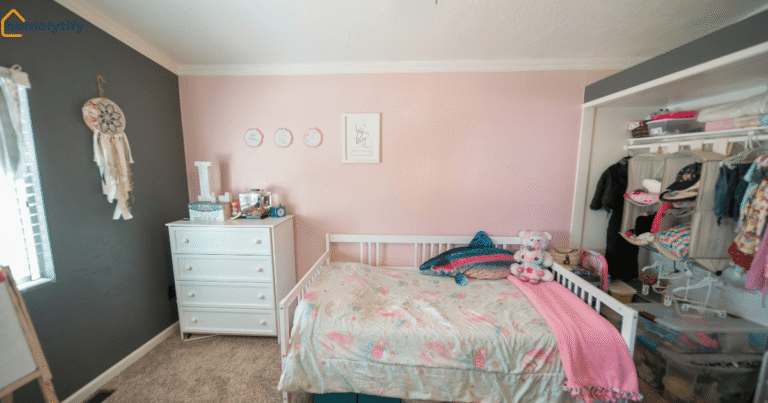

9 Small Bedroom Organization Ideas on a Budget (Most Are Free)
Small bedroom organization ideas on a budget are everywhere, but most of them skip the part where they actually work, and it shouldn’t feel this hard.
You walk in at the end of a long day, and instead of feeling calm, you feel buried. Clothes pile up on the chair, random stuff takes over the nightstand, and there’s no clear surface anywhere.
Most people assume fixing it requires a trip to IKEA or a hundred-dollar Amazon haul. It doesn’t. Most bedroom clutter problems are solved with habits and rearranging, not buying more stuff. Some ideas take ten minutes.
None requires spending real money. And a few of them will make your room feel noticeably bigger before the day is over.
Small Bedroom Organization Ideas on a Budget That Require No Shopping
Here’s the truth most organization content won’t tell you: buying products to organize a cluttered room usually makes the problem worse.
You add more stuff before dealing with what’s already there. The real issue in most small bedrooms isn’t lack of storage, it’s too much stuff and no clear system for the stuff you have.
The Myth That Organizations Require Expensive Products
Walk into any home store, and you’ll see a wall of bins, baskets, drawer dividers, under-bed containers, and wall-mounted systems.
They look satisfying. They also cost $15 to $80 each, and most people buy them before they’ve figured out what they actually need to store. The result? Those products sit stacked in a corner, adding to the clutter they were supposed to solve.
I fell for this myself. I once bought a set of Sterilite 6-Pack Tall Weave Baskets before I had even sorted through my stuff. They looked clean and practical on the product page.
When they arrived, two didn’t fit my shelf, and one was too floppy to hold its shape without something inside it. They sat in the corner for two weeks before I folded them back up. The bins became the clutter they were supposed to solve.
Organization is a behavior, not a product. A $40 drawer organizer doesn’t organize anything you do.
The drawer organizer just holds things once you’ve already done the work of deciding what stays and where it goes. That decision-making is free.
What Actually Makes a Small Bedroom Feel Organized
Three things: clear surfaces, visible floor space, and everything having a designated spot. That’s it. You don’t need matching storage boxes or a Pinterest-perfect setup.
A bedroom feels organized when you walk in, and your eyes aren’t being pulled in twelve directions at once. One clear nightstand, one walkable path from the door to the bed, and clothes that aren’t draped over furniture- that’s the whole game.
What to Do Before Spending a Single Dollar
Please stop before you search for products or make a list of what to buy; do the free work first. Most people skip this.
As a result, they end up spending money on a problem they could have fixed for free in just one afternoon.
Declutter First: It Costs Nothing and Changes Everything
Pull everything out of one zone at a time: a drawer, a shelf, under the bed. Put it all on the floor or the bed. Now sort it into three groups: keep, donate, and trash.
Be honest. If you haven’t used something in six months and it’s not seasonal, it’s clutter. If it’s broken and hasn’t been fixed in three months, it’s not acceptable.
If it’s sentimental but you have ten versions of the same thing, keep one.
Here’s where most people get stuck: they keep too much. The real goal isn’t to organize everything you own; it’s to own less than your space can comfortably hold.
When your bedroom only contains what you actually use, organization becomes almost automatic.
How to Identify What Your Bedroom Actually Needs
After decluttering, look at what remains and ask: where does this logically live? Things you reach for daily, phone charger, water bottle, book, glasses, should be within arm’s reach of where you use them.
Things you use weekly, such as extra blankets, workout clothes, and accessories, can live in a secondary spot. Things you rarely use have no business taking up prime real estate in a small bedroom.
This assessment is free and takes about twenty minutes. It’ll tell you exactly what kind of storage you need before you spend a dollar on anything.
9 Budget-Friendly Bedroom Organization Ideas That Actually Work
These ideas work. Not just in theory, but in actual small apartments and cramped rented rooms where you can’t drill holes.
And where you don’t have a spare hundred dollars to throw at the problem.
1. Use Vertical Wall Space With Items You Already Own
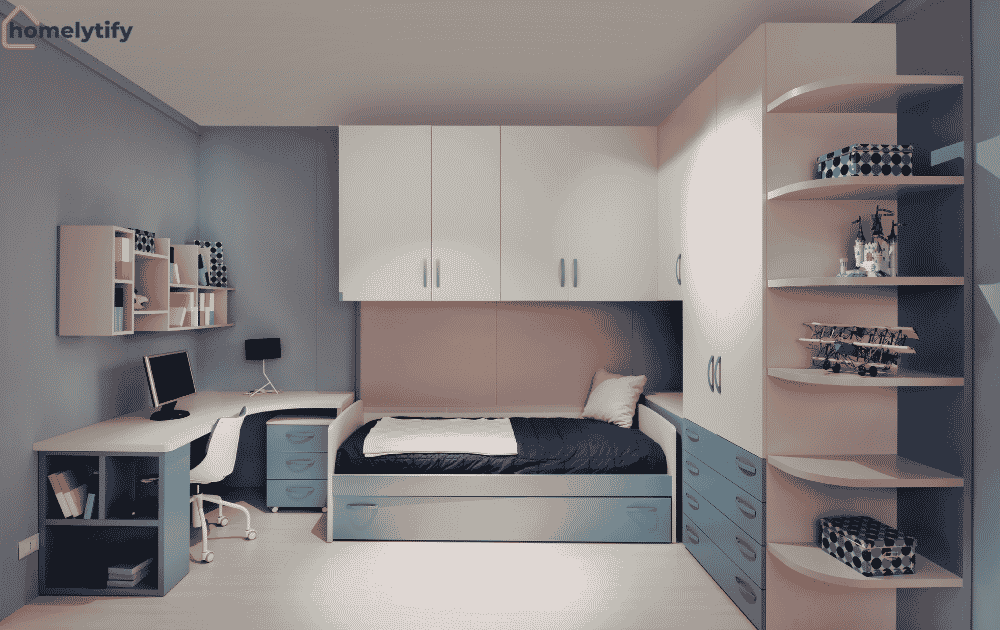
Floor space is limited. Wall space usually isn’t. Most small bedrooms have bare walls from eye level up, and that’s wasted real estate.
Look around your home for items that can mount or hang a small shelf you removed from another room, a tension rod you’re not using, or an old towel rack. Even a few sturdy nails and S-hooks can also work.
Command strips work on most rental walls and hold more than people expect. A simple row of nails or hooks at shoulder height can hold bags, hats, belts, or a weekly outfit.
You’re not decorating, you’re moving storage off the floor and onto the wall, which immediately makes the room feel less cramped.
2. Repurpose Boxes and Containers as Drawer Dividers
Open any junk-filled drawer, and you’ll find things mixed with no logic: socks next to charging cables next to receipts. The reason it stays that way is that everything can slide around freely.
A drawer divider fixes that, but you don’t need to buy one.
Shoeboxes, cardboard gift boxes, small food containers, even folded cereal boxes cut to size, all work as drawer dividers. Line them up inside the drawer and assign one category per box. Socks in one.
Underwear in another. Phone cables in a third. It takes fifteen minutes and costs nothing. The drawer will stay organized because items physically can’t migrate to the wrong section.
3. Use Under-Bed Space With Flat Bins or DIY Solutions
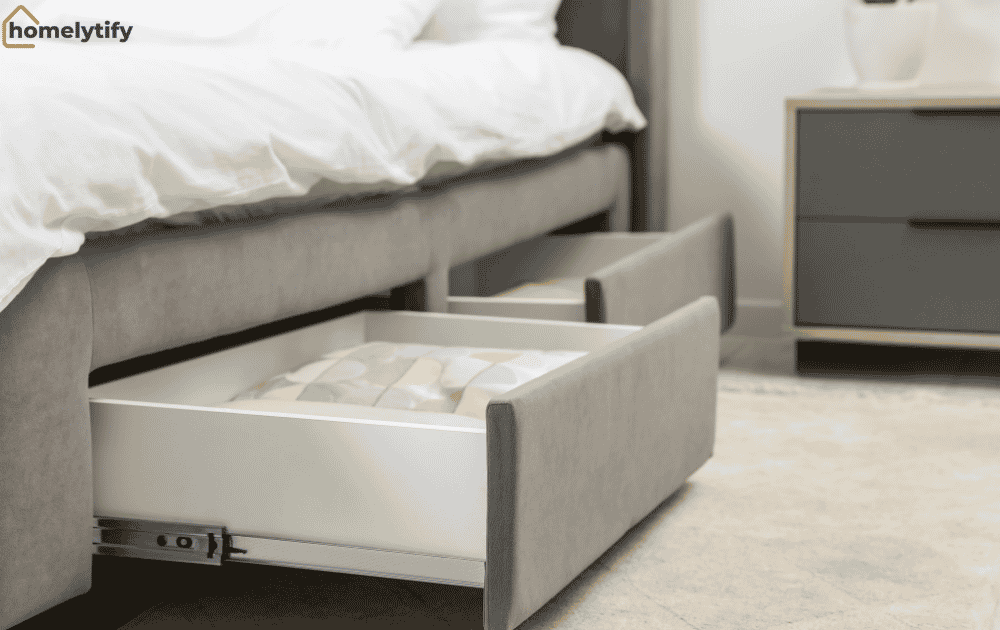
The space under your bed is one of the most underused storage zones in any small bedroom. If you don’t have dedicated under-bed storage containers, don’t buy them yet.
Use flat cardboard boxes from deliveries or retail shopping. Slide them under the bed with seasonal clothes, spare linens, or items you rarely need but can’t get rid of.
If you want something more durable, a few flat, wide plastic bins from a dollar store cost under two dollars each and slide in and out easily.
This isn’t glamorous, but it moves items out of your closet and drawers and creates room for the things you access daily.
4. Add Hooks Behind the Door for Daily Use Items
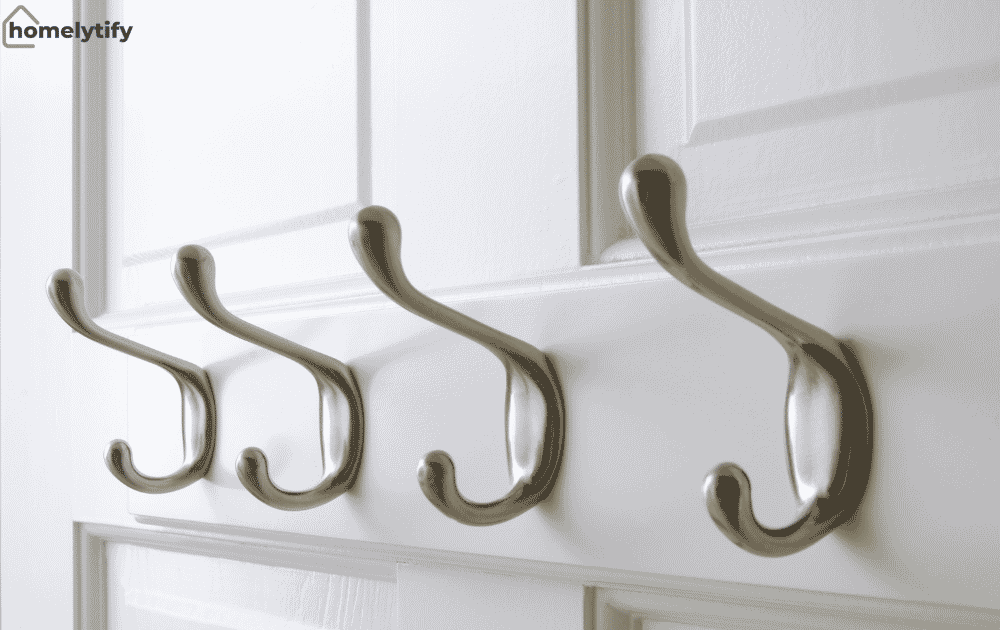
The back of your bedroom door is almost always empty, and it’s one of the most convenient spots in the room. A few over-the-door hooks are available for under three dollars, or free if you already have spare ones around the house.
They can hold tomorrow’s outfit, your bag, your robe, or a set of headphones.
The rule here is to keep it limited to daily-use items only. The moment the door becomes a dumping ground, it stops working.
Three to five hooks, one item per hook, reset them each morning. That’s the whole system.
5. Fold and Store Clothes More Efficiently

This one is free and makes a bigger difference than most people expect. The vertical folding method, popularized by Marie Kondo, involves folding clothes into small rectangles and storing them standing upright in the drawer rather than stacked flat.
This setup lets you see every piece of clothing at once. No more digging through a pile to find the shirt at the bottom.
It takes about an hour to refold an entire dresser this way. After that, adding clean laundry in the same format takes about the same time as flat folding.
The difference is a drawer where you can see everything, and clothes that don’t get crumpled from being buried.
6. Rotate Seasonal Items Out of the Bedroom
Your bedroom closet does not need to hold every item of clothing you own for every season of the year. Winter coats and heavy sweaters in July are just wasting space.
Swap seasonal items to under-bed storage, a spare closet, or labeled bags on a high shelf. This alone can free up a third of your closet space without getting rid of anything.
The rotation takes about thirty minutes twice a year. That’s a pretty good return for the space it frees up.
7. Rearrange Furniture to Open Up Floor Space
This is genuinely free and often overlooked. Most people set up their furniture when they first move in and never change it.
But the original layout might not be the best one for the space. Push the bed against the wall if it’s floating in the middle. Move the dresser to a corner instead of blocking a window.
Pull furniture slightly away from walls to create visual breathing room.
The goal is one clear, unobstructed path through the room. When the floor is navigable, and furniture isn’t blocking natural light, the space feels twice as large.
Spend twenty minutes experimenting with a different layout before buying anything new.
8. Create a Simple Surface Rule for Every Flat Area
Every flat surface in a small bedroom, such as the nightstand, dresser top, and windowsill, becomes cluttered within days if there is no rule governing it.
This happens quickly when there is no clear system in place to control what gets placed there.
The surface rule is simple: each flat area gets a maximum of three to five items. Every item placed there must earn its place by being used daily or being genuinely decorative.
The nightstand might hold a lamp, a book, a glass of water, and a phone charger. That’s it. Anything else that lands there gets put away before bed. The dresser top holds a few items you use every day: a watch, a hairbrush, and keys.
Nothing else lives there permanently. This rule costs nothing and prevents the gradual creep of clutter that undoes any organizational system within a week.
9. Build a Weekly Reset Habit That Takes Five Minutes
This is where most organizational systems fall apart. People organize their bedroom beautifully and then stop maintaining it because “maintenance” sounds like a lot of effort.
But it doesn’t have to be.
A five-minute weekly reset is all it takes. Put laundry away, clear the surfaces, check under the bed, and do a quick visual scan of each zone.
Set a timer. Do it the same day each week; Sunday evening works well. The goal isn’t a deep clean; it’s catching things before they pile up. A bedroom that’s reset weekly never gets back to the frustrating chaos you started with.
Free Storage Solutions for Small Bedroom Organization
There’s a whole category of organizations that require zero dollars, just a different way of looking at what you already own.
Household Items That Double as Storage
Look around your home before you shop. A mug holds pens, hair clips, or small accessories on a dresser. A tray from the kitchen corrals items on a nightstand and stops them from spreading.
A belt hung over a hanger keeps ties, belts, and scarves in order. An old shoebox becomes a nightstand caddy. A wide-mouth mason jar on the dresser holds everyday jewelry clearly and neatly.
None of these are hacks in the Instagram sense. They’re just repurposing functional items you already own instead of buying new containers.
How to Organize Without Buying Anything New
The honest approach: spend two weekends doing the free work first. Week one, declutter and sort. Week two, rearrange and implement the systems from this list.
Only after those two weeks will you know what, if anything, you actually need to buy. In most cases, the answer is very little.
The reason people keep buying organization products and still never feel organized is that they’re treating a decision-making problem as a product problem.
No product can make those decisions for you.
When It Is Worth Spending a Little Money
After you’ve done the free work, there are a few things worth buying. Not many. And not first.
Budget Buys Under Ten Dollars That Make a Real Difference
A few items genuinely earn their cost:
Over-door hooks (a set of three to five costs under five dollars) are hard to replicate with items you already own, and they take zero wall damage. Slim velvet hangers come in a pack of thirty and cost about eight dollars. They can double your closet hanging space because they are half the thickness of plastic hangers.
If your closet is packed, this is the single best small purchase you can make. Flat plastic bins for under the bed run one to two dollars each at dollar stores and outlast cardboard by years. A small turntable (lazy Susan) for a shelf or cabinet makes items at the back instantly accessible without digging.
What to Buy Last, Not First
Don’t buy matching baskets, decorative bins, label makers, closet systems, or multi-piece drawer organizer sets yet. First, live with the free systems for at least two weeks before you decide what you actually need.
You’ll often find you don’t need them. And when you do know you need something specific, you’ll spend far less because you’re buying for a real identified problem rather than an imagined one.
Common Small Bedroom Organization Mistakes That Cost You Money
A few patterns come up again and again, and they all end the same way: more clutter, less money.
Buying storage before decluttering. This is the most common one. You can’t know what containers you need until you know what you’re storing. Buying first means buying wrong. Return trips, wasted money, and containers that don’t fit your actual stuff.
Organizing by category without checking the frequency of use. Folding all your t-shirts neatly is satisfying, but it is useless if the three shirts you wear every week are buried under the twelve you wear twice a year.
The real problem is not organization; it is that your most-used items are not easily accessible. Organize by how often you use something, not just by type.
Creating systems that require ongoing effort to maintain. A color-coded closet or a perfectly labeled drawer system sounds great.
But if it takes five minutes every time you put laundry away to maintain it, you’ll stop doing it within two weeks. The best system is one that’s easy to maintain, not one that looks impressive.
Using valuable primary storage for items you rarely need. Your nightstand and top dresser drawers should hold things you reach for every day. Rarely used items taking up primary space means your most-needed things get buried.
Move low-frequency items to secondary zones under the bed, top shelves, and rotation bags.
Treating the organization as a one-time project. The room will drift back to clutter. That’s not failure; it’s just how spaces work when people live in them.
Building the weekly reset habit (idea number nine) is what separates a bedroom that stays organized from one that needs a full redo every three months.
How to Maintain an Organized Bedroom Without Ongoing Spending
Maintenance doesn’t have to feel like a second job. The key is building a few lightweight habits that prevent buildup instead of trying to clean up massive clutter every few weeks.
A bedroom that stays organized doesn’t need more products or a bigger budget; it needs consistent, small actions that take almost no time.
- Do a two-minute surface clear every evening. Walk around the room and return anything that landed on a surface to its proper home. This takes less time than checking your phone and prevents the overnight accumulation that becomes a weekend project.
- Put clothes away the day you do laundry, not the day after. Laundry left in a basket for twenty-four hours almost always ends up back on the chair. The task takes three minutes and saves a recurring problem.
- Run the five-minute weekly reset on a fixed day. Same day, same time. It becomes automatic within three weeks. Sunday evening or Monday morning are the two most effective times to close the week; the other starts it clean.
- Do a fifteen-minute seasonal declutter twice a year. Spring and fall are natural moments. Pull out items you haven’t touched in six months and make decisions. This prevents the slow creep of items that accumulate without you noticing.
- When something new comes in, something goes out. One in, one out. This is the single rule that prevents the bedroom from reverting to its pre-organized state over time. It doesn’t apply to consumables, only to clothes, accessories, and belongings that occupy physical space.
- Keep a small donation box in the closet. When you find something that no longer fits or that you no longer want, it goes in the box immediately rather than back on the shelf. When the box is full, it leaves the house.
Conclusion
Small bedroom organization on a budget is mostly a thinking problem, not a shopping problem. The bedroom you want, with clear surfaces, accessible storage, and a space that actually feels restful, is already possible with what you have. You just need to arrange what you already have in a smarter, more intentional way. The clutter came from decisions that weren’t made; the organization comes from making them now.
Start with decluttering. Then rearrange. Then use the ideas in this list. Only after that should you even consider spending money, and even then, a few dollars on velvet hangers or over-door hooks is usually all you’ll need. Pick one idea from this list and do it today. Not all nine. One. The momentum from finishing something small is what makes the next thing easier.
Frequently Asked Questions
What is the best way to start a small bedroom organization?
Start by decluttering one zone at a time, a drawer, a shelf, or under the bed. Sort everything into keep, donate, and trash. Only after decluttering should you think about storage solutions. Most people find the room is already more manageable once unused items are removed.
How can I organize a small bedroom with no money?
Use cardboard boxes as drawer dividers, repurpose household containers for storage, hang items on the back of the door, fold clothes vertically to save drawer space, and rearrange furniture to open up floor space. None of these costs anything.
How do I maximize storage in a small bedroom?
Use vertical wall space with hooks or shelves, store seasonal clothes under the bed in flat bins, keep the back of the door for daily-use items, and rotate seasonal clothing out of the main closet twice a year. These steps free up significant space without buying anything.
How do I keep a small bedroom organized long-term?
Three habits make the biggest difference: a two-minute surface clear every evening, a five-minute weekly reset on a fixed day, and a one-in-one-out rule for belongings. Together, they take under fifteen minutes a week and prevent clutter from building back up.
What should I buy first for a small bedroom organization?
Nothing, until you have decluttered and rearranged first. After that, the only purchases worth making are slim velvet hangers, over-door hooks, and flat under-bed bins. All three cost under ten dollars total and solve real, identified problems.