
Small Apartment Living Room Storage: 15 Space-Saving Ideas
You know that feeling when you walk into your living room and immediately feel overwhelmed? Every surface covered, floor disappearing, can’t find the remote for two weeks. Sound familiar?
Finding the right small apartment living room storage solutions — without making the room feel like a storage closet — is a real challenge. I’ve lived in four tiny apartments and helped countless friends solve this exact problem. After all that trial and error, here’s what actually works.
Below are 15 specific, actionable ideas you can start on this weekend. Most are renter-friendly and budget-conscious.
Comparison: Which Storage Idea Is Right for You?
| Storage Idea | Average Cost | Renter Friendly | Difficulty | Best For |
| Under-Sofa Storage | $10-30 | ✅ | Easy | Extra bedding, seasonal items |
| Lift-Top Coffee Table | $50-200 | ✅ | Easy | Daily clutter (remotes, chargers) |
| Floating Shelves | $20-80 | ❌ | Medium | Books, plants, decor |
| Storage Ottoman | $40-150 | ✅ | Easy | Blankets, toys, gaming gear |
| Over-the-Door Organizer | $10-30 | ✅ | Easy | Cables, mail, small items |
| Corner Shelves | $15-50 | ❌ | Medium | Plants, candles, small decor |
| Tall Narrow Bookcase | $50-200 | ✅ | Easy | Book collections, baskets |
| Sofa With Storage | $200-800 | ✅ | Easy | Sheets, pillows, guest items |
| Nesting Tables | $30-150 | ✅ | Easy | Extra surface when needed |
| Window Bench | $50-300 | ✅ | Medium | Blankets, books, board games |
| TV Stand With Storage | $50-250 | ✅ | Easy | Media, games, electronics |
| Baskets and Bins | $5-30 each | ✅ | Easy | Mail, notebooks, kids’ toys |
| Pegboard | $15-60 | Depends | Medium | Keys, headphones, craft items |
| Above-Door Shelf | $15-40 | ❌ | Easy | Seasonal items, extra linens |
| Sofa Console Table | $40-150 | ✅ | Easy | Baskets, lamps, magazines |
What Are the Best Storage Solutions for a Small Apartment Living Room?
The best small apartment living room storage solutions combine vertical space, hidden compartments, and multi-functional furniture. Floating shelves, storage ottomans, and under-sofa containers add storage without taking up floor space. The key is choosing pieces that serve at least two purposes while keeping clutter out of sight.
The demand for space-saving solutions is real. According to a June 2025 industry report covered by GlobeNewswire, the global multifunctional furniture market was valued at $15.9 billion in 2024 and is projected to reach $25.4 billion by 2034, growing at nearly 5% annually, driven largely by shrinking urban living spaces.
Why? Because urban living is getting more compact. In cities like Seattle, Boston, and New York, micro-units now make up a large share of new apartment construction. People simply have less space, and they need furniture that works harder.
Sofa beds are consistently cited as one of the most popular categories of space-saving furniture.
Furniture typically takes up somewhere between a third and nearly half of the available floor space in a small apartment — meaning a large chunk of your room can already be taken up before you’ve added a single storage piece. The smart move is making that furniture earn its keep. People are tired of single-purpose pieces that waste precious square footage.
Vertical storage and multifunctional furniture remain the two most effective small-space strategies professional organizers recommend. In a small living room, storage isn’t just about finding space — it’s about creating it.
Before You Buy Anything: A Quick Checklist
Before you order a single storage piece, run through this checklist. Skipping these steps is where most people go wrong.
- Measure your available space. Wall width, floor area, ceiling height — write it all down. Bring a tape measure when shopping. This sounds obvious, but it’s the step people skip most often.
- Decide what you’ll actually store. Pull everything out of your living room first, then sort it. You don’t need to store things you don’t use — decluttering first makes every storage solution after it more effective.
- Check weight limits for wall-mounted products. Floating shelves and pegboards have limits. Overloading them is a safety risk.
- Choose multi-purpose furniture whenever possible. A single piece doing two jobs eliminates the need for separate furniture.
- Keep walking paths clear. Storage is useless if you can’t walk through the room. Leave at least 18-24 inches of walking space.
Which Storage Solution Should You Choose?
Not every idea works for every situation. Here’s a quick decision guide based on your specific constraints.
| If you live in a… | Start with these solutions |
| Studio apartment | Storage ottoman + floating shelves + under-sofa storage |
| One-bedroom apartment | Lift-top coffee table + tall bookcase + storage sofa |
| Tiny home (under 400 sq ft) | Wall-mounted shelving + sofa bed + nesting tables |
| College dorm | Over-the-door organizer + under-bed bins + corner shelves |
| Space with kids | Storage bench + baskets + closed cabinets (hide toys fast) |
| Space with pets | Closed storage only (ottoman with lid, cabinets) |
| Apartment with no drilling allowed | Over-the-door organizers + under-sofa storage + freestanding shelves |
| Very small budget | Baskets + bins + repurposed boxes + under-sofa storage |
15 Space-Saving Storage Ideas for Your Small Living Room
1. Use Under-Sofa Storage Containers
That space between your sofa and the floor? It’s prime storage real estate. If your couch sits at least six inches off the ground, flat storage containers slide right underneath — ideal for extra bedding, seasonal clothing, board games, photo albums, and off-season shoes.
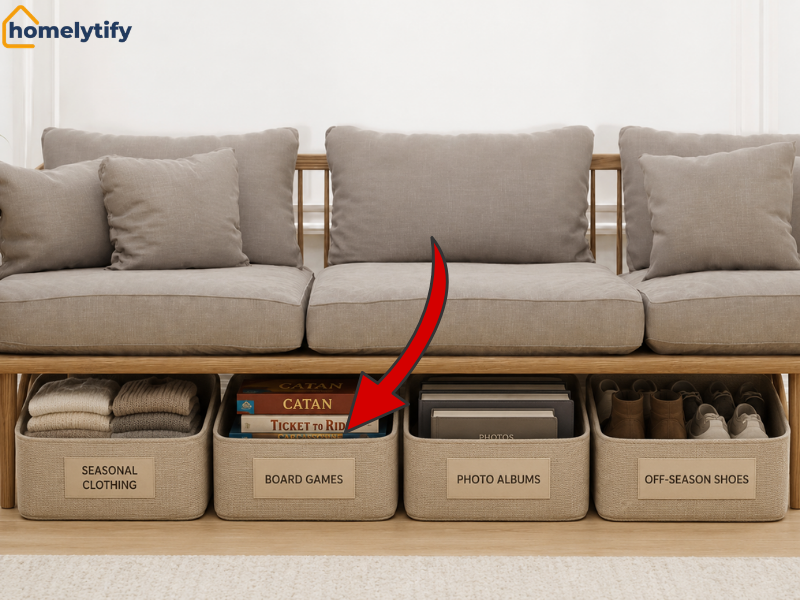
I found slim under-bed containers with wheels at a home goods store for about $15 each. They fit perfectly under my sofa and hold extra blankets, board games, and winter boots during summer. The wheels are a game-changer — no wrestling with heavy boxes. Just measure your sofa’s clearance first; you’ll need at least 5-6 inches for containers to slide in. And label each one so you know what’s inside without having to pull them all out.
2. Get a Lift-Top Coffee Table With Hidden Compartments
Your coffee table takes up floor space anyway. Make it work harder. Lift-top tables have hidden compartments underneath, perfect for stashing TV remotes, gaming controllers, coasters, magazines, and chargers out of sight.
I bought mine on Facebook Marketplace for $40. Best $40 ever spent. When guests come over, I sweep everything inside and suddenly have a clean coffee table. “These tables lift to reveal storage underneath. They are great for stashing items out of sight,” says Siân Pelleschi, president of the Association of Professional Declutterers and Organisers.
If a lift-top table isn’t in the budget, a vintage trunk works just as well as a coffee table and doubles as a hiding place for toys, games, and throws — I found mine at a flea market for $25. Either way, look for one with dividers inside so your stuff doesn’t become a jumbled mess.
3. Install Floating Shelves at Different Heights
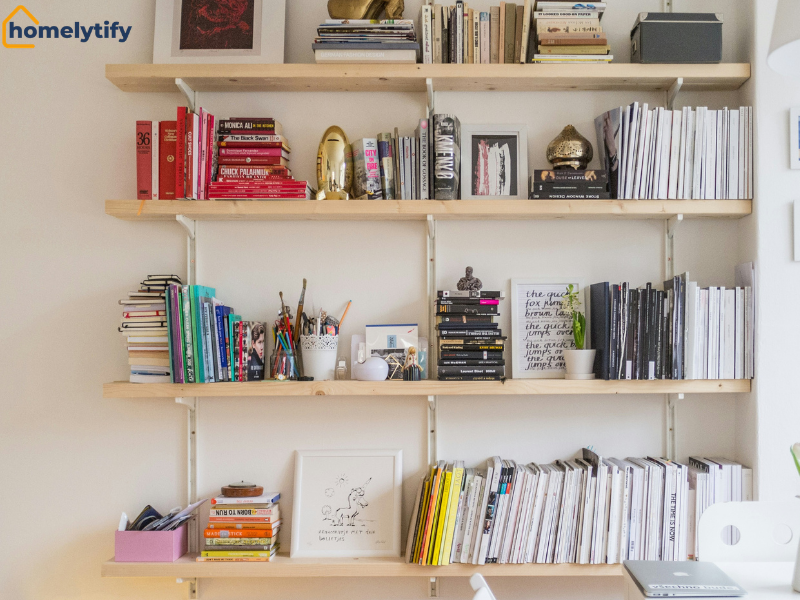
Floating shelves hold books, plants, and decor without bulky furniture underneath, making them ideal for small collectibles, framed photos, candles, and decorative baskets. But here’s where most people mess up: they put too much stuff on them.
The trick is to treat floating shelves like a display, not a dumping ground. Limit yourself to three or four items per shelf and leave space — cluttered shelves make the whole room look cluttered. Vary the heights instead of hanging them all in a straight line; it adds visual interest and makes ceilings feel taller. And always use a level before you drill. Nothing screams “rental” louder than crooked shelves.
4. Use the Space Above Your Doorway
The space above your door is totally wasted in most apartments, yet it’s perfect for seasonal items, extra linens, and books you’ve already read once you box them up. Install a shallow shelf above the door frame and store items in decorative boxes or baskets.
My friend stores extra candles, photo albums, and winter scarves up there. It’s out of sight and not in the way — one of the most overlooked “dead zones” in a small apartment. A basic wooden board and L-brackets from the hardware store cost under $20, and matching boxes or baskets make the whole setup look intentional rather than like you just shoved things up there.
5. Buy a Storage Ottoman
A storage ottoman is a footrest, extra seating, coffee table, and hiding place all in one — great for throw blankets, pillows, gaming equipment, cable clutter, and kids’ or pet toys. Mine holds gaming controllers, cables, and random things that don’t have a home elsewhere.
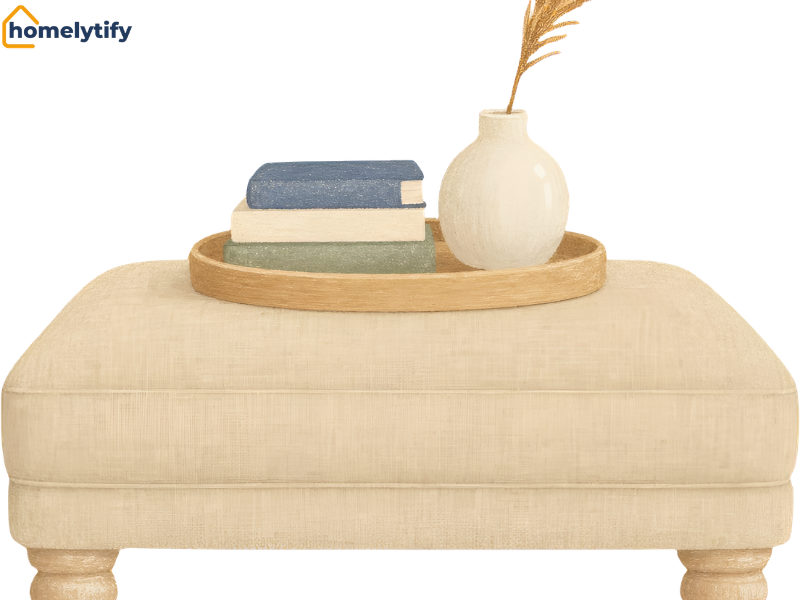
Some come with a reversible top that becomes a hard surface for drinks, so it doubles as a table too. “Look at multifunctional furniture such as storage ottomans that provide a dual function — serving as both seating and storage,” says Siân Pelleschi. Just make sure the one you buy has a lid that stays open on its own; gas hinges make a huge difference. And skip fabrics that show stains easily — leather or faux leather wipes clean.
6. Use Over-the-Door Organizers
The back of your door is valuable storage space for cords and chargers, remote controls, mail, small electronics, and craft supplies — all within reach but out of sight. I use the clear plastic kind so I can see exactly what’s inside without opening everything.
A basic shoe organizer works just as well as a dedicated “electronics” one and costs less. Whichever you choose, make sure your door can still close fully once it’s loaded up.
7. Build a Window Bench With Hidden Storage
Window benches with storage underneath are fantastic for extra bedding, books, magazines, board games, and seasonal decorations. You can build one using IKEA kitchen cabinets as the base — much cheaper than custom-built-ins.
I built one in my last apartment using two IKEA cabinets and a piece of plywood on top. The whole thing cost under $100 and became the most-used spot in my living room. Measure the window area carefully before you start, and don’t skip the cushion — a comfortable bench gets used; a hard one doesn’t.
8. Install Corner Shelves
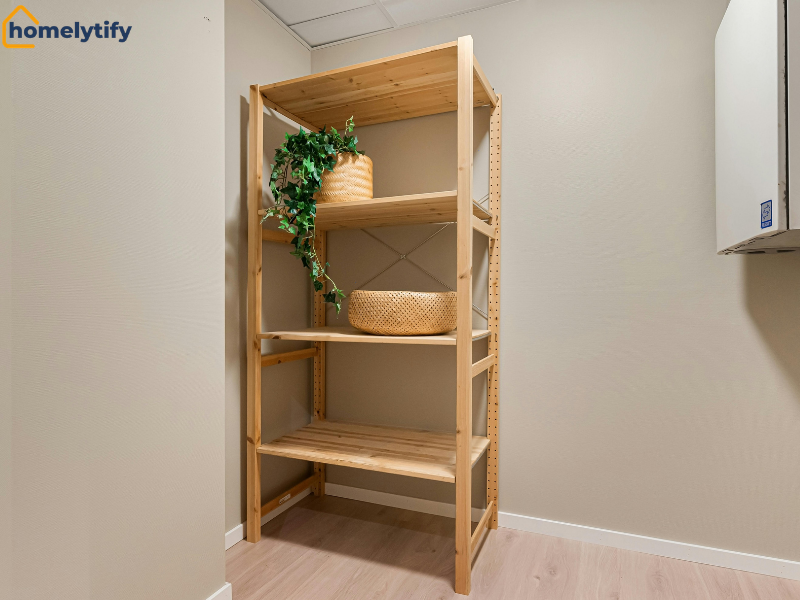
Those awkward corner spaces usually collect dust, but they’re perfect for small plants, candles, decorative items, and framed photos without taking up any usable floor space.
I installed three corner shelves in my living room within an hour using a basic shelf kit. It turned a useless corner into a decorative feature.
Just don’t overload them — corner shelves can’t hold as much weight as flat wall shelves, so keep what you put there light.
9. Get a Sofa With Built-In Storage
Sofa beds with built-in storage under the mattress are next level for stashing extra sheets, pillows, blankets, guest towels, and out-of-season clothing right where you need them.
Some even have shelves built into the arms or underneath. “Some sofas have under-seat storage, which is perfect for stashing away items you don’t need every day,” says Siân Pelleschi. If a new sofa isn’t in the cards, flat storage containers slide underneath your existing one just as well. And if you do go shopping, look for a sofa bed with a memory foam mattress — it makes a real difference for guests.
10. Use Nesting Tables for Flexible Extra Surface
Nesting tables aren’t hidden storage like the other ideas here, but they solve a related problem: needing extra surface space without a permanent footprint. When not in use, they stack together and take up the space of a single side table, freeing up floor space that a full-size second table would otherwise claim — handy for when guests come over and need somewhere for drinks or snacks.
Choose a set without too much height difference between tables, so each one is still useful even when stacked, and test the legs for wobble before you buy.
11. Place Tall, Narrow Bookcases
Tall, narrow bookcases give you far more storage than short, wide ones for the same floor footprint — great for books, photos, collectibles, plants, and baskets of small items.
I have a six-foot-tall skinny bookcase that holds my entire book collection, photo frames, and decorative items. It only takes up a small corner. Just make sure to anchor tall bookcases to the wall; tipping is a real safety hazard. Arranging items by color or size also makes the whole thing look more intentional.
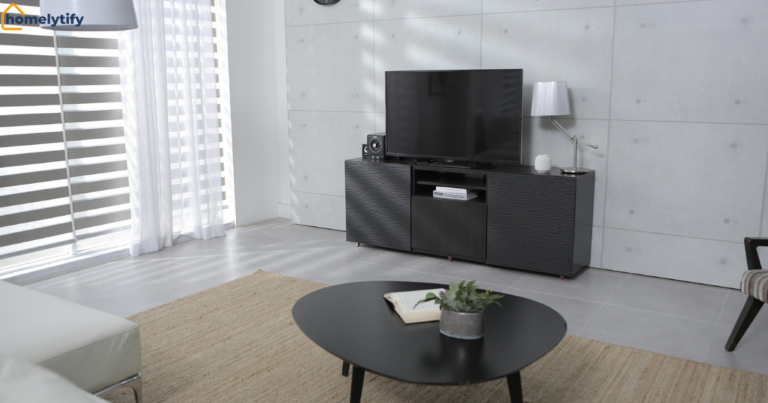
12. Choose a TV Stand With Shelves or Cabinets
Your TV stand is already taking up space, so use it wisely. Look for stands with shelves, cabinets, or drawers for DVDs, gaming consoles, cable boxes, remote controls, board games, and extra books.
My TV stand has two small cabinets that hold all my board games, extra cables, and streaming devices. A media unit with built-in storage is one of the easiest upgrades for a small living room, since it replaces furniture you’d need anyway.
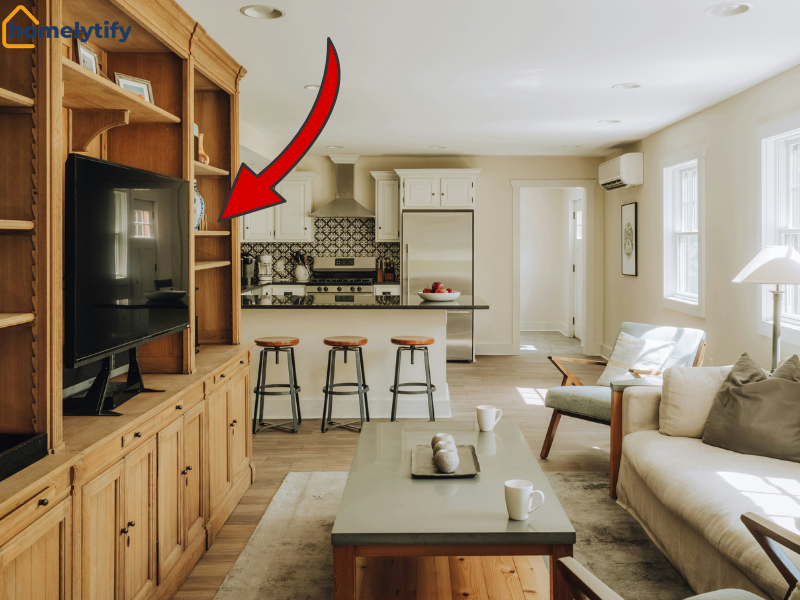
If you’re on a budget, a sturdy bookshelf works as a TV stand and gives you more storage for less money — just look for one with cable management holes in the back to hide the cord mess.
13. Use Baskets and Bins on Open Shelves
Sometimes you need extra storage but don’t want everything on display. Baskets and bins hide mail, notebooks, craft supplies, small toys, remote controls, and charging cables while keeping them organized and accessible.
I use woven baskets on my bottom shelves to hold mail, notebooks, and random clutter. It looks intentional and hides the chaos. Stick to a few larger baskets rather than lots of tiny ones — too many small containers create their own visual clutter — and label them with chalkboard tags so you actually remember what’s inside.
14. Mount a Pegboard on the Wall
Pegboards turn empty wall space into flexible, adjustable storage for keys, headphones, small plants, craft supplies, notebooks, and lightweight tools. You can hang shelves, hooks, and baskets, and move everything around as your needs change.
I mounted one behind my desk area. It holds notebooks, pens, a small plant, headphones, and keys. Mount it at a comfortable reach height, not too low, and check the weight limit on your drywall anchors before loading it up. If you’re renting, adhesive strips or a freestanding pegboard propped on furniture work just as well as drilling.
15. Use a Sofa Console Table
A narrow console table behind your couch adds storage without taking up extra floor space — perfect for baskets of blankets, books, magazines, decorative items, and a lamp.
I have a slim console table behind my sofa that holds baskets with extra throws, books, and magazines. Also serves as a lamp table. One easy trick: pull the sofa a little further from the wall and use the gap behind it for storage boxes you don’t want on display. Just keep the table slim enough not to block walkways, and leave enough room that the sofa can still recline or sit properly.
5 Common Storage Mistakes That Make Small Rooms Feel Smaller
- Buying too many small storage pieces. A bunch of tiny containers creates visual clutter. You’re better off with a few larger pieces.
- Choosing dark or bulky furniture. Heavy furniture makes a small room feel heavier. Choose lighter colors and exposed legs.
- Pushing all furniture against the wall. Pulling furniture out slightly can make the room feel bigger — and you can use the space behind it for storage.
- Not measuring before buying. I’ve done this. Bought furniture way too big for my space. Measure everything — it’s the step people skip most often.
- Storing things you don’t need. If you haven’t touched it in six months, you probably don’t need it in your living room.
Renter-Friendly Storage Ideas That Won’t Lose Your Deposit
- Command hooks and strips hold shelves and organizers without marks. Heavy-duty ones work for items over a few pounds.
- Tension rods create instant storage in closets, windows, and doorways. Hang curtains, organizers, or lightweight shelves.
- Adhesive wall-mounted shelves stick on and come off clean. Check weight limits.
- Freestanding shelving units lean against walls without mounting. Just make sure they’re stable.
- Furniture with casters lets you rearrange without scratching floors. Move things around to try different layouts.
Tip: Ask your landlord before installing anything. Many will say yes to small things like shelving if you promise to patch holes.
Conclusion
Adding storage to a small apartment living room isn’t about buying fancy furniture or spending a ton of money. It’s about being smart with what you’ve got and thinking in three dimensions — the walls, under your furniture, the back of your door, even above your doorway.
Start small, pick one or two ideas from this list, and try them this weekend. Each small change builds on the next. Your living room can feel like a place you want to spend time in, not a storage unit with a couch.
Frequently Asked Questions
How can I add storage to my small living room without making it feel cramped?
Use vertical space with tall shelving and wall-mounted options. Choose furniture that doubles as storage, like ottomans and coffee tables with hidden compartments. Keep surfaces clear and store items behind closed doors or in baskets to reduce visual clutter.
How much storage do I need in a small apartment living room?
Focus on what you actually use. Start by decluttering and keeping only items you’ve touched in the past six months.
Can I add storage without drilling into the walls?
Yes. Use tension rods, over-the-door organizers, freestanding shelving units, and under-sofa storage containers. Command hooks work for lightweight items too.
What’s the cheapest way to create more living room storage?
Start with baskets, bins, and under-sofa containers — these cost under $30. Repurpose boxes you already have. The most expensive option is buying furniture you don’t actually need.
What’s the first thing I should do before buying storage furniture?
Declutter, then measure your available space before buying anything.
One Comment