8 Relaxing Evening Habits That Actually Make Your Home Feel Calmer
Most evenings don’t fall apart all at once. They unravel slowly: a phone check here, a pile of dishes there, work thoughts sneaking in after dinner. By the time you’re ready for bed, your head is full, and your home feels like it never really settled.
Relaxing evening habits aren’t about turning your night into a spa ritual. They’re about giving the end of your day a shape, something intentional that signals to your brain and your home that the busyness is done. Even 20 to 30 minutes of deliberate winding down can shift the entire atmosphere in your space.
This guide covers 8 habits that genuinely work for real people with real constraints: parents, remote workers, late-shift adults, and anyone who ends the day feeling more frazzled than they should. No expensive products. No hour-long routines. Just practical changes that make your evenings calmer and your mornings easier.
Why Your Evenings Are Setting the Tone for Everything Else
Here’s something that most night routine articles skip over: your evening doesn’t just affect your sleep. It affects your morning, your mood at breakfast, and how much patience you have as you walk into the next day.
When you end your day in chaos, with dishes in the sink, clothes on the floor, your mind still running through tomorrow’s to-do list, your nervous system doesn’t get a proper reset. You wake up already behind. It’s not about being perfect or tidy. It’s about creating enough order that your brain can actually let go.
A 2024 study published in the journal Sleep by researchers at RMIT University and Monash University in Melbourne tracked 95 adults over 15 consecutive nights using EEG sleep monitors and daily cortisol (stress hormone) sampling. Their findings were clear: higher pre-sleep cortisol levels directly predicted shorter sleep duration and lower sleep efficiency that same night.
Not just for people with sleep problems, but for everyone. The research confirmed that your stress levels in the hour before bed have a measurable, direct impact on the quality of sleep you get.
What this means practically: the way you spend your evening isn’t just about feeling nice before bed. It’s about actively lowering that cortisol level before you sleep. Every habit on this list does exactly that.
The Transition Ritual Most People Skip (And Why It Matters)
There’s a gap that almost nobody talks about: the space between “work mode” and “home mode.” For people who commute, that transition used to happen naturally. The drive or train ride gave your brain time to shift gears. But for remote workers, or anyone who stays home, that gap simply doesn’t exist unless you create it.
Without a transition signal, your brain treats 8 PM the same as 2 PM. You might be physically home, physically done with work, but mentally you’re still on the clock. This is why you feel tired but not relaxed. Tired but unable to sleep. It’s a state of low-grade alertness that sits right below the surface all evening.
A transition ritual can be simple. Change your clothes when you finish work, actual clothes, not just sweatpants, but something that physically marks the shift. Make a cup of tea. Step outside for five minutes. The specific activity matters less than the consistency. When you do the same thing at the same time each day, your nervous system starts to recognize it as a signal: the work day is over, you can put it down now.
This one habit, more than any individual item on a wind-down checklist, changes the quality of your entire evening.
8 Relaxing Evening Habits for a Calmer Home
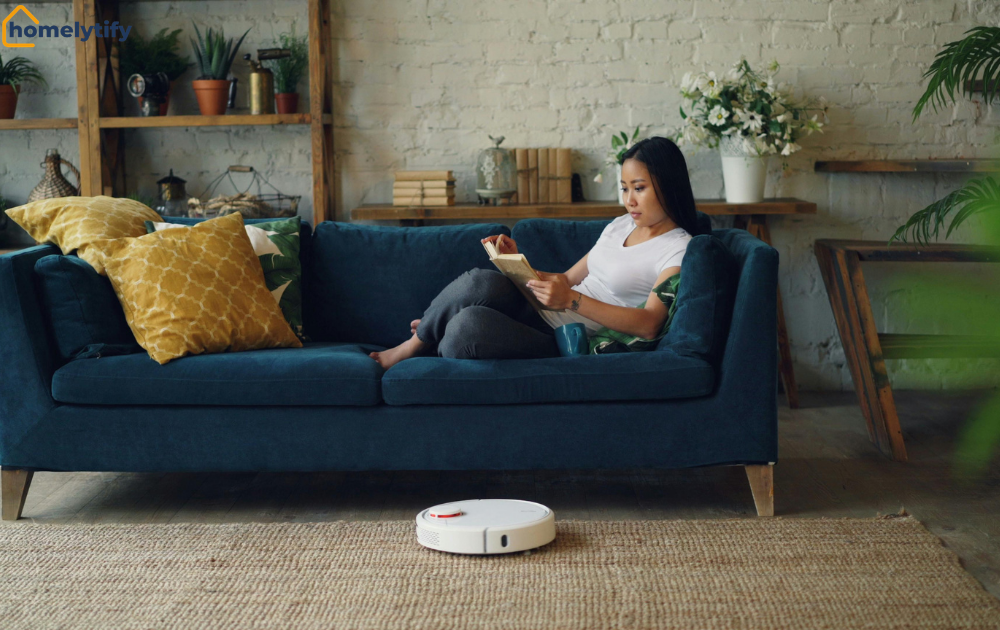
These aren’t in a rigid order. Pick two or three to start with and build from there. The goal isn’t a perfect routine; it’s a reliable one.
1. Dim the Lights 30 Minutes Before You Wind Down
Bright overhead lighting at 9 PM is working against you. Your body uses light as its primary signal for wakefulness. Warm, dim light triggers melatonin production and naturally starts to slow your system down.
You don’t need smart bulbs or fancy lamps. Turning off overhead lights and using a single floor lamp in the corner of a room makes a noticeable difference.
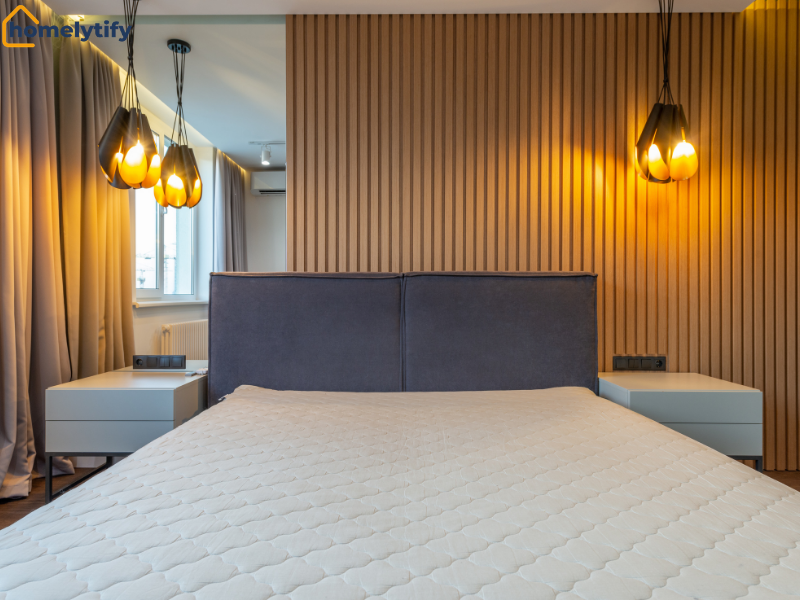
If you want something easy and affordable, a warm-toned lamp (under 2700K color temperature) on a timer works well. Some people use just a salt lamp or a few candles; the effect is similar.
The shift in your home’s atmosphere from this alone is surprisingly significant. A brightly lit room feels like it’s waiting for something to happen. A dimly lit room signals rest.
2. Do a 10-Minute Reset of Your Living Space
A calm home environment doesn’t require a clean home. It requires a reset.
There’s a difference. A full clean takes time and energy you probably don’t have at 9 PM. A reset means: dishes in the sink (not necessarily washed), cushions straightened, surfaces cleared enough that the room doesn’t feel cluttered when you wake up. Set a timer for 10 minutes and do only what fits in that window.
The reason this works as a stress-free evening routine element is psychological. Clutter and unfinished tasks create what researchers call “open loops” in the brain, unresolved items that your mind keeps cycling back to. Closing those loops visually, even partially, reduces background mental noise. You’ll notice it when you sit down afterward.
One tip: start with whatever bothers you most. For most people, it’s the kitchen counter or the coffee table. Clear that one surface and you’ve already shifted the feeling of the room.
3. Set a Hard Stop for Work And Actually Honor It
This is the habit that’s easiest to agree with and hardest to follow. Most people who feel stressed in the evenings aren’t struggling to find relaxing activities; they’re struggling to stop working long enough to do them.
A hard stop means a specific time, not “when I finish this.” Because that finish line keeps moving. Pick a time, 7 PM, 7:30 PM, whatever fits your life, and treat it like a meeting you can’t reschedule.
The practical side of this: close your work apps, log out of email on your phone, and physically move away from your workspace if possible. Out of sight genuinely does help out of mind. If you work from a laptop at the kitchen table, close it and put it somewhere else in the evenings. The visual cue of the open laptop is an invitation to keep working.
This is especially important for home relaxation ideas to land; none of the other habits on this list feel relaxing if work is still technically running in the background.
4. Create a Sensory Shift With Sound or Scent
Your brain is wired to associate environments with states of mind. The same room can feel like a workspace or a sanctuary depending on what you pair it with. This is where sound and scent become practical tools, not luxuries.
Sound: A consistent audio cue in the evening- the same playlist, the same podcast genre, even rain sounds- helps your brain file the evening under “rest.” You’re essentially training a sensory cue. After a few weeks of pairing the same music with your wind-down time, just hearing it starts to relax you.
Scent: Lavender, cedarwood, chamomile. These aren’t just pleasant smells. They have a real (if modest) effect on cortisol and alertness for many people. A diffuser, a scented candle, or even a pillow spray costs very little and adds a lot to the overall atmosphere. The key is consistency. Use the same scent at the same time, and it becomes a sleep cue.
This is one of the calming home environment tips that most articles mention but don’t go deep on. The sensory environment of your home in the evening is a tool you can actively shape, and it works on people other than just you. Families and couples often find that a shared sensory cue in the evening brings the whole household’s energy down together.
5. Prep for Tomorrow Tonight (5 Minutes Is Enough)
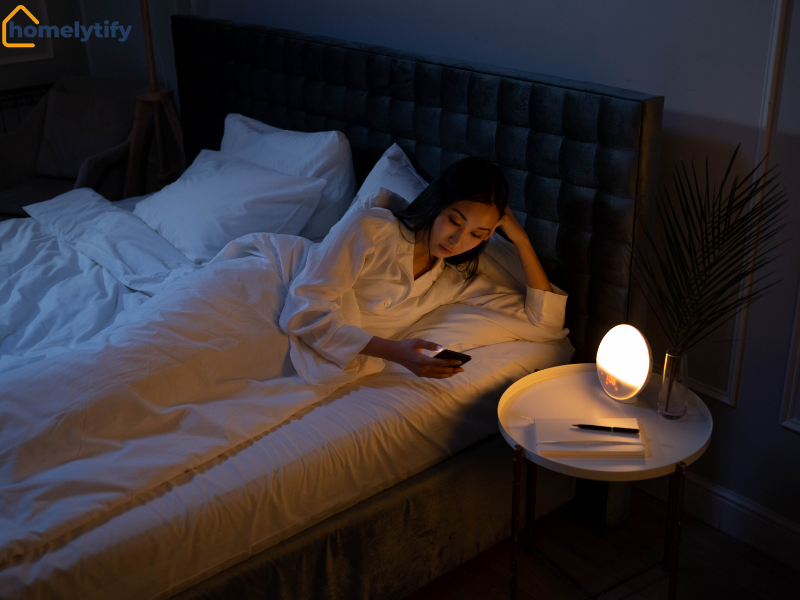
This one sounds counterintuitive. Preparing for tomorrow seems like more doing, not less. But here’s the practical truth: most morning stress is actually evening anxiety that shows up the next day.
When you go to bed without a clear picture of tomorrow, your brain tries to hold all of it in memory. It replays your calendar, worries about what you might forget, and keeps you in a mild state of readiness.
Five minutes of evening prep writing out tomorrow’s three priorities, setting out what you need, checking your schedule offloads that mental weight.
You’re not solving tomorrow’s problems. You’re just giving your brain permission to stop holding them for you overnight. The difference in how you feel walking into the next morning is real. It’s one of the most underrated healthy evening habits for people who carry a lot of mental responsibility.
6. Replace Scrolling With Something That Feeds You
Everyone knows that late-night scrolling isn’t great for sleep. The advice to “put the phone down” is everywhere. What’s missing from most of that advice is the honest acknowledgment of why scrolling happens: it’s effortless, and by the evening, most people have nothing left for anything that requires effort.
The key is finding a replacement that’s equally low-effort but not a screen. Reading works for many people, but not everyone wants to read at 10 PM. Other options that actually work for tired adults: a puzzle (any complexity), a simple craft or knitting, listening to a podcast while lying down with your eyes closed, or even just reorganizing something small, a drawer, a shelf.
The goal isn’t to be productive. It’s to give your mind something gentle to rest on that isn’t a social media feed or a news cycle. The difference in how you feel 20 minutes later is noticeably different from the dull, vaguely guilty fog that comes after a long scroll session.
7. Choose a Wind-Down Drink Ritual
This one is small, but its impact on the overall feeling of an evening is real.
Having a consistent evening drink, herbal tea, warm milk, tart cherry juice (which has natural melatonin), or even just warm water with lemon adds a physical ritual anchor to your night. It’s something you do every evening, at roughly the same time, that marks the official start of your unwind after work routine.
The ritual aspect matters more than the drink itself. Making the drink, holding the warm mug, sitting somewhere comfortable to drink it- these small physical acts bring you into the present moment more reliably than most intentional mindfulness practices. It takes about 90 seconds and requires no effort.
Avoid caffeine after 2 PM if sleep is a struggle, and if you’re sensitive to sugar, skip sweetened herbal teas late at night. Otherwise, this is a genuinely zero-barrier evening self-care routine addition.
8. End With a Mental Offload Before Sleep
This is the habit that personally made the biggest difference, so it’s worth being honest about how it actually started.
For years, getting into bed meant the brain immediately lighting up. Every unfinished thing from the day would start replaying the conversation handled badly, the task forgotten, the thing needed tomorrow that hadn’t been written down anywhere.

Not anxious in a clinical sense. Just unfinished. The day hadn’t been closed properly.
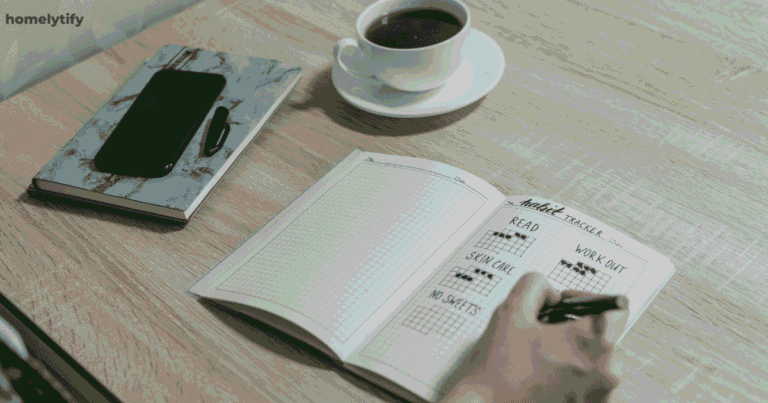
What finally helped wasn’t a meditation app or a gratitude journal (though both have their place). It was something stupidly simple: sitting at the desk for two minutes before bed and writing down everything still open in my head. Not to solve it. Just to get it out. Three or four things, sometimes just one. The act of putting it on paper physically, not in a phone note, told my brain it didn’t need to keep holding onto it. Someone else (the paper) had it now.
That first night, sleep came faster than it had in months. It didn’t feel like a miracle. It felt like finally taking off a backpack that had been on all day without noticing.
A mental offload doesn’t need to be this exact practice. Some people do it by writing three sentences about what went well, what’s still open, and one thing they’re grateful for. Others just sit quietly for two minutes and mentally walk through the day.
The form doesn’t matter. What matters is consciously closing the day before trying to sleep. It’s one of the simplest bedtime relaxation tips with the most consistent real-world impact, and it costs nothing.
Common Mistakes That Quietly Wreck Your Evening Calm
These are the patterns that consistently undermine otherwise good intentions, and most people make them without realizing it.
Trying to change everything at once. Adding five new habits in a single evening creates pressure, not calm. One or two habits practiced consistently do more than a six-step routine you abandon after three days. Start small and add gradually.
Use the evening to catch up on everything you didn’t finish. The evening isn’t a productivity extension of the day. When you treat it as overflow time for cleaning, emails, errands, you never give your nervous system a clear signal that the day is over. Some things simply have to wait until tomorrow.
Relying on alcohol to wind down. This is common and understandable, but alcohol disrupts sleep architecture even when it helps you fall asleep faster. You tend to sleep lighter, wake earlier, and feel less rested. If a drink is part of your evening, keep it earlier in the night and treat it as a social habit rather than a sleep tool.
Watching stimulating content right before bed. This doesn’t just mean horror or thrillers. True crime, intense news, emotionally heavy dramas all of these keep your nervous system in an alert state. It’s not about what you’re watching technically, but what emotional state it puts you in. Save the heavy stuff for earlier evenings and wind down with something lighter.
Treating your evening routine as all-or-nothing. Missing one habit, or having one chaotic evening, doesn’t mean the routine is broken. Consistency over weeks and months matters far more than perfection on any single night. A good evening routine is flexible enough to survive a hard day.
How to Build This Routine When You’re Already Exhausted
Here’s where most people get stuck. The advice sounds reasonable, but by the time 8 PM arrives, they have almost nothing left. No motivation to dim lights, no energy to reset the living room, no patience for any ritual whatsoever.
This is the real challenge, and it’s worth being honest about it.
The solution isn’t more willpower. It’s reducing the effort required to start. Habit researchers call this “reducing the activation energy.” Practically, it means:
Leave the lamp already plugged in where you need it. Keep the herbal tea in a visible spot on the counter. Put your journal on your pillow in the morning so it’s waiting for you at night. The less you have to decide and retrieve at 9 PM, the more likely you are to actually do the habit.
Also, and this matters, pick the one evening habit from this list that addresses your biggest specific problem. If stress is your main issue, start with the mental offload. If your home environment makes you feel anxious, start with the 10-minute reset. If you can’t disconnect from work, start with the hard stop time. You don’t need all eight. You need the two or three that fit your actual life right now.
Build from there. Calm evenings don’t require a perfect setup. They just require a starting point.
Conclusion
A calmer home in the evening isn’t a result of having more time. It’s a result of using the time you already have differently.
The eight habits here aren’t complicated. Some take five minutes. Some cost nothing. What they share is intention; each one puts a small but real boundary between the busyness of the day and the rest you need at the end of it. That boundary is what makes an evening feel like yours, rather than just the tail end of a long to-do list.
Start with one habit tonight. Not all eight, not a new system, just one. Pick the one that would have helped most this week, and do that. Build from there, imperfectly, over the coming weeks.
The evenings you build now shape the mornings you wake up to. That’s worth a few intentional minutes.
Frequently Asked Questions
How long should an evening routine take?
20 to 30 minutes is plenty. Quality matters more than length.
What’s the single most effective relaxing evening habit for better sleep?
A consistent wind-down cue, dimming lights, making tea, or a quick mental offload — trains your brain to recognize that rest is coming and has the most direct impact on sleep quality.
Can I do an evening routine if I have young kids?
Yes — just keep it realistic. A 10-minute home reset and a drink ritual are two habits that fit easily around a kid’s bedtime schedule.
Is it okay to watch TV as part of a relaxing evening?
TV is fine, but avoid emotionally intense content in the last hour before bed. Something light and familiar works far better than starting a gripping new series.
How long does it take to feel the benefits of an evening routine?
Most people notice a difference within one to two weeks. Give it at least that long before deciding if it’s working.