

Frugal Laundry Habits for Small Households: Save Money
If you live alone or with one other person, your laundry bill has no business being as high as it is. That’s the thing nobody really talks about: frugal laundry habits for small households look completely different from advice written for families of five. Most of the tips floating around online assume you have mountains of clothes to wash every single day. You probably don’t.
But small households often waste more per load, not less. You run the machine half-full. You use the same amount of detergent as a family of four. You forget to air-dry when it’s perfectly sunny outside. It adds up quietly, every single week.
This guide is about building a cheap laundry routine that actually fits how you live without buying new appliances or following a complicated system. Just simple, practical habits that cut your laundry costs month after month.
Why Small Households Actually Overspend on Laundry
Most laundry advice is written with big families in mind, which means it doesn’t translate well for smaller ones. When you’re only doing laundry for one or two people, you face a specific problem: half-empty machines.
Running a washing machine that’s only 40% full costs almost the same in water and electricity as running one that’s full. You’re paying full price for half the output. That’s the core reason so many small households overspend, not because they’re doing too much laundry, but because they’re doing it inefficiently.
Add in the habit of using too much detergent (because the cap markings are designed for large loads), plus machine drying clothes that could air dry in two hours, and you’ve got a routine that bleeds money every week without you even noticing.
Build a Low-Cost Laundry Routine That Works for 1–3 People
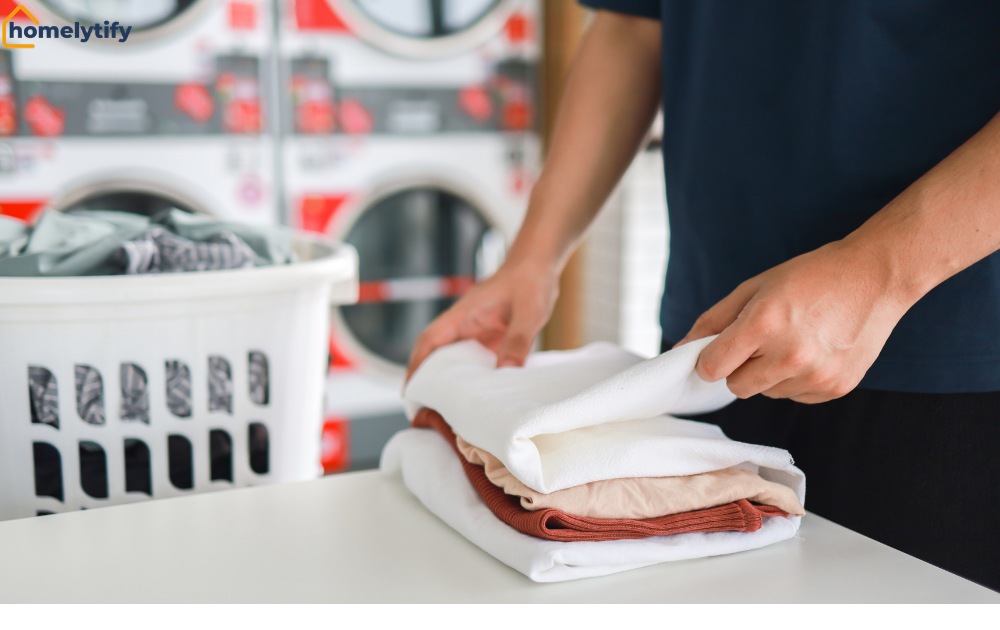
The single biggest shift you can make is to stop doing laundry whenever you feel like it and start batching it into one or two days per week. This sounds simple. But almost nobody does it.
When laundry becomes a scheduled event, you naturally wait until you have a full load. You stop running machines for four items because you need a specific shirt. And you get into a rhythm that makes the whole thing faster and cheaper.
Set One Laundry Day Per Week
Pick a day, Sunday, Wednesday, whatever works, and commit to it. Put it in your phone if you need to. The goal is to accumulate enough clothing to fill the machine properly before running it.
For a household of one or two people, once a week is usually enough. For three people, twice a week might be necessary. The key is that you’re deciding in advance, not reacting to an empty drawer.
One real-world benefit most people don’t expect: when you know laundry day is coming, you start re-wearing clothes more naturally. That sweater you wore for three hours in an air-conditioned office doesn’t need washing. It gets hung back up and worn again. That habit alone can reduce your loads by 20–30% over a month.
Only Wash Full Loads
This is non-negotiable for a budget laundry routine. A half-full machine uses roughly the same electricity and water as a full one. So if you’re running two half-loads, you’re paying for two full loads and only getting one load’s worth of value.
If you genuinely don’t have enough for a full load, wait. If you’re running low on a specific item, hand-wash just that piece in the sink. It takes five minutes and costs almost nothing.
Simple Frugal Laundry Habits That Cut Your Washing Costs Without Extra Effort
There’s a difference between washing clothes cheaply and washing them badly. The goal is to maintain quality while spending less, and most of that comes down to two things: water temperature and when you actually run the machine.
Getting both right doesn’t require any new equipment. It just requires changing habits you probably haven’t questioned in years.
Cold Water Washing Benefits and Savings
This one surprises most people. Cold water cleans everyday clothes — shirts, jeans, underwear, towels, just as effectively as warm water. Modern detergents are specifically formulated to work in cold water. Warm or hot water only makes a meaningful difference for heavily soiled items or specific fabric types, such as heavily stained children’s clothes or bedding that needs sanitizing.
The numbers are hard to ignore. According to the American Cleaning Institute, switching from warm to cold water saves 3.2 kilowatt-hours per load — because about 90% of what your washing machine consumes goes toward heating the water, not actually cleaning the clothes. Yet fewer than 1 in 4 laundry cycles are run in cold water today, meaning most households are burning energy they simply don’t need to.
Run those numbers across a full year of washes, and that’s a genuinely significant saving — for a change that costs nothing and takes one second.
Use Off-Peak Hours to Run Your Machine
This one depends on your electricity provider, but it’s worth a five-minute check. Many utility companies offer lower rates during off-peak hours, typically late evenings or early mornings on weekdays. If your provider uses time-of-use pricing, running your machine at 10 PM instead of 6 PM can reduce your cost per load without changing anything else about how you do laundry.
Check your electricity bill or call your provider and ask directly whether off-peak rates apply to your plan. It’s a one-time task that can quietly reduce your laundry expenses every single month going forward.
Air Drying Clothes to Save Electricity: The Simplest Habit Nobody Uses Enough
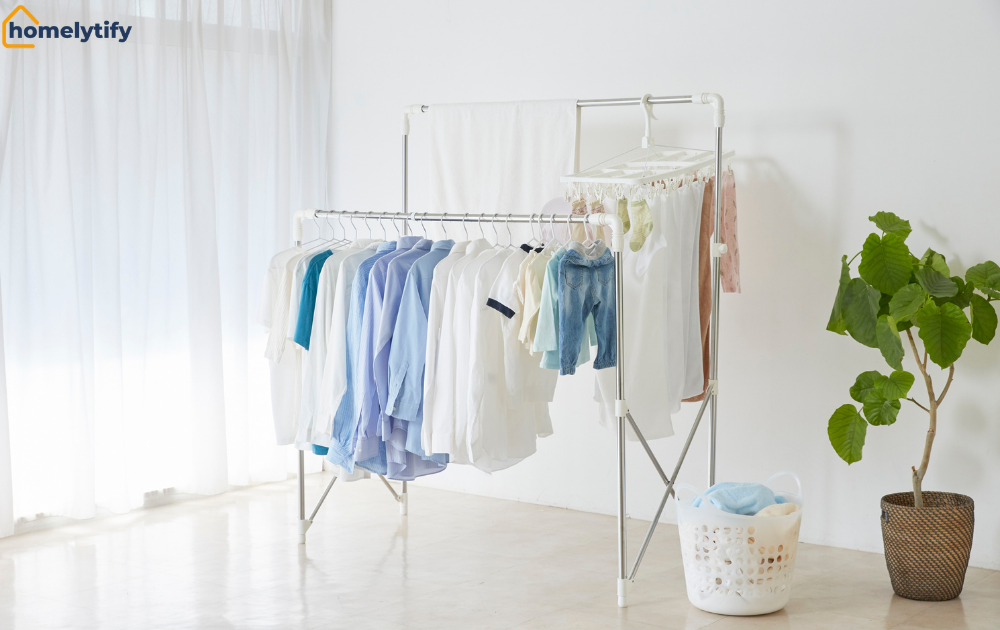
The dryer is the most expensive part of laundry. Not the washer, the dryer. It pulls significantly more electricity per cycle than the washing machine does, and for a small household, it’s largely optional most of the year.
I switched to air drying about two years ago after noticing my electricity bill was higher than it had any right to be for someone living alone. I picked up the Amazon Basics Foldable Clothes Drying Rack — it costs around $25, has a 4.7-star rating from over 34,000 reviews, folds completely flat when not in use, and fits in a corner of any apartment. That one purchase paid for itself within six weeks. I haven’t used the dryer for everyday clothes since.
Here’s what surprised me: clothes hung while slightly damp come out far less wrinkled than dryer-dried ones. I actually stopped ironing most of my shirts. That’s time saved on top of money saved.
The realistic version of this habit doesn’t mean giving up the dryer entirely. Use it on rainy days, for heavy towels, or when you genuinely need something dry in an hour. But make the default choice to hang clothes first. Even replacing half your dryer loads with air drying makes a visible difference on your monthly bill within the first few weeks.
Air drying also extends the life of your clothes in a way most people underestimate. The lint you see building up in the dryer filter is literally your clothing breaking down, fabric fibres worn away with every cycle. Less dryer time means your clothes last longer, which is its own form of saving money.
If you have a balcony or outdoor space, even a small one, use it. Clothes dry faster outside, the sun naturally freshens fabric, and direct sunlight has a mild sanitizing effect — especially useful for towels and pillowcases.
How Much Detergent Do You Actually Need? (Less Than You Think)

Here’s where most people silently waste money without realizing it. The measuring cap on a detergent bottle is marked for large loads, typically 8–12 pounds of laundry. A small household rarely runs a load that heavy.
If you’re filling the cap to the recommended line for a half-full machine, you’re using twice as much detergent as you need. And the excess doesn’t make your clothes cleaner. It just stays in the fabric as residue or gets rinsed away, wasted.
A practical test: run a load of clothes with no detergent at all. If suds appear, your clothes have detergent buildup from previous overwashing. That’s how common overuse is.
For a standard small load, use about half the minimum recommended amount. Modern detergents are concentrated enough that this is still effective. You can reduce this even further by switching to a high-efficiency (HE) detergent; even if you don’t have an HE machine, they’re designed to clean with less product.
Transferring liquid detergent into a smaller bottle with a narrow spout is a practical tip that actually works. It forces you to dispense less and makes it harder to pour carelessly. Simple, but effective.
White vinegar as a fabric softener replacement is another real saving. Half a cup in the rinse cycle softens clothes, reduces static, and leaves no smell once dry. A large bottle of white vinegar costs a fraction of commercial softeners and lasts for months.
Frugal Laundry Habits for Beginners: Small Changes, Real Savings
If you’re just starting to think about reducing your laundry expenses monthly, the best approach is to start with one habit and build from there. Trying to change everything at once usually leads to abandoning all of it within two weeks.
Start with cold water washing. It requires no change in routine except pressing a different button. Once that feels normal, usually after two or three weeks, add the weekly laundry day habit. Then start air drying. Layer habits slowly, and they stick.
Mend Before You Replace
This is a habit most frugal living content glosses over, but it’s genuinely valuable for a small household. When you have fewer clothes overall, keeping each piece in good condition matters more. A small tear, a missing button, a worn seam, these are things you can fix in ten minutes for almost no cost.
There are hundreds of free video tutorials for basic clothing repair. You don’t need to be skilled at sewing. You just need a needle, thread, and five minutes. A shirt that would have been thrown away lasts another two years. Over time, that’s real money.
Treat Stains Before They Set
This isn’t just a laundry quality tip; it’s a budget tip. Stains that sit for hours or go through a wash cycle without treatment often become permanent. Which means the clothing item is damaged or lost. A simple habit of treating stains within the first hour (cold water and a small amount of dish soap works for most common stains) protects your wardrobe investment.
Don’t wait for laundry day. Treat it immediately. Let it sit for fifteen minutes, rinse, and then wash it with the next regular load. This prevents you from losing clothes to perfectly fixable stains.
Laundry Mistakes That Are Quietly Draining Your Budget
These are the habits that cost money without feeling like they do. They’re easy to overlook precisely because they’re woven into a routine that feels normal.
Running small loads too often. This is the most common mistake in single or two-person households. The machine uses the same amount of water and electricity whether it’s half-full or full. Waiting until you have a full load is one of the highest-impact changes you can make.
Using dryer sheets and fabric softener on every single load. Both of these are optional products that the industry has convinced people are essential. Dryer sheets leave a waxy coating on fabric over time and on the dryer’s moisture sensor, which makes drying less efficient. White vinegar does the same job for almost nothing.
Washing things that aren’t actually dirty. This sounds obvious until you really examine your habits. Jeans worn for a few hours in an office don’t need washing. A sweater worn over a collared shirt is still clean. Pajamas worn for one night are fine for a second night. Over-washing also degrades fabric faster, shortening the life of your clothes.
Ignoring the quick wash setting. Most modern machines have a 30-minute or speed wash cycle. For lightly worn clothes, the kind that are more “refreshing” than “cleaning,” the quick cycle uses less water, less electricity, and is usually perfectly sufficient. Most people never touch this setting.
Buying cheap detergent in small containers. Buying a larger container of a decent concentrated detergent almost always works out cheaper per load than buying small bottles regularly. If the budget allows, buying in bulk once every few months is a straightforward way to reduce your laundry expenses monthly.
Conclusion
Cutting your laundry costs as a small household isn’t about sacrifice. It’s about stopping the small, quiet waste that’s already built into most people’s routines: half-full machines, excess detergent, unnecessary dryer use, and clothes washed more often than they need to be.
Pick two or three habits from this list and start there. Cold water washing and a weekly laundry schedule alone can make a noticeable difference within the first month. Add air drying when the weather allows, and the savings compound further.
The goal isn’t a perfect system. It’s a slightly smarter low-cost laundry routine that fits your life and quietly reduces what you spend every single month without asking much of you.
Start this week. One change. That’s enough to begin.
Frequently Asked Questions
How often should a small household do laundry to save money?
Once a week is ideal for most 1–to 2-person households. This allows you to accumulate a full load, maximizing the efficiency of each machine cycle and reducing overall water and electricity use.
Does washing in cold water really clean clothes properly?
Yes, for the vast majority of everyday laundry. Modern detergents are formulated specifically for cold water use. Reserve warm or hot water for heavily soiled items or bedding where sanitizing is important.
Is air-drying clothes actually worth the effort?
Absolutely, a dryer uses significantly more electricity than a washing machine. Even replacing half your drying loads with air-drying can save $50–$100 per year in a small household, and your clothes last longer.
How much detergent should I use for a small load?
Start with half the minimum amount marked on the cap. For a household of one or two people, a small-to-medium load rarely needs the full recommended dose. If you see suds when washing with no detergent, you’ve been using too much.
What is the fastest way to reduce laundry expenses monthly?
Switch to cold water washing immediately; it’s a single-button change that reduces energy use by up to 75% per cycle. Then commit to only running full loads. These two habits together produce the most immediate impact on your monthly laundry costs.